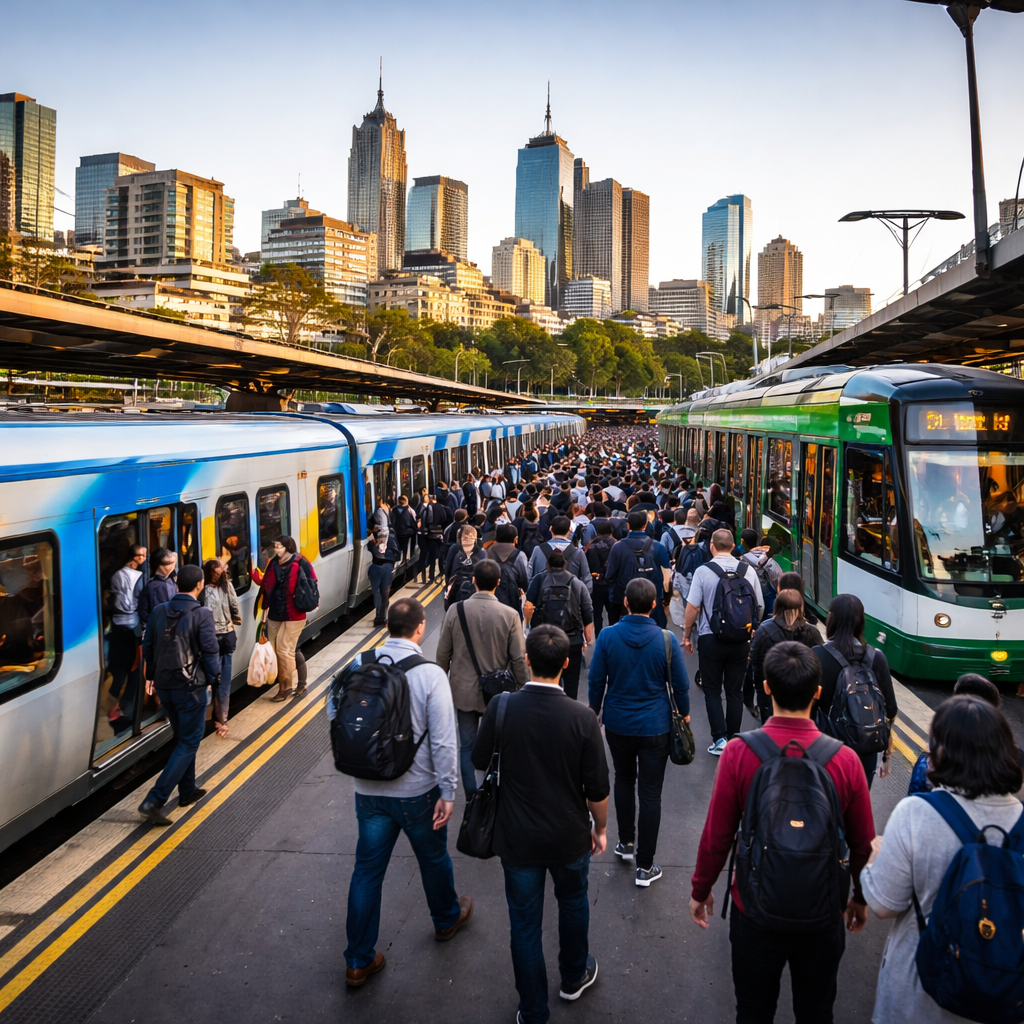

Free public transport has triggered a sharp shift in commuting patterns across Victoria, with ridership jumping nearly 30% within days of fares being scrapped for April. The sudden spike comes as fuel prices surge globally, pushing households to rethink how they travel and where they spend.
The move, introduced as a cost-of-living relief measure, is already saving commuters hundreds of dollars in a matter of weeks. But while the policy is delivering immediate benefits, it is also raising deeper questions about long-term economic impact, infrastructure gaps, and whether free travel can truly change behaviour.
Fuel crisis accelerates shift from cars to trains
The backdrop to the policy is a sharp rise in petrol and diesel prices, driven by global supply disruptions and geopolitical tensions. For many drivers, the weekly cost of fuel has become increasingly difficult to manage, especially for those commuting long distances.
In response, the Victorian government removed fares across trains, trams and buses for the entire month of April. The goal was simple: reduce pressure on household budgets while encouraging more people to leave their cars at home.
Early signs suggest the strategy is working — at least in the short term. Metro train usage has climbed significantly, while regional services have recorded even sharper increases during peak travel periods and public holidays. The shift has also contributed to lighter traffic conditions in some areas, improving overall travel flow.
For global context on how fuel markets are evolving, updates from the International Energy Agency show continued pressure on oil supply, which is feeding directly into rising pump prices.
30% ridership jump highlights both gains and gaps
The near-30% rise in ridership has reinforced one key point: price is a major barrier to public transport use. Once fares are removed, even temporarily, more people are willing to switch.
But transport experts say the story is more complicated. Much of the increase is coming from people who already had access to reliable services, particularly those living closer to the city. In contrast, outer suburban and regional communities — where services are less frequent or harder to access — are seeing fewer benefits.
This uneven impact is at the centre of the debate. Critics argue that free public transport does little to help those who rely on cars because they simply don’t have viable alternatives. In areas where buses run infrequently or routes are indirect, removing fares alone is unlikely to drive meaningful change.
There are also concerns about overcrowding. Without additional services, more passengers can put pressure on existing infrastructure, especially during peak hours. In some cases, free travel may even encourage short, unnecessary trips that add to congestion on the network.
From a fiscal perspective, the policy is not insignificant. The one-month initiative is estimated to cost around $70 million, funded by taxpayers at a time when state debt is already high. Analysts warn that such spending, while politically popular, could add to inflationary pressures by increasing overall demand in the economy.
That creates a potential conflict with monetary policy. While governments are trying to ease cost-of-living pressures, central banks are attempting to reduce demand to control inflation. Some economists say measures like free transport, alongside fuel subsidies, could make that balancing act more difficult and even contribute to higher interest rates in the months ahead.
Despite these concerns, there is little doubt the policy has captured public attention. For many commuters, the immediate savings are tangible. Daily travel that once involved fuel, tolls and parking fees can now be replaced with a free train or tram ride, freeing up cash for other essentials.
The bigger question is whether this behavioural shift will last. If fuel prices remain high, public transport may continue to look attractive even after fares return. However, if service quality, coverage and reliability do not improve, many commuters could revert to driving once the incentive disappears.
Transport planners say long-term solutions lie not in removing fares but in expanding networks, increasing frequency and improving accessibility — particularly in underserved areas. Without those changes, free travel risks becoming a short-term fix rather than a lasting transformation.
For now, the numbers tell a clear story. Rising fuel costs have forced a rethink, and free public transport has accelerated that shift. But the experiment is also exposing deeper structural challenges that will shape how cities move long after April ends.
You may like: Haiti stampede leaves 30 dead near the Citadelle fortress in a devastating tragedy.

Make Swikblog your go-to source on Google for reliable updates, smart insights, and daily trends.