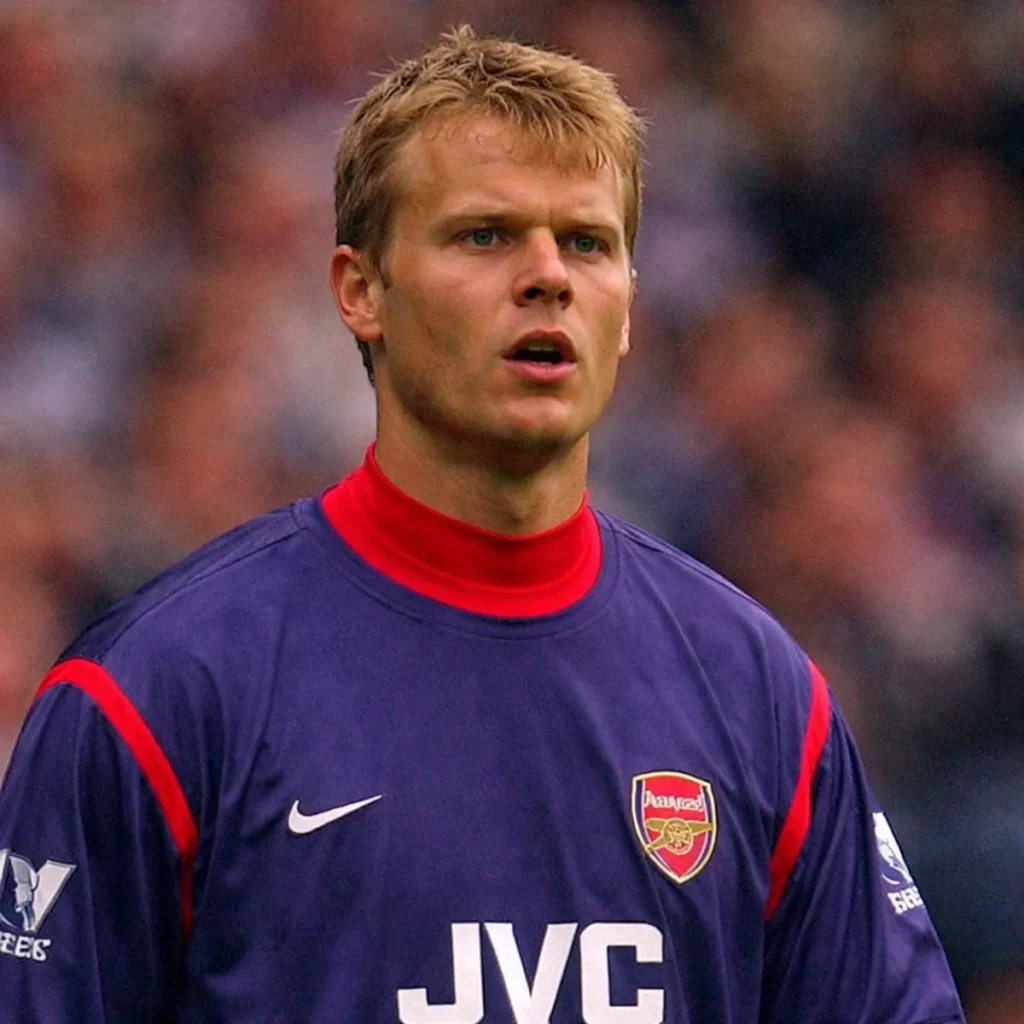

Former Arsenal goalkeeper Alex Manninger has died at the age of 48 after his car was struck by a train at a level crossing near Salzburg on Thursday morning, a sudden tragedy that has sent shockwaves across European football.
Police said the incident occurred at around 08:20 local time, with Manninger alone in the vehicle when it was hit and dragged along the tracks by the train. Emergency responders freed him from the wreckage and attempted to resuscitate him using a defibrillator, but he could not be saved. The train driver was not injured.
The Austrian, who played a key supporting role in Arsenal’s 1997-98 Premier League and FA Cup double-winning campaign, made 64 appearances for the club between 1997 and 2002. His death quickly became one of the most widely discussed stories in football, with tributes pouring in from former clubs, teammates and governing bodies.
Manninger’s career was defined by reliability and adaptability rather than headline-grabbing moments. At Arsenal, he largely served as understudy to David Seaman but stepped in during crucial periods, including late in the 1997-98 season, when his performances helped stabilise the side during their run to the title.
He was named Premier League Player of the Month in March 1998 and notably saved a penalty in Arsenal’s FA Cup quarter-final shootout victory over West Ham, underlining his contribution to one of the club’s most successful seasons.
A respected presence across Europe
Beyond England, Manninger built a career that spanned more than a decade across Europe’s top leagues. He played for clubs including Juventus, where he made 42 appearances and deputised for Gianluigi Buffon, as well as spells with Espanyol, Augsburg and Udinese.
He also earned 33 caps for Austria after making his international debut in 1999 and was part of the squad for Euro 2008, co-hosted by his home country. For many within Austrian football, he represented a generation defined by discipline and professionalism.
His first club, Red Bull Salzburg, confirmed his death, describing him as a player they “mourn deeply”, while the Austrian Football Association called him “an outstanding ambassador for Austrian football, both on and off the pitch”.
Clubs across Europe echoed those sentiments. Arsenal said they were “shocked and deeply saddened”, while Juventus described him as “a man of rare values”, highlighting his humility and dedication.
A loss that resonates beyond statistics
Manninger’s career may not have been built on stardom, but his role within teams was often critical. Coaches trusted him to step in during high-pressure moments, and teammates valued his calm presence in dressing rooms across multiple leagues.
His journey—from Salzburg to the Premier League, Serie A and beyond—reflected the path of a player who consistently adapted to different football cultures while maintaining a reputation for composure and professionalism.
He later signed for Liverpool in 2016 at the age of 39, although he did not make a competitive appearance, bringing to a close a career that included spells with 14 clubs across Europe.
The circumstances of his death have added to the sense of shock, not only because of its suddenness but also because Manninger remained a familiar figure to supporters who remember Arsenal’s rise under Arsene Wenger and Austria’s presence on the international stage.
More details on his playing career and international record can be found on UEFA’s official website, where his contribution to European football is recorded.
In a sport often defined by its biggest names, Manninger’s legacy stands as a reminder of the players who built their careers on consistency, trust and quiet influence—qualities that have shaped teams as much as any headline performance.
You may like: Calgary spring storm triggers dozens of crashes as snow makes roads hazardous.

Make Swikblog your go-to source on Google for reliable updates, smart insights, and daily trends.