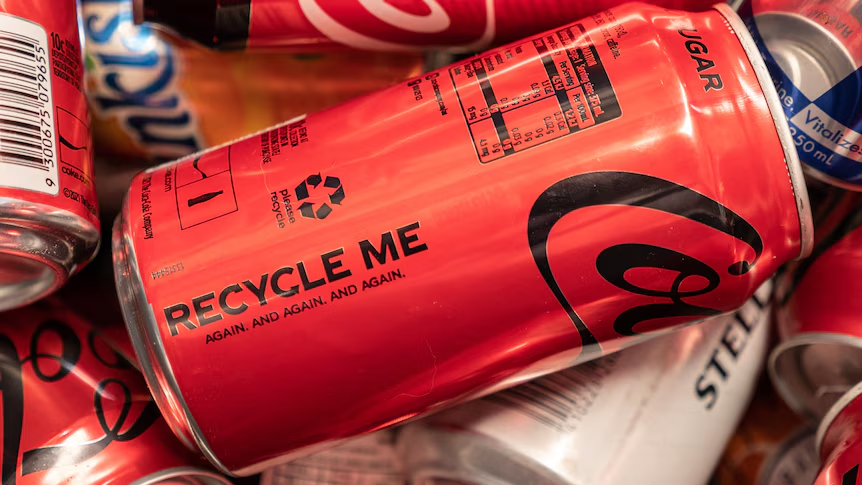

A major shift in Queensland’s recycling landscape is emerging after Coca-Cola Europacific Partners (CCEP) indicated it may reconsider its role in the state’s Containers for Change scheme, raising concerns about costs, governance, and long-term sustainability.
Coca-Cola also raised concerns about the inquiry process itself, stating it did not have sufficient opportunity to respond to allegations that could impact its reputation. The parliamentary review referred 10 separate allegations to Queensland’s corruption watchdog, though further details have not been publicly disclosed.
The warning comes as the Queensland government moves forward with proposed reforms aimed at overhauling the scheme’s structure. While the plan seeks to strengthen oversight, it has triggered pushback from key industry players who say the changes could significantly increase operating costs.
The Containers for Change initiative, launched in 2018, has become a central part of Queensland’s recycling efforts. Funded by beverage companies, the scheme allows consumers to return eligible containers in exchange for a 10-cent refund. However, the government has ruled out any increase to that refund rate, even as it proposes structural reforms.
In its submission to a parliamentary committee, CCEP warned that the proposed legislation introduces “practical challenges” that could alter the conditions under which it originally agreed to participate. The company also noted that its reputation is closely tied to the scheme’s integrity, suggesting that any perceived governance issues could have wider implications.
As one of the founding members of COEX, the not-for-profit organisation that operates the scheme, Coca-Cola plays a pivotal role in its functioning. Alongside beverage company Lion, it contributes funding through levies charged per container produced.
Concerns around governance have been growing. A parliamentary inquiry into the scheme uncovered allegations including conflicts of interest, unfair contracts, and workplace misconduct. While ten allegations were referred to the state’s corruption watchdog, details remain undisclosed.
The inquiry also highlighted financial concerns. Since its inception, the scheme has generated approximately $2.5 billion in revenue. Yet less than 40 per cent has been returned to consumers through refunds, and under 2 per cent has gone to charities, raising questions about efficiency and distribution.
Industry stakeholders argue that the proposed reforms could further strain the system. Submissions from both Coca-Cola and Lion suggest that increased administrative costs would likely be passed down the chain, ultimately affecting consumers at the checkout.
“Any increase in scheme costs is ultimately borne by beverage companies and will flow through to consumers,” Lion noted in its submission, pointing to the already challenging economic environment.
The Queensland government has not directly addressed these cost concerns but maintains that the reforms are necessary to improve transparency and strengthen the scheme’s long-term viability. Officials say the parliamentary review process will help shape the final outcome.
The debate now centres on whether these changes will enhance the scheme’s effectiveness or risk undermining participation from major industry players. For consumers, the potential ripple effects could extend beyond recycling bins to everyday purchase prices.
More details on the evolving policy discussion can be explored through official reporting on Australia’s recycling reforms.
You may also like: Winners Bathroom Closures in Canada: What Shoppers Need to Know

Make Swikblog your go-to source on Google for reliable updates, smart insights, and daily trends.