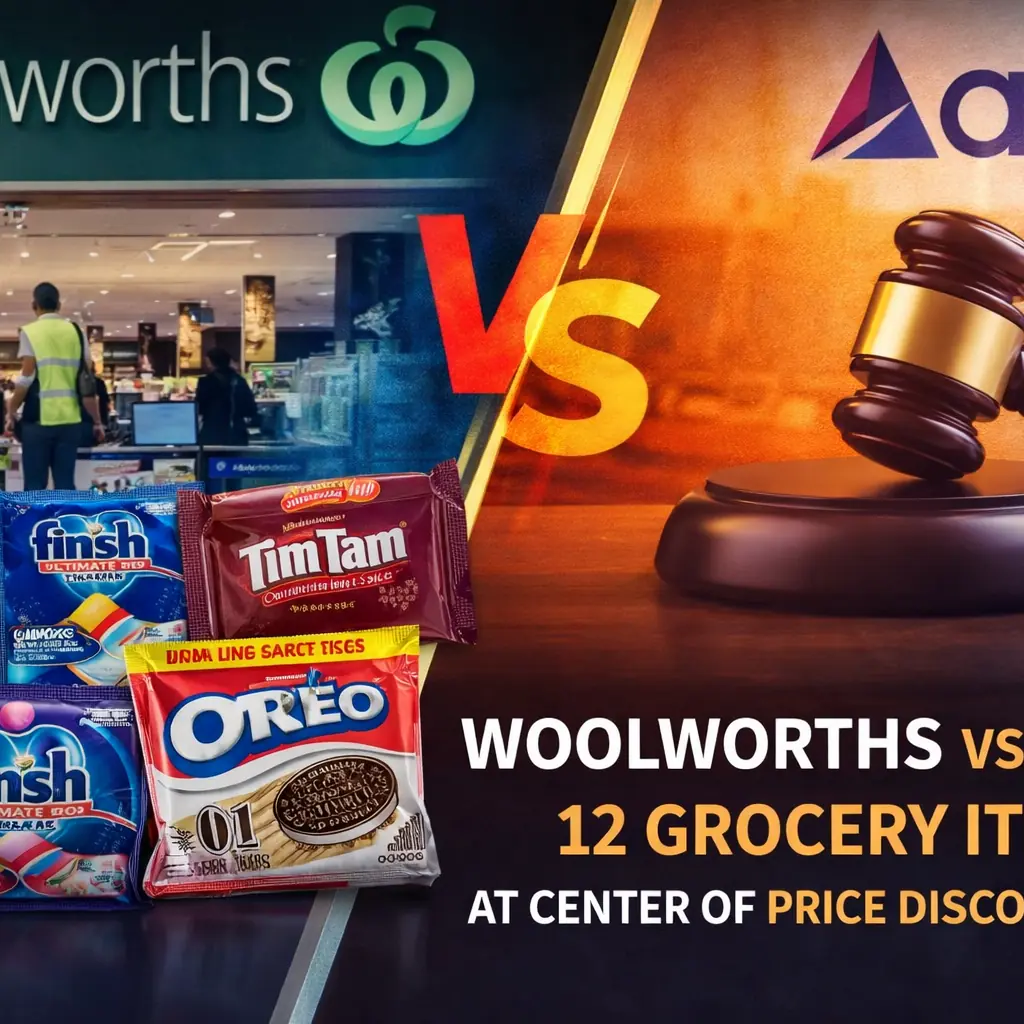

Woolworths is set to face a major legal test this week as Australia’s consumer watchdog takes the supermarket giant to court over claims that some of its widely promoted grocery discounts were not genuine. The case, which resumes in the Federal Court in Sydney, centers on whether the retailer misled customers through its “Prices Dropped” campaign during a period of intense inflation.
While the dispute originally covered hundreds of products, it has now narrowed to a closely watched list of 12 everyday grocery items — including Arnott’s Tim Tams, Oreo family packs, laundry powder, and pet food — turning ordinary supermarket staples into the focal point of a high-stakes legal battle.
ACCC targets ‘illusory’ discounts across 266 products
The Australian Competition and Consumer Commission (ACCC) alleges that Woolworths promoted discounts that were effectively misleading. According to the regulator, the retailer increased prices on certain items before later advertising them as part of price drop campaigns, giving shoppers the impression they were receiving a better deal.
The investigation spans a 20-month period from September 2021 to May 2023 and initially covered 266 products sold across Woolworths stores. The ACCC has described some of these discounts as “illusory,” arguing that the advertised savings did not reflect genuine reductions.
The case has since been refined to a basket of 12 key products, which will now be examined in detail during the court proceedings. These items, ranging from snacks to household essentials, were selected as representative examples of the broader pricing practices under scrutiny.
ACCC chair Gina Cass-Gottlieb previously confirmed that the regulator is seeking a significant penalty if the court finds Woolworths breached consumer law. More information on enforcement actions can be accessed via the ACCC’s official website.
Woolworths cites inflation and supplier pressure
Woolworths has strongly denied the allegations and says it will vigorously defend its pricing practices. The company maintains that it did not mislead customers and argues that the broader economic environment must be taken into account.
According to the retailer, the period following the COVID-19 pandemic saw “extraordinary inflation,” which significantly increased costs across supply chains. Woolworths says it worked closely with suppliers during this time to reduce the impact on customers and that its “Prices Dropped” program was part of that effort.
“At no stage did we mislead or deceive customers,” a company spokesperson said, adding that the business respects the ACCC’s role but fundamentally disagrees with the claims being made.
The company also pointed to rising supplier costs and ongoing pressure from factors such as fuel prices as key drivers behind pricing decisions during the period in question.
Coles case already underway as sector faces scrutiny
The legal challenge is not limited to Woolworths. Rival supermarket chain Coles is also facing similar allegations from the ACCC, with its defense already heard in court earlier this year. A final judgment in the Coles case is still pending, adding another layer of uncertainty across the sector.
Together, Woolworths and Coles dominate Australia’s grocery market, meaning the outcome of these cases could have far-reaching implications for how supermarkets advertise prices and promotions nationwide.
If the ACCC succeeds in either case, it could undermine the long-standing narrative from major retailers that they consistently deliver value to customers, particularly during periods of rising living costs.
Market focus shifts to legal risk and earnings outlook
The timing of the case is significant. Both Woolworths and Coles are due to report their third-quarter sales updates on April 30 and May 1, respectively, placing additional attention on their pricing strategies and margin outlook.
Investors are also watching closely as legal proceedings introduce a new layer of uncertainty. While Woolworths shares have held relatively steady in recent trading, cases involving potential regulatory penalties can influence sentiment, particularly if reputational risks begin to affect consumer behavior.
At the same time, supermarkets are dealing with renewed pressure from suppliers seeking price increases as costs continue to rise. This creates a complex balancing act between maintaining margins and meeting customer expectations on affordability.
The court hearing, expected to run for eight days, is likely to bring further detail into the public domain about how pricing decisions were made and communicated to shoppers during one of the most volatile economic periods in recent years.
Although the case revolves around a relatively small group of products, its outcome could reshape how discounts are presented across Australia’s $100 billion grocery sector. For consumers, it may change how promotional pricing is interpreted. For retailers, it could define the boundaries of how value is marketed in an increasingly competitive environment.
You may like Hot Air Balloon Emergency Landing in Temecula Backyard Stuns Residents.

Make Swikblog your go-to source on Google for reliable updates, smart insights, and daily trends.