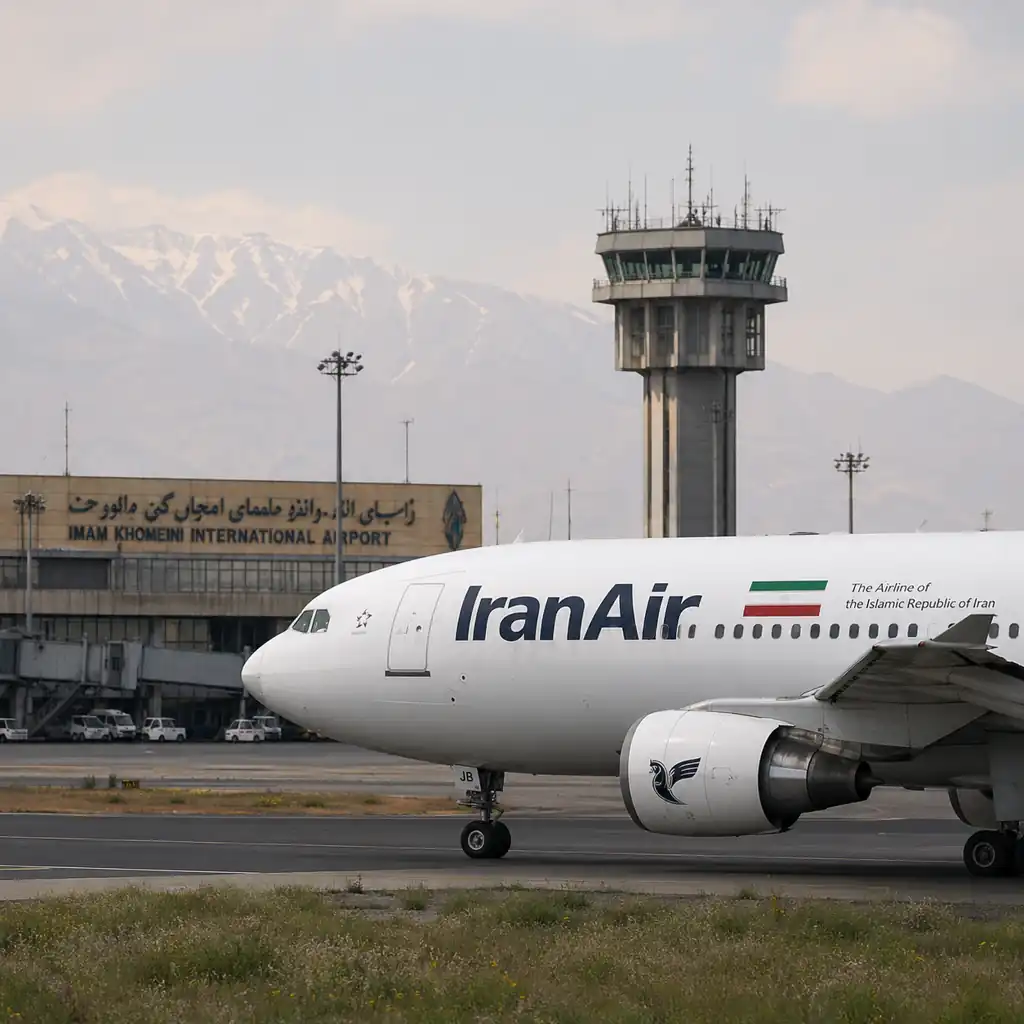

Iran has started allowing limited international flights from Tehran’s Imam Khomeini International Airport again, giving passengers and airlines the first clear sign that the country’s aviation network is slowly returning after weeks of disruption linked to the recent conflict.
The reopening is being handled carefully rather than as a full return to normal operations. Flights from Tehran are expected to restart first on selected regional routes, including Istanbul and Muscat, while passenger arrivals and departures are being restored in phases. Iranian carriers are likely to handle much of the early traffic as authorities issue fresh approvals for additional schedules.
For travelers, the decision matters because Tehran’s Imam Khomeini Airport is Iran’s main international gateway. When operations were disrupted, passengers faced canceled journeys, limited exit options and uncertainty over when regular commercial travel would resume. The gradual restart now offers some relief, though flight availability is still expected to remain limited in the near term.
A cautious reopening, not a full recovery
The return of flights should not be read as a complete normalization of Iran’s skies. Aviation authorities appear to be reopening routes step by step, likely balancing commercial pressure with safety and security concerns. In conflict-affected regions, airspace decisions are rarely simple. Governments must consider military risks, airline insurance, airport readiness, air traffic control capacity and the willingness of carriers to operate.
That is why the first routes are important. Istanbul gives Iranian passengers access to one of the world’s busiest international hubs, connecting Tehran with Europe, North America and other major destinations. Muscat, meanwhile, provides a key Gulf connection at a time when regional travel and trade links remain sensitive. These routes are practical choices for a controlled restart because they serve both passenger demand and diplomatic connectivity.
The move also carries economic meaning. Aviation is not just about tourism. International flights help move business travelers, medical passengers, students, officials and cargo-linked personnel. Even a limited reopening can help reconnect companies, families and institutions that were cut off during the shutdown.
Iran’s economy is already under pressure from inflation, sanctions, trade disruptions and the wider cost of conflict. A functioning airport network can ease some strain by restoring movement across borders. However, the benefits will depend on whether the reopening expands beyond a handful of routes and whether airlines feel confident enough to increase frequency.
Why Tehran airport’s restart matters beyond Iran
Iran’s airspace sits near important corridors between Asia, Europe and the Middle East. When regional tensions rise, airlines often avoid large sections of airspace, creating longer routes, higher fuel costs and operational delays. A stable reopening could eventually help improve regional flight planning, although global carriers are likely to move slowly before returning to wider use of Iranian routes.
Passengers should still expect uncertainty. Airlines may change schedules quickly as new approvals are issued or withheld. Travelers flying to or from Iran should check directly with carriers before departure and monitor airport updates closely. A flight being listed does not always mean conditions will remain unchanged, particularly when security assessments are evolving.
The reopening also comes against a complicated political backdrop. Iranian officials have been trying to project unity after a turbulent period marked by conflict, internal pressure and questions over the direction of leadership. Public messaging has focused on stability and national resilience, but reports of disagreement within the political system suggest the recovery phase may be difficult to manage.
That matters because aviation policy is closely tied to broader national security decisions. If tensions ease further, more routes could be approved and international travel may expand. If disputes deepen or the ceasefire environment weakens, authorities could slow or reverse the reopening. For airlines, predictability is essential. Without it, carriers may hesitate to restore larger operations.
The restart of commercial flights from Tehran therefore represents both progress and caution. It shows that Iran wants to reconnect with the region and reduce the visible signs of wartime disruption. At the same time, the limited nature of the reopening suggests officials are not ready to declare a full return to normal life.
For ordinary Iranians, the return of international flights may feel like a small but meaningful step. It can help families reunite, allow students and workers to travel, and give businesses a route back into regional markets. Yet the broader recovery will take more than planes taking off again. Inflation, supply problems, damaged confidence and political uncertainty remain major challenges.
From an aviation perspective, the coming days will be important. If flights to Istanbul and Muscat operate smoothly, authorities may approve more routes and higher frequencies. If disruptions continue, the reopening could remain narrow and fragile.
For now, Tehran’s skies are opening again, but carefully. The return of international flights from Imam Khomeini Airport is a visible sign that Iran is trying to move beyond the immediate shock of conflict. Whether this becomes the start of a sustained recovery or only a temporary pause in a volatile period will depend on security conditions, regional diplomacy and the confidence of airlines and passengers.
For official global aviation safety guidance, readers can refer to the International Air Transport Association. For more regional updates, read our coverage on Middle East news and global market developments.
You may like: RAAF ANZAC Day Flypasts 2026: Victoria Schedule, PC-21 and King Air Details

Make Swikblog your go-to source on Google for reliable updates, smart insights, and daily trends.