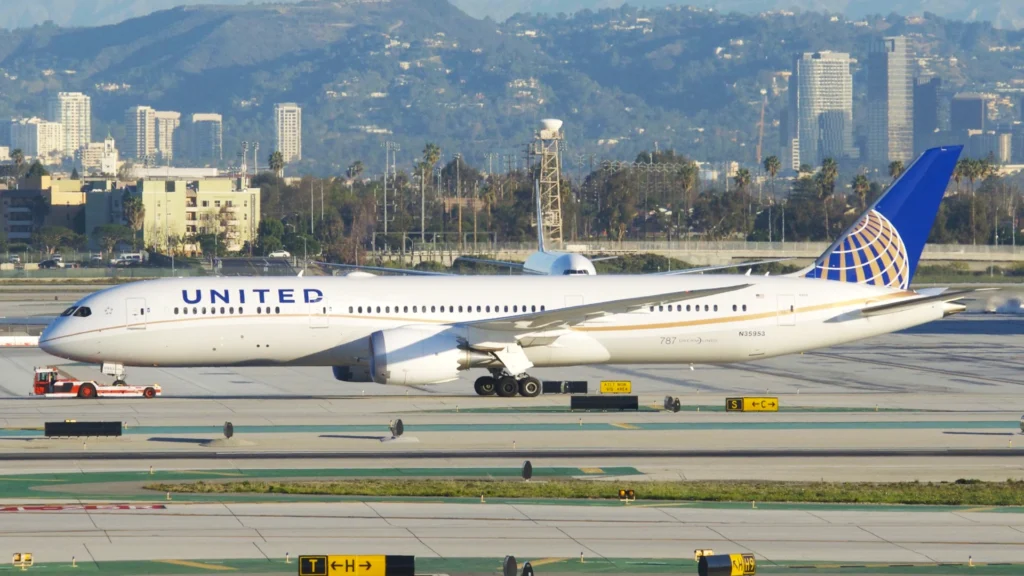

United Airlines’ newest Boeing 787-9 Dreamliner suffered an early operational setback after a technical issue forced the aircraft to return to Singapore during its first international long-haul assignment.
The aircraft, registered N61101, was operating United Flight UA2 from Singapore Changi Airport to San Francisco when the crew detected an unusual electrical smell in the cabin after departure. Rather than continue across the Pacific on one of the airline’s longest routes, the pilots turned the aircraft back to Singapore, where it landed safely.
The incident drew attention because this was not an ordinary 787 in United’s fleet. The jet is the first Boeing 787-9 fitted with the airline’s new “Elevated” cabin, a premium-heavy layout created for some of United’s most competitive international routes.
United’s New 787 Returns to Singapore After Cabin Odor
Flight UA2 departed Singapore for San Francisco on April 24, shortly after the same aircraft had completed its first inbound international flight from San Francisco as UA1. The aircraft had arrived in Singapore earlier that morning after a long transpacific sector, before being prepared for the return journey to California.
Not long after takeoff, passengers and crew became aware of an electrical-type odor inside the cabin. On ultra-long-haul routes, such concerns are treated with extra caution because the aircraft may soon be far from major diversion airports once it crosses deeper into the Pacific region.
The flight crew requested a return to Singapore and entered a brief holding pattern before landing. Holding patterns are often used in such situations to reduce aircraft weight before landing, especially when a long-haul aircraft has departed with a heavy fuel load for a flight lasting more than 15 hours.
United later attributed the disruption to a maintenance issue, though the airline did not publicly provide a detailed technical explanation. The flight was ultimately cancelled, leaving passengers to be reaccommodated while engineers inspected the aircraft.
The safe return highlights how airline crews are trained to respond conservatively when any possible electrical or smoke-related concern emerges. Even when the source is unclear, pilots generally avoid continuing a long oceanic flight until the aircraft has been checked by maintenance teams.
Why This Aircraft Matters to United Airlines
The Dreamliner involved in the incident is important because it represents the next phase of United’s long-haul cabin strategy. The aircraft was delivered to the airline in early March 2025 and entered commercial service on March 29 after final cabin work and engineering checks.
Before sending it across the Pacific, United had operated the jet on domestic services from San Francisco for several weeks. Airlines often use this type of short-haul introduction period to observe aircraft performance, crew procedures, cabin reliability, and any early technical issues before assigning a new aircraft to demanding international missions.
The San Francisco–Singapore route was therefore a significant step. It is one of United’s flagship long-haul services and demands high aircraft reliability because of its length, fuel planning, crew scheduling, and limited diversion options along parts of the route.
The aircraft’s cabin is also built around United’s premium revenue ambitions. It includes 56 Polaris Business Class suites with sliding privacy doors, eight Polaris Studio seats, 35 Premium Plus seats, and 123 economy seats. Of the economy seats, 39 are Economy Plus, offering additional legroom.
The Polaris Studio product is especially notable because it gives United a more upscale business-class option with extra space and upgraded service. This type of cabin design is aimed at corporate travelers and premium leisure passengers willing to pay more for comfort on long-haul flights.
By placing fewer standard economy seats and more premium seats on the aircraft, United is signaling where it sees stronger margins on international routes. That makes any disruption involving this aircraft more visible, particularly during the early stage of its rollout.
Technical Checks and Costly Disruption
After the aircraft returned to Singapore, maintenance teams began examining the possible source of the odor. Reports suggested engineers looked at whether the issue could be replicated on the ground. Early attention reportedly included systems linked to the aircraft’s GEnx engines and other electrical or onboard components, though no final cause was publicly confirmed.
United also considered options to recover the flight, including a possible routing through Honolulu with a fresh crew. Such planning can help airlines manage crew duty-time limits on disrupted ultra-long-haul services. However, the aircraft was not cleared in time, and the service was cancelled.
The aircraft was later expected to return to San Francisco under a non-routine flight number, indicating a ferry or repositioning flight without passengers. These flights can be expensive because the airline must move the aircraft while earning no passenger revenue.
For an airline, the cost of a disruption like this can extend beyond one cancelled flight. Passenger rebooking, hotel accommodation, crew scheduling, aircraft rotation changes, maintenance work, and lost premium revenue can all add up quickly.
Still, the most important outcome was that the aircraft landed safely and the issue was handled before the flight continued over the Pacific. Aviation regulators and airlines place strong emphasis on conservative decision-making in cases involving unusual smells, smoke warnings, or suspected electrical faults.
The Boeing 787 Dreamliner remains a central aircraft for global long-haul travel, used by airlines for its range, fuel efficiency, and cabin technology. Boeing describes the 787 family as designed for long-distance routes with improved efficiency and passenger comfort in its official Dreamliner program overview.
United’s setback does not automatically point to a wider issue with the 787 or with the airline’s new cabin product. New aircraft can face early maintenance findings as they enter service, and airlines routinely inspect and clear jets before returning them to scheduled operations.
However, the timing makes the incident difficult to ignore. This was the first “Elevated” 787-9 on its debut international route, carrying a cabin product that United is using to strengthen its position in premium long-haul travel.
For passengers, the incident may have caused frustration and delay, but the crew’s decision to return to Singapore reflects the safety-first approach expected in modern commercial aviation. For United, the priority now is identifying the source of the electrical smell, completing inspections, and restoring the aircraft to service only when engineers are satisfied it is ready.
The episode serves as an early test for United’s newest Dreamliner and its premium international strategy. While the aircraft’s long-term role in the fleet remains unchanged, its first global outing ended with a reminder that reliability matters just as much as luxury when airlines compete on ultra-long-haul routes.
For more airline updates, aircraft delivery stories, and route developments, visit our latest aviation news section.
You may like: Flying Blue Adds New Rewards at 30,000 Miles Before Ultimate Status

Make Swikblog your go-to source on Google for reliable updates, smart insights, and daily trends.