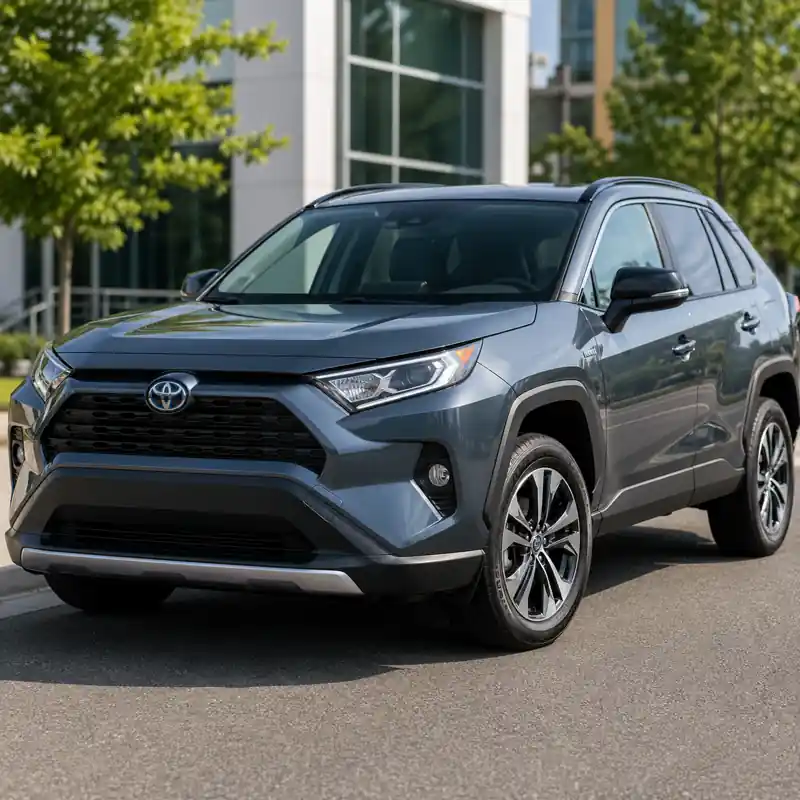

Toyota has announced a very small but safety-related recall for the 2025 Toyota RAV4 in the United States, and the number of affected vehicles is drawing attention. Only four RAV4 SUVs are included, even though the model remains one of Toyota’s strongest-selling vehicles in America.
The recall is unusual because of its tiny scale, but the defect itself is not something owners should ignore. The affected vehicles may have front seat rail brackets with welds that were not completed properly during production. Since these brackets help secure the seat to the vehicle body, Toyota is taking action before the issue leads to any reported incidents.
For readers tracking auto safety updates, this recall is a reminder that even a handful of vehicles can trigger a formal safety campaign when a critical crash-protection component is involved.
Why Toyota Is Recalling Only 4 RAV4 SUVs
The issue is tied to the way certain front seat bracket parts were welded at a supplier facility. During production, a shim on a welding jig was not installed correctly. That small setup error created interference in the welding process and damaged robotic equipment used on the line.
Once the welding robot and its tip-dressing equipment were affected, some welds on the front seat rail brackets may have been weak, incomplete, or missing. Toyota’s review found that the problem was limited to four 2025 RAV4 vehicles.
The concern is that, during a crash, a seat with improperly welded brackets may not remain secured as designed. If the seat moves or separates from its intended mounting position, the risk of injury could increase because the occupant may not be held in the correct position for the seat belt and airbag systems to work effectively.
Although the recall population is extremely small, Toyota’s decision reflects how automakers handle potential safety defects. A recall is not based only on how many vehicles are affected. It is also based on whether the defect could create a safety risk for drivers or passengers.
According to information filed with the National Highway Traffic Safety Administration, Toyota had not received field technical reports or warranty claims related to this condition as of April 15, 2026. That suggests the issue was found through inspection and internal review rather than after customer complaints or crash reports.
Vehicle owners can check open recalls by entering their VIN on the official NHTSA recalls lookup page. This is the most reliable way to confirm whether a specific vehicle is affected by a safety campaign.
What Affected Owners Should Know
Toyota is expected to notify the four affected owners between June 7 and June 21, 2026. Once notified, owners should schedule service with an authorized Toyota dealer. Recall-related repairs are typically completed at no cost to the vehicle owner.
For most 2025 Toyota RAV4 owners, there is no action needed unless their VIN appears in the recall database or they receive a notice from Toyota. The company’s ability to narrow the issue to only four vehicles shows that the problem was connected to a very specific manufacturing window rather than a widespread design issue.
This is also why the recall has gained attention beyond its actual size. Toyota sold 479,288 RAV4 units in the U.S. last year, making the affected group a tiny fraction of the model’s overall American sales. Still, the recall matters because seat mounting hardware is directly connected to crash safety.
Modern vehicles rely on a chain of protection systems during an accident. The seat frame, seat rails, seat belt, airbags, and vehicle body structure all need to work together. If one part of that system is compromised, even on a small number of vehicles, the manufacturer is expected to correct it quickly.
The incident also offers a rare look at how small production details can matter in automotive manufacturing. A misplaced shim may sound minor, but in a robotic welding setup, part positioning has to be exact. If the jig does not hold components in the correct place, weld quality can be affected. In this case, the error also damaged robot-related equipment, which helped Toyota trace the issue back to the source.
For Toyota, the recall may actually reinforce confidence among some buyers because the company identified the issue before it became a known field problem. No automaker is completely immune to production errors, but the key question is how quickly those errors are detected, contained, and fixed.
For more updates on recalls, vehicle safety campaigns, and ownership news, visit our auto news coverage.
The bottom line is simple: this is not a broad warning for all RAV4 owners, but it is important for the four affected drivers. Anyone who owns a 2025 Toyota RAV4 should take a minute to check their VIN, especially if they recently purchased the SUV and have not yet received any recall notice.
A four-vehicle recall may sound unusual, but safety campaigns are designed to address risk, not just volume. In this case, Toyota’s narrow recall shows how one small production error can be tracked through the manufacturing process and corrected before it becomes a larger problem.

Make Swikblog your go-to source on Google for reliable updates, smart insights, and daily trends.