
May 2026 is bringing an unusually rich month for skywatchers, starting with the full Flower Moon on Friday, May 1, and closing with a rare second full moon at the end of the month. For anyone who enjoys simple night-sky events that do not require special equipment, this is one of the easiest astronomy moments of the year to follow.
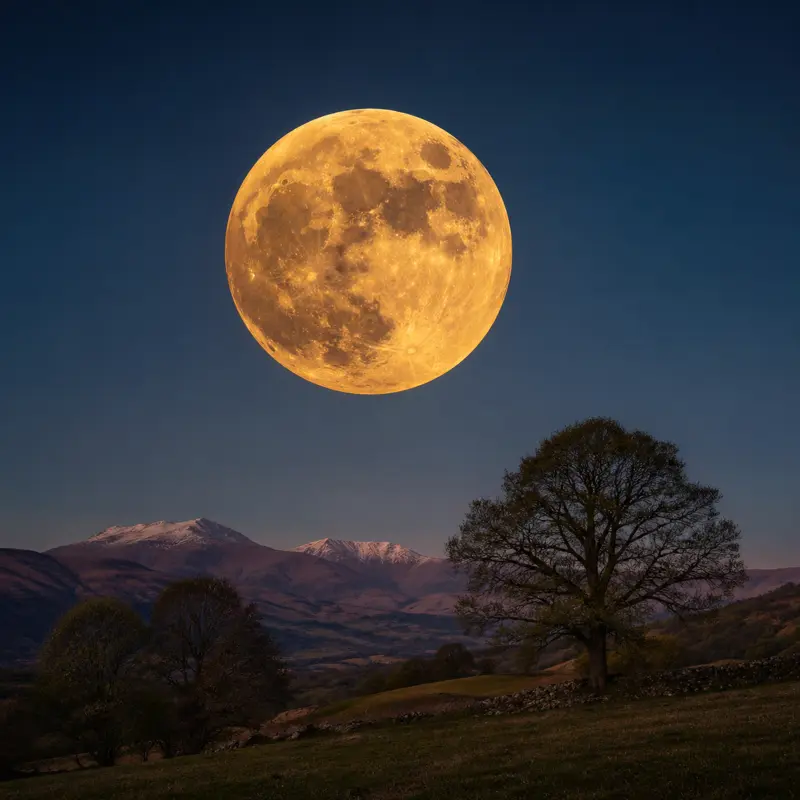
The Flower Moon will reach full phase on May 1, 2026, at around 17:23 UTC. In many locations, the exact peak will happen before moonrise, so the best viewing opportunity will come after sunset, when the Moon climbs above the eastern or southeastern horizon. At that point, it may appear warm, golden or orange, especially while sitting low in the sky.
The name Flower Moon is traditionally linked with the arrival of spring blooms across the Northern Hemisphere. By early May, wildflowers, blossom, greener fields and longer evenings give the season its familiar colour. According to Royal Museums Greenwich, many full moon names are connected to seasonal changes and natural cycles, which is why May’s full moon became closely associated with flowering plants.
Why the 2026 Flower Moon is slightly different
This year’s Flower Moon is also being described as a micromoon. That means the full moon happens when the Moon is close to apogee, the farthest point from Earth in its monthly orbit. The Moon does not travel around Earth in a perfect circle, so its distance changes during the month.
When the Moon is near apogee, it can be roughly 406,000 kilometres from Earth. When it is near perigee, the closest point in its orbit, it can be closer to about 363,000 kilometres. A full moon near perigee is often called a supermoon, while one near apogee is called a micromoon.
For most people, the difference will be subtle. The Moon will not look dramatically smaller, but it may appear slightly less bright than some other full moons. The most impressive view will still come during moonrise, when the low Moon can be framed against buildings, trees, hills or water.
That makes May 1 a strong opportunity for photographers. A phone camera can capture the wider scene, while a zoom lens or binoculars can reveal more detail on the lunar surface, including darker maria and brighter highland regions.
Why May 2026 has two full moons
The reason May 2026 has two full moons comes down to timing. A complete lunar cycle lasts about 29.5 days. Because the first full moon falls right at the beginning of May, there is enough time for another full moon before the month ends.
That second full moon is known as a Blue Moon. In this case, the term refers to the second full moon in a single calendar month, not the colour of the Moon. It will still usually appear white, silver or yellowish, though it may look orange near the horizon because of the way Earth’s atmosphere scatters light.
This calendar pattern does not happen every year, which is why the phrase “once in a Blue Moon” became associated with rare events. For skywatchers, it gives May 2026 two strong lunar dates: the Flower Moon at the start of the month and the Blue Moon near the end.
Other sky events to watch in May 2026
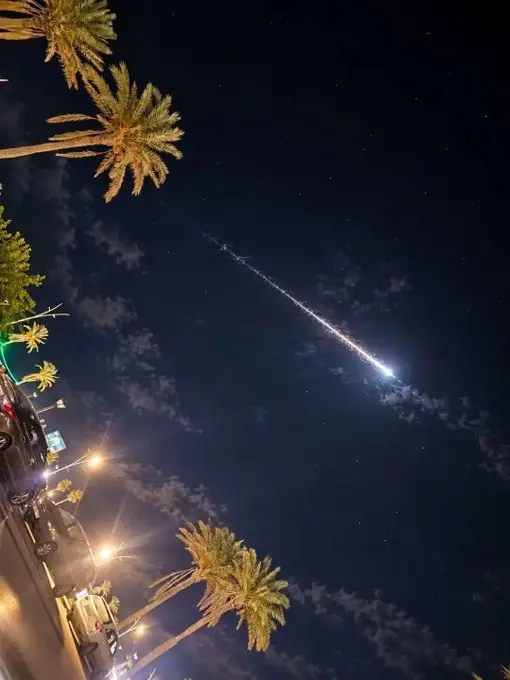
The full moons are not the only highlights. May also brings the Eta Aquarids meteor shower, which is expected to peak around May 6 and May 7. This shower is linked to dust left behind by Halley’s Comet. In darker locations, Northern Hemisphere observers may see around 10 to 30 meteors per hour, although moonlight and local weather can affect visibility.
The best time to watch the Eta Aquarids is usually before dawn. Viewers should choose a dark location away from bright streetlights, give their eyes at least 20 minutes to adjust, and look across the wider sky rather than staring at one fixed point.
Mid-May also brings good chances to see Earthshine. Around May 12–13, before sunrise, and again around May 19–20, after sunset, the crescent Moon may show a soft glow on its darker side. This happens when sunlight reflects from Earth’s clouds and oceans and then lights up the Moon’s night side.
On May 16, the Moon reaches its new phase while near its closest point to Earth. This is sometimes called a super new Moon. It will not be visible, because the Moon’s sunlit side faces away from Earth, but the darker night skies around this period can be useful for viewing faint stars, galaxies and the Milky Way from suitable locations.
Between May 18 and May 20, the waxing crescent Moon will also appear near Venus and Jupiter in the western sky after sunset. This bright grouping should be easy to spot if the horizon is clear, making it one of the month’s best evening scenes for casual observers.
How to get the best view
For the Flower Moon, the simplest advice is to look east shortly after sunset on May 1. A clear horizon will make the biggest difference. Open fields, rooftops, beaches, lakesides and hilltops can all improve the view.
Cloud cover will be the main challenge. Some areas may see patchy showers or thicker cloud around the start of May, but broken cloud can still allow dramatic glimpses of the Moon. Checking a local forecast before heading out will help decide the best viewing window.
No telescope is needed for the Flower Moon, the Blue Moon or the Moon’s meeting with Venus and Jupiter. Binoculars can add detail, but the main appeal of May 2026 is that most events are visible with the naked eye. From the first full moon to the final Blue Moon, the month offers a rare mix of beauty, timing and easy access for anyone willing to look up.
You may also like: 25-Million-Year-Old Platypus Fossils With Teeth Discovered in Australia

Make Swikblog your go-to source on Google for reliable updates, smart insights, and daily trends.