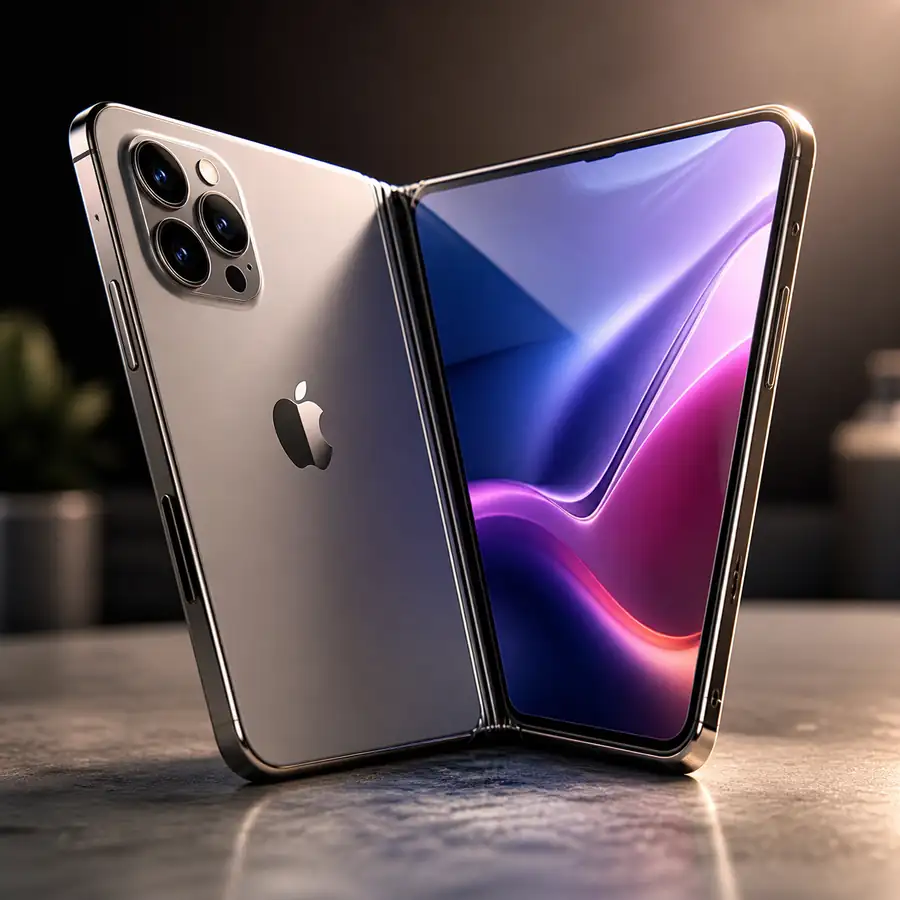

Apple’s foldable iPhone—expected to arrive as the iPhone Ultra—is quickly becoming one of the most talked-about launches in the smartphone industry. With leaks pointing toward a premium book-style foldable priced above $2,000, expectations are already sky-high.
But this isn’t the early smartphone era anymore. Apple is stepping into a market where Samsung, Google, and others have spent years refining foldable hardware. Simply launching a foldable iPhone won’t be enough. If anything, the pressure is higher than ever—because users now expect real innovation, not just a familiar logo.
As highlighted in early industry discussions and leak-based analysis, Apple’s biggest challenge isn’t building a foldable device—it’s delivering a user experience that actually justifies the price.
Apple’s foldable design looks promising—but that’s just the beginning
Leaks suggest the iPhone Ultra will follow a book-style folding design, similar to the Galaxy Z Fold series. More importantly, Apple appears to be focusing on a wider aspect ratio, something many users—and even competitors—are beginning to prefer.
This matters more than it sounds. A wider foldable display allows users to comfortably run two apps side by side without either feeling cramped. It also improves everyday tasks like browsing, reading, and watching content in landscape mode.
That alone could give Apple an advantage in usability. But design improvements like a less visible crease or a refined hinge, while important, won’t be enough to win over buyers in 2026.
The bigger issue is what happens after you unfold the device.
7 features Apple must deliver to compete with Samsung and Google
1. A dedicated foldable version of iOS
A foldable iPhone cannot feel like a stretched-out version of a regular iPhone. Apple needs a custom software experience designed specifically for larger screens—potentially with a dock, improved navigation, and better multitasking controls.
2. True multitasking that feels natural
Users expect to run multiple apps seamlessly. Whether it’s split-screen, floating windows, or quick switching, the experience must feel fluid—not like a workaround.
3. Smarter app scaling for developers
One of the biggest problems across all foldables today is poorly optimized apps. Apple has an opportunity to solve this by introducing system-level scaling tools that help apps adapt automatically—even if developers don’t fully optimize them.
4. A meaningful upgrade over standard iPhones
If the iPhone Ultra delivers the same experience as an iPhone Pro Max with a bigger screen, users won’t see the value. Apple must clearly define what makes this device different in everyday use.
5. A durable display with minimal crease
Reducing the crease is still a major challenge in foldables. Apple is expected to push advancements in hinge design and display materials—but it needs to go beyond incremental improvements.
6. Strong battery performance despite larger screens
Foldables demand more power. Apple must ensure that battery life keeps up with multitasking and larger displays without forcing users to compromise.
7. A clear use-case that justifies the price
At a price expected to exceed $2,000, the iPhone Ultra needs a compelling reason to exist. Whether it’s productivity, media consumption, or creative workflows, Apple must make that value obvious.
For a broader look at how current foldables compare and where Apple could position itself, this detailed report from Tom’s Guide offers useful context.
The real problem: software still holds foldables back
Despite years of progress, no company has fully solved the foldable software experience. Samsung and Google have improved multitasking and app continuity, but the experience still often feels like a compromise rather than a breakthrough.
This is where Apple has an opportunity—but also a risk.
If Apple delivers a foldable that feels like “just a bigger iPhone,” it will struggle to stand out. Users paying a premium expect something transformative—not incremental.
And there are concerns. Apple’s recent software track record has been inconsistent, with some updates receiving criticism for lack of polish. That raises questions about whether the company can deliver a truly refined foldable experience on its first attempt.
Why Apple’s strategy raises questions
Another surprising move is Apple’s decision to reportedly start with a book-style foldable instead of a clamshell design.
Clamshell foldables—like the Motorola Razr—are easier for users to understand. They function like a regular smartphone but fold into a more compact form. They’re also generally more affordable and less disruptive.
By contrast, book-style foldables are more complex, more expensive, and appeal to a narrower audience.
This suggests Apple isn’t trying to ease into the foldable market—it’s aiming straight for the premium segment. That’s a bold move, but it also increases the risk if expectations aren’t met.
Apple can’t rely on brand power alone anymore
In the past, Apple could enter a category late and still dominate simply through brand strength and ecosystem advantages. But the foldable market is different.
Today’s consumers are more informed, and competitors are more advanced. When spending over $2,000, buyers expect more than design—they expect real value and innovation.
Apple will still generate massive attention when the iPhone Ultra launches. Marketing, ecosystem integration, and brand loyalty will ensure strong interest.
But long-term success will depend on whether the device genuinely improves how people use their phones.
Foldables are no longer just a novelty—they’re evolving into a serious category. And with the iPhone Ultra, Apple has a chance to redefine it—or risk blending into a market that has already moved ahead.
Read more tech coverage on Swikblog.
You may like: Australia Powerball Results March 5, 2026: Draw 1555 Winning Numbers & Jackpot Update

Make Swikblog your go-to source on Google for reliable updates, smart insights, and daily trends.