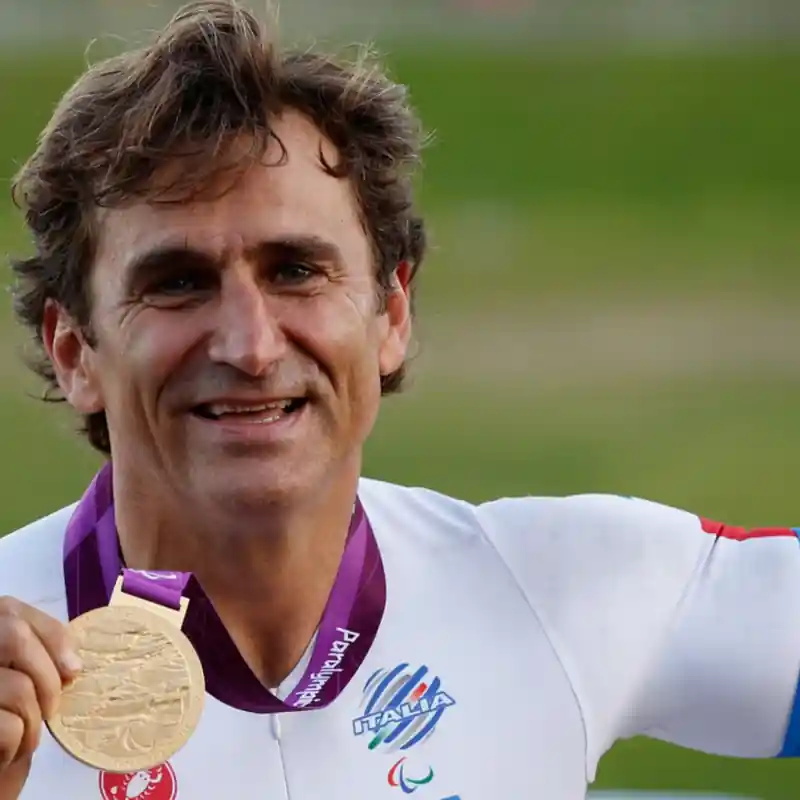

Alex Zanardi, the Italian racing driver who later became one of the most admired Paralympic athletes in the world, has died at the age of 59. His death closes the chapter on a sporting life marked by speed, reinvention, severe adversity and an extraordinary refusal to be defined by tragedy.
Zanardi’s family confirmed that he died peacefully, surrounded by loved ones. No official cause of death has been announced. The news has brought emotional reactions from across motorsport, Paralympic sport and Italy, where he was widely regarded as a national symbol of courage.
For many fans, Zanardi was more than a former Formula One driver or a decorated handcyclist. He represented something larger: the ability to rebuild a life after devastating loss and still compete at the highest level.
From Formula One to American racing fame
Born in Bologna, Zanardi built his early career through European racing before reaching Formula One in the 1990s. He drove for Jordan, Minardi, Lotus and Williams, making 41 Grand Prix starts during a period when breaking through in F1 was brutally difficult.
Although Formula One did not bring him the results his talent deserved, Zanardi found his true stage in American open-wheel racing. In CART, he became one of the standout drivers of the decade, known for bold overtakes, late-braking moves and a style that made him impossible to ignore.
He won CART championships in 1997 and 1998, building a reputation as a fearless competitor. His famous pass at Laguna Seca’s Corkscrew became one of the defining moments of his racing career and remains part of motorsport history.
A return to Formula One with Williams in 1999 proved difficult, and Zanardi later went back to racing in America. Then, in September 2001, his life changed forever during a CART race at the Lausitzring in Germany.
After spinning while rejoining the track, Zanardi’s car was struck at high speed. The crash was catastrophic, and both of his legs were severed. The motorsport world feared the worst, but Zanardi survived after emergency medical treatment and a long recovery process.
A second sporting life few could imagine
What followed became one of the most powerful comeback stories in modern sport. Zanardi did not want pity, and he did not allow the accident to become the final line of his competitive career. During rehabilitation, he helped design his own prosthetic legs and gradually learned to walk again.
He later returned to racing using specially adapted cars with hand controls for acceleration and braking. His comeback was not symbolic. He competed seriously, won races in touring cars and showed that his racing instincts were still sharp.
But Zanardi’s second sporting life reached even greater heights when he turned to handcycling. What began as a new challenge became a world-class career.
At the London 2012 Paralympic Games, he won two gold medals and one silver. The setting made the achievement even more meaningful: Brands Hatch, the British circuit where he had once raced as a driver, became the place where he celebrated Paralympic glory.
Four years later in Rio, Zanardi added more medals, including golds in handcycling events. Across the 2012 and 2016 Paralympics, he won four gold medals and two silvers, making him one of the most celebrated Paralympic athletes of his era.
His official Paralympic profile details the scale of his success and his transition from motor racing to elite handcycling through the International Paralympic Committee.
Zanardi also competed in major endurance events, including marathons and Ironman competitions. In 2018, he set an Ironman world record in the disabled category in Cervia, Italy, another example of how far he was willing to push his body and mind.
The 2020 accident and years away from public life
In June 2020, Zanardi suffered another devastating accident while taking part in a handbike relay event in Tuscany. He collided with a truck and sustained serious facial and cranial injuries. He was placed in a medically induced coma and underwent lengthy treatment.
After that crash, Zanardi’s public appearances became rare. Updates about his recovery were limited, and his family largely protected his privacy. Even so, supporters around the world continued to follow his story and send messages of strength.
That second accident added another painful chapter to a life already shaped by survival and recovery. Yet it did not erase what he had already given to sport: proof that achievement after trauma can be real, competitive and deeply meaningful.
Why Alex Zanardi’s legacy reaches beyond sport
Zanardi’s impact was not built only on medals or championships. It came from the way he carried himself after every setback. He was often described as warm, funny, curious and full of life, with an ability to make people feel hopeful without turning his own pain into performance.
Formula One leaders, drivers, Paralympic officials and fans have remembered him as an inspiration. Italian leaders also paid tribute, calling him a figure who turned hardship into a lesson in courage and dignity.
His story continues to stand alongside other powerful sporting comebacks.
Zanardi is survived by his wife, Daniela, and their son, Niccolò. His family has asked for privacy during the mourning period while thanking people for their support.
Alex Zanardi will be remembered as a champion in two very different worlds: the high-speed world of motor racing and the endurance-driven world of Paralympic handcycling. But his deeper legacy is harder to measure. He showed millions that identity does not have to end with injury, that ambition can survive disaster, and that courage is often found in the decision to keep moving forward.
You may like: Melbourne weather today: Cloudy skies and flood watch across Victoria

Make Swikblog your go-to source on Google for reliable updates, smart insights, and daily trends.