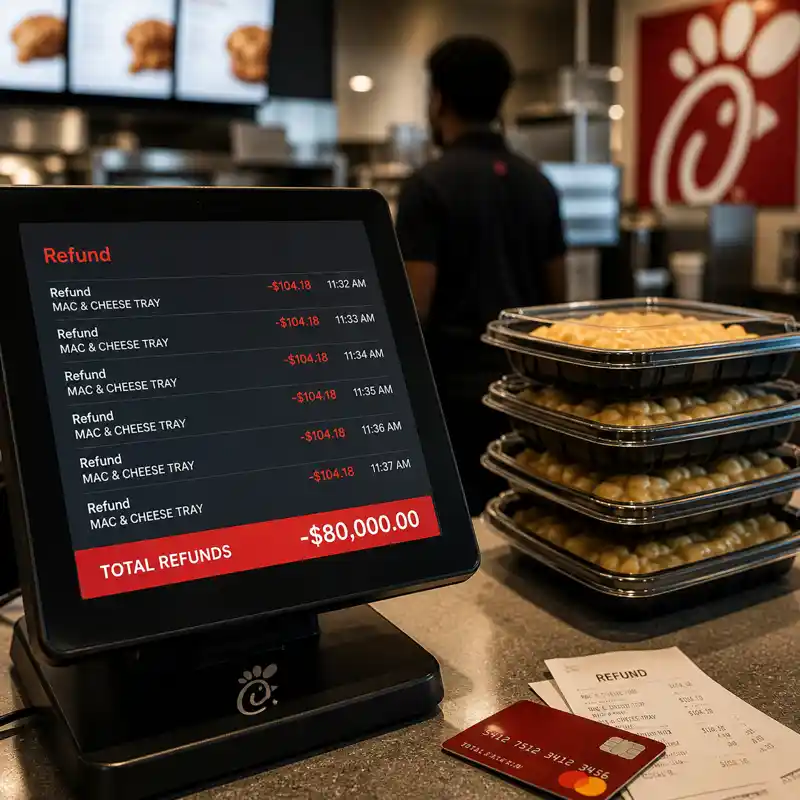

A fraud case involving a former Chick-fil-A worker in Grapevine, Texas, has put a fresh spotlight on how quickly weak internal controls can become expensive for restaurant operators. Authorities allege that Keyshun Darnell Jones, a former employee of a local Chick-fil-A franchise, used the store’s register system after being fired to process hundreds of refunds tied to fake food orders.
The alleged scheme was not built around one large transaction. Instead, investigators say it involved roughly 800 separate refunds, many connected to catering-style mac and cheese tray orders. By the time the suspicious activity was reported, the total loss was said to be more than $80,000.
According to details shared in the report, Jones was dismissed from the store in October 2025. About a month later, franchise owner Jarvis Boyd reported the suspected theft after financial irregularities were discovered. Police later said surveillance footage appeared to show Jones behind the counter without authorization, using the point-of-sale system to issue refunds to personal credit cards.
How Small Refunds Can Become a Major Loss
The case stands out because of the way the alleged fraud unfolded. Rather than drawing attention with a single unusually large refund, the activity reportedly relied on repeated transactions that may have looked routine when viewed individually.
Catering trays can carry higher prices than standard menu items, which means each refund may be larger while still appearing normal within a restaurant’s daily activity. Investigators allege that the orders were entered and then refunded, with the money directed to cards that had not been used for the original purchases.
Authorities have not publicly explained how the former employee allegedly regained access to the restaurant area or whether anyone else was on shift during the transactions. Those unanswered questions are part of what makes the case important for other restaurant owners and franchise operators.
Jones was eventually arrested on April 17, 2026, after what police described as multiple attempts to take him into custody. The Texas Attorney General’s Fugitive Task Force and Fort Worth Police assisted in the arrest. He has been charged with felony theft, money laundering and evading arrest. Court records cited in the report show bail was set at $5,000, with a court appearance scheduled for June 4.
The charges remain allegations, and Jones has not been convicted.
Why This Case Matters for Restaurants
Refund fraud is one of the quieter risks facing restaurants and retailers. Unlike a break-in or a visible shoplifting incident, refund abuse can happen inside normal business systems. That makes it harder to detect, especially when a person understands how the register, refunds and store routines work.
In 2024, consumers returned about $685 billion worth of merchandise, equal to more than 13% of total retail sales. Around $103 billion of those returns were linked to return and claims fraud, according to industry research from Appriss Retail and Deloitte. Employee theft also remains a major part of shrinkage, with internal cases often costing businesses more per incident than shoplifting.
Restaurant owners face a slightly different version of the same problem. High transaction volume, busy counters, shared workstations and staff turnover can create gaps. If refund activity is not reviewed regularly, unusual patterns may not be noticed until the money is already gone.
The Grapevine case also raises a basic but critical question: what happens when an employee leaves? Businesses are expected to revoke access quickly, including register credentials, alarm codes, key access, app permissions and any shared passwords. When that process is incomplete, a former worker may still have a path back into systems that should have been closed.
A report from Deloitte has noted that return fraud remains a costly pressure point for retailers, especially as transactions become more digital and refund processes move faster.
For franchise operators, the financial impact can be personal. Chick-fil-A’s model gives local operators responsibility for day-to-day business performance. A loss of more than $80,000 is not just an accounting issue; it can represent weeks or months of income for an individual franchise owner.
What Businesses Can Learn From the Allegations
The case offers a practical warning for restaurants, retailers and small business owners. Fraud prevention is not only about cameras or locked doors. It also depends on daily controls that are easy to overlook.
Every refund should leave a clear trail. Managers should review refund activity by employee, time of day, item type and payment method. A high number of refunds tied to one user, one product or one card should trigger a review. Businesses should also limit who can approve refunds above a certain amount and require manager confirmation for unusual transactions.
Offboarding should be handled the same day an employee leaves. That means removing system access, changing shared codes, collecting keys and reviewing any permissions linked to scheduling apps, payment systems or back-office tools. In restaurants with high turnover, this process should be written down and followed every time.
Customer-facing businesses also need to balance fraud prevention with service. When fraud losses grow, companies may respond with stricter refund rules, longer processing times or more identity checks. Honest customers often feel those changes first, even though the problem began behind the scenes.
The Chick-fil-A case is still moving through the legal system, and the facts will be tested in court. But the broader lesson is already clear for business owners: a refund button can become a financial risk when access, monitoring and accountability are not tightly controlled.
You may like: Potts Point shooting: Man shot dead by police after alleged attack in Sydney

Make Swikblog your go-to source on Google for reliable updates, smart insights, and daily trends.