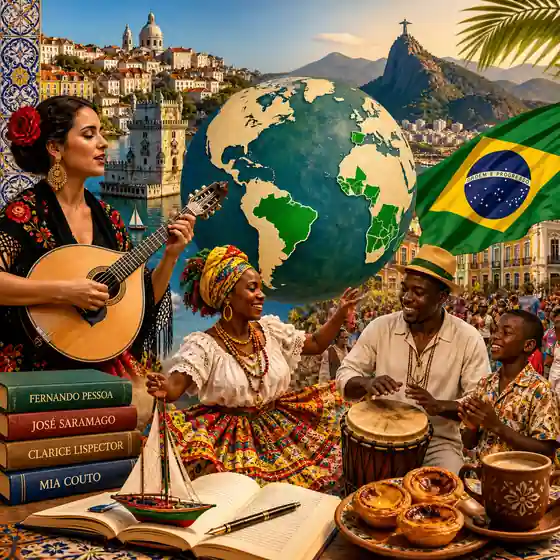

World Portuguese Language Day 2026 will be observed on Tuesday, May 5, bringing attention to a language that connects communities across Europe, South America, Africa and Asia. The day celebrates Portuguese as a language of culture, education, literature, music and international dialogue.
Spoken by more than 265 million people worldwide, Portuguese is far more than the national language of Portugal. It is a global language with deep historical roots and a strong cultural presence in countries such as Brazil, Angola, Mozambique, Guinea-Bissau, Cape Verde, São Tomé and Príncipe, Equatorial Guinea and Timor-Leste.
The 2026 observance is expected to highlight the language’s role in preserving identity, strengthening cultural exchange and encouraging new generations to explore the Lusophone world.
Why May 5 Is Celebrated as World Portuguese Language Day
The roots of the observance go back to 2009, when the Community of Portuguese Language Countries established May 5 as Portuguese Language and Culture Day. The date was chosen to promote cooperation among Portuguese-speaking nations and to recognize the cultural value of a language shared across continents.
A major milestone came in 2019, when UNESCO officially proclaimed May 5 as World Portuguese Language Day. That recognition gave the observance wider international importance and placed Portuguese among the languages celebrated for their contribution to cultural diversity and multilingualism.
According to UNESCO, the day supports linguistic diversity and encourages dialogue between cultures. This makes the event especially relevant at a time when languages are increasingly seen as important tools for education, inclusion and global cooperation.
Portuguese also has a long historical journey. It developed from Galician-Portuguese in the Iberian Peninsula and later spread through migration, trade, exploration and cultural exchange. Over time, it became a language with many voices, accents and traditions.
5 Key Facts About the Global Language Spoken by 265 Million
1. Portuguese is spoken across several continents. Unlike many languages tied mainly to one region, Portuguese has a truly global footprint. It is spoken in Europe, South America, Africa and parts of Asia. Brazil has the largest Portuguese-speaking population, while African nations such as Angola and Mozambique continue to play a growing role in the language’s future.
2. It is an official language in nine countries. Portuguese is the official language of Portugal, Brazil, Angola, Mozambique, Cape Verde, Guinea-Bissau, São Tomé and Príncipe, Equatorial Guinea and Timor-Leste. This wide official status gives the language political, educational and cultural importance in different parts of the world.
3. It is one of the most important languages in the Southern Hemisphere. Because of Brazil’s population and the growing influence of Lusophone African countries, Portuguese has a strong presence in the Southern Hemisphere. This gives it importance in business, diplomacy, media and international development.
4. The language has a rich literary and musical legacy. Portuguese has shaped major works of poetry, fiction, theatre and music. From Portugal’s fado traditions to Brazil’s samba and bossa nova, the language carries emotion, rhythm and cultural memory. Writers such as Fernando Pessoa and José Saramago helped bring Portuguese-language literature to global readers.
5. The number of speakers may continue to grow. Demographic growth in Portuguese-speaking African countries could increase the language’s global relevance in the coming decades. As education, digital media and international trade expand, Portuguese is likely to remain an important language for communication and cultural exchange.
World Portuguese Language Day is also a reminder that language is not only about grammar or vocabulary. It carries family histories, oral traditions, songs, recipes, prayers, memories and everyday expressions that define communities.
Many celebrations include poetry readings, cultural performances, academic discussions, art exhibitions, storytelling sessions and language workshops. Schools, cultural organizations and universities often use the day to introduce people to Portuguese literature, music and history.
For individuals, the day can be marked in simple but meaningful ways. Reading a Portuguese-language author, learning common phrases, listening to Lusophone music, watching a Portuguese or Brazilian film, or exploring the history of Portuguese-speaking countries can all be part of the celebration.
Digital platforms have also changed how the day is celebrated. Social media campaigns, online classes, virtual cultural events and AI-powered language tools are helping more people discover Portuguese. This is especially important for younger audiences who may connect with the language through music, films, short videos or online communities.
The 2026 celebration comes at a time when multilingualism is increasingly valued in education and global careers. Portuguese can open doors in diplomacy, tourism, international business, journalism, technology and cultural research. For students and professionals, learning the language can provide access to fast-growing regions and diverse cultural markets.
At its heart, World Portuguese Language Day 2026 celebrates unity through diversity. The Portuguese spoken in Lisbon, Rio de Janeiro, Luanda, Maputo or Dili may sound different, but it reflects a shared linguistic heritage. Those differences make the language richer, not weaker.
As May 5 approaches, the day offers a chance to appreciate Portuguese as a living global language. It is a language shaped by history, carried by millions and renewed every day through books, songs, conversations and cultural exchange.
World Portuguese Language Day 2026 is therefore more than a calendar event. It is a celebration of identity, connection and the enduring power of language to bring people together across borders.
You may like: Blood Moon total lunar eclipse: Exact totality times for March 3, 2026

Make Swikblog your go-to source on Google for reliable updates, smart insights, and daily trends.