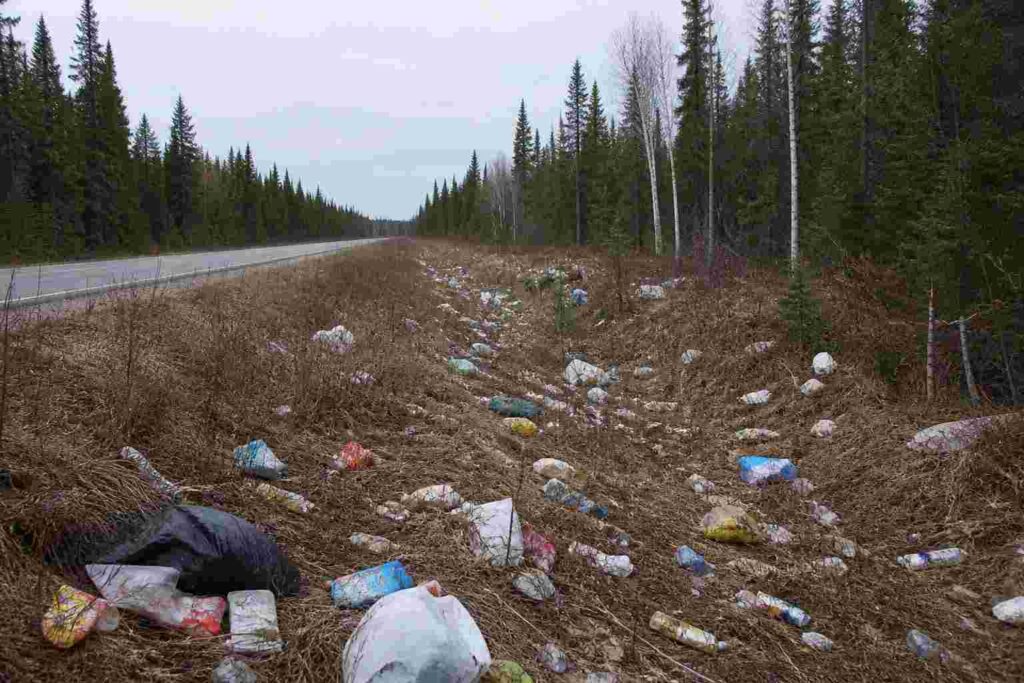

The snow has barely cleared across Northern Ontario, but what it’s left behind is triggering a wave of anger online. Long stretches of highway are now visibly covered in garbage—coffee cups, plastic bags, beer cans, and fast-food packaging scattered across roadside ditches.
What should be one of Canada’s most untouched landscapes is, for now, telling a very different story. And as images circulate, public frustration is quickly turning into a heated and deeply divided debate.
“Hundreds of kilometres of garbage”
Drivers say the scale of litter this year feels overwhelming. Entire highway shoulders appear lined with waste, stretching for kilometres through forested areas that would otherwise look pristine.
The reaction online has been immediate and emotional.
“By the time it took you to photo and post this you could have picked up some of this,” one commenter wrote, reflecting a growing frustration over inaction.
Others focused on the sheer volume: “It’s disgusting this year the amount of garbage and illegal dumping. It infuriates me.”
Some pointed to seasonal factors, noting that snowplows, wind, and wildlife can spread trash over time. But many aren’t convinced that explains everything.
Blame, frustration, and a divided conversation
As the discussion grows, the tone has shifted beyond environmental concern into something more contentious. Certain commenters have begun pointing fingers at specific groups, particularly truck drivers and newcomers.
Examples of reactions include statements like “Make all the truckers who put it there pick it all up” and “It’s a newcomer problem.”
Others made broader claims linking the issue to cultural habits or immigration, while some pushed back strongly against that narrative, arguing that littering is a widespread behavioral issue that cuts across all communities.
The result is a conversation that’s no longer just about trash—it’s about responsibility, perception, and frustration boiling over in public spaces.
The reality behind roadside litter
Environmental experts consistently point to a mix of causes. Littering from vehicles remains a primary factor, but it’s not the only one. Trash can escape from unsecured loads, get redistributed by snowplows during winter, or be scattered by animals and weather.
Remote highways may also lack frequent disposal points, increasing the likelihood that waste ends up on the roadside rather than in bins.
According to Canada’s waste management guidance, improper disposal continues to be one of the leading contributors to environmental pollution across the country.
A recurring issue that keeps returning each spring
Cleanup crews typically begin roadside collection efforts once conditions improve, but covering vast highway networks takes time. Until then, the problem remains highly visible—and highly debated.
For many residents, the frustration isn’t just about what they’re seeing now, but the feeling that the same situation repeats every year.
As the highways slowly get cleared, the bigger question lingers: whether the focus will stay on assigning blame, or shift toward preventing the problem from building up again next winter.

Make Swikblog your go-to source on Google for reliable updates, smart insights, and daily trends.