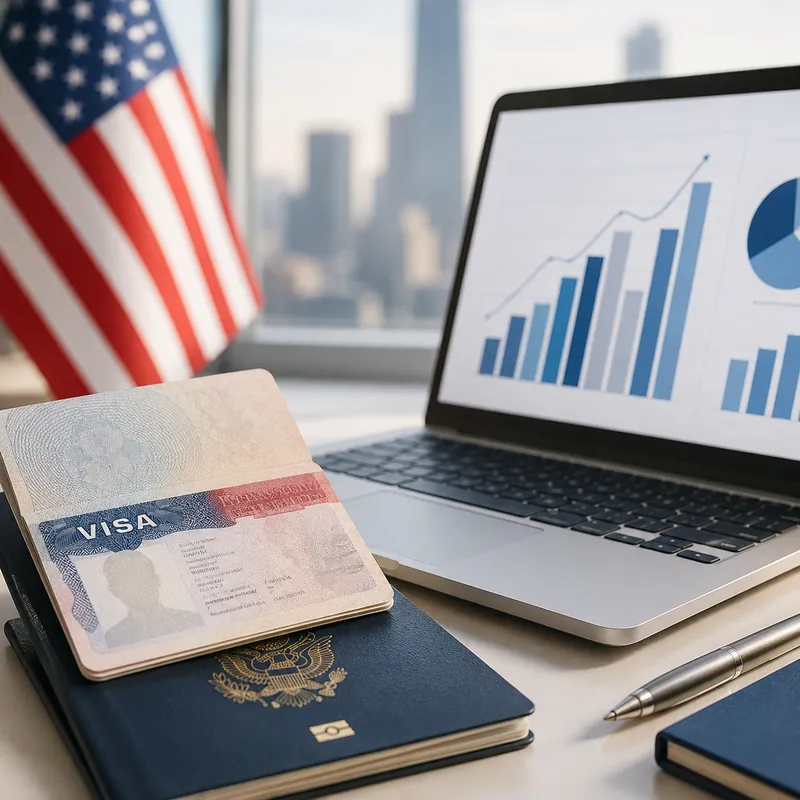

US employers that rely on skilled foreign workers could face a much higher salary bill under a new Trump administration wage proposal that would lift entry-level H-1B pay by more than 33%, pushing the national example wage for the lowest level from $73,279 to $97,746.
The proposal, issued by the US Department of Labor, is aimed at changing the way prevailing wages are calculated for several employment-based immigration routes, including H-1B, H-1B1, E-3 and PERM labour certification. If finalised, the change could reshape hiring decisions across technology, engineering, research, finance, healthcare and other skilled sectors where employers often sponsor foreign professionals.
The Department of Labor says the current wage system gives some employers room to hire foreign workers at pay levels below those offered to similarly skilled US workers. The agency said the proposed changes are designed to improve wage protections, reduce incentives to underpay foreign employees and support fairer competition in the American labour market. The official Department of Labor release says public comments on the proposal are due 60 days after publication in the Federal Register.
The numbers are the central reason this rule is drawing attention. Under the proposal, Level I wages would rise to $97,746, a jump of about 33.39%. Level II wages would increase from $98,987 to $123,212, while Level III would move from $121,979 to $147,333. Level IV, used for the most experienced workers, would rise from $144,202 to $175,464.
Key date: the proposal is not final yet. The public comment window closes on May 26, 2026, after which the Department of Labor will review feedback before deciding whether to issue a final rule.
Higher wage floors put entry-level H-1B hiring under pressure
The sharpest increase falls on entry-level positions, which could make early-career foreign hiring far more expensive. That matters because many H-1B applicants begin in junior software, data, engineering, consulting, academic or analyst roles before moving into higher-paid positions. A wage floor close to $98,000 could push some jobs out of reach for smaller employers, universities and startups that cannot match the salary budgets of large technology companies.
Large employers may have more room to absorb the increase, especially in high-paying metro areas where salaries already sit near or above the proposed levels. Smaller companies could face a harder calculation. Sponsoring a foreign worker already involves legal costs, filing costs, compliance duties and timing uncertainty. A higher required salary adds another layer to that decision.
The proposal also arrives after a broader period of immigration cost pressure. Swikblog previously covered Trump’s US$100,000 H-1B visa fee policy, which intensified debate over whether the programme should prioritise only the highest-paid roles or remain accessible to a wider range of skilled workers and employers.
For workers, the impact is more complicated. Some foreign professionals could benefit if the rule forces employers to offer higher pay. Higher wage standards may strengthen compensation for skilled workers and reduce the risk of lowball offers. But the same rule could also reduce the number of available sponsorships, especially for graduates, junior employees and candidates applying outside the largest corporate hiring pipelines.
Immigration lawyers and employer groups are likely to focus heavily on implementation details. Prevailing wages vary by job, location and experience level, so the real-world effect will not be identical across the country. A software role in California, a university research role in Ohio and a healthcare role in Texas may all be affected differently depending on the local wage data used for each occupation.
Tech firms, startups and universities face a new cost debate
The H-1B programme has long sat at the centre of America’s skilled immigration fight. Employers argue it helps fill gaps in science, technology, engineering, healthcare and research when domestic talent is limited. Critics argue the system can be used to hold down wages or replace US workers with lower-cost labour. This proposal is designed to answer that criticism by making foreign hiring less attractive unless employers are willing to pay closer to higher market levels.
The administration’s approach also echoes earlier efforts to revise H-1B wage rules. A previous attempt during Trump’s first term faced legal challenges after being rolled out without the usual notice-and-comment process. This time, the government is using formal rulemaking, meaning public comments will play a key role before any final version takes effect.
For employers, the practical response may begin before the rule is final. Companies could review pending hiring plans, salary bands, job descriptions and visa sponsorship budgets. Roles that were viable under the old wage structure may need to be re-priced, moved to different locations, delayed or dropped altogether if the final rule closely follows the proposal.
The policy signal is clear: the Trump administration wants the H-1B programme to tilt toward higher-paid roles and reduce any cost advantage from hiring foreign workers. Whether that produces stronger wage protection or fewer opportunities for skilled immigrants will depend on the final rule, employer response and the scale of legal challenges that may follow.
Until then, the May 26 deadline gives businesses, workers, universities and immigration advocates a narrow window to shape one of the most consequential proposed changes to US skilled-worker hiring in 2026.
Read More
- Beaudesert Dog Attack: Toddler Fighting for Life
- Missing Hiker Found Dead in Glacier National Park
- Historic Lake District Pub Closes Amid UK Pub Crisis
- CRA Data Breach Settlement: Canada 2020 Hack Compensation
- Bunnings Free Mother’s Day Event: High Tea Australia
- Visit Swikblog Homepage

Make Swikblog your go-to source on Google for reliable updates, smart insights, and daily trends.