
Heytesbury’s acquisition of Vroon’s Livestock Express fleet is not just another shipping deal. It is a strategic move that places one of Australia’s largest cattle operators much closer to the centre of the global live animal supply chain, at a time when reliable livestock transport has become increasingly important for exporters, feedlots and overseas buyers.
The Holmes à Court family-owned pastoral company has agreed to buy 11 purpose-built live export vessels from Dutch shipping group Vroon, along with 100% of the shares in Livestock Express. The deal gives Heytesbury control of a specialised fleet that already carries livestock across key international trade routes, including the northern Australian cattle corridor into Indonesia and other parts of South-East Asia.
For Heytesbury, the purchase marks a major step beyond cattle stations and landholdings. The company runs about 165,000 head of cattle across 2.7 million hectares in northern Australia, including the famous Victoria River Downs. By adding a major shipping platform, Heytesbury is moving deeper into the infrastructure that connects Australian cattle producers with international protein markets.
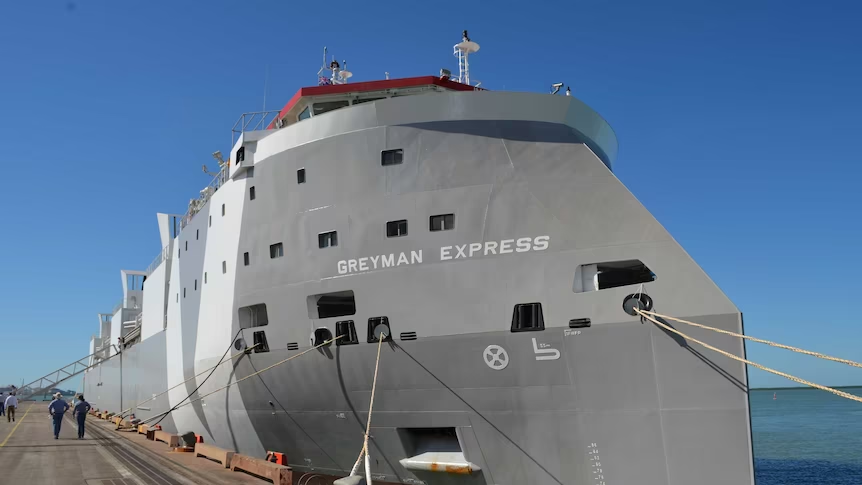
The vessels included in the transaction are the Brahman Express, Friesian Express, Galloway Express, Ganado Express, Gelbray Express, Girolando Express, Gloucester Express, Greyman Express, Gudali Express, Murray Express and Shorthorn Express. Several of these ships are already well known in Australia’s northern live export trade, particularly on routes supplying Indonesia.
Vroon’s Livestock Express business has long presented itself as the world’s largest provider of premium livestock tonnage, with about 60 years of experience in the sector. The company says its modern purpose-built fleet transports between 600,000 and 750,000 livestock each year, including cattle, sheep, horses and goats.
Why this deal gives Heytesbury more than ships
The most important part of the transaction is not only the number of vessels. It is the control of capacity, technical expertise and customer relationships in a highly specialised shipping market. Livestock carriers are not standard cargo ships. They require purpose-built systems for ventilation, feeding, watering, drainage, monitoring and animal welfare during long sea journeys.
Vroon was widely viewed as one of the companies that helped lift technical standards in the trade. Industry figures have credited the group with moving away from older converted vessels and toward modern new-build ships designed specifically for livestock transport. That reputation matters because live export is closely watched by regulators, animal welfare groups and trading partners.
Heytesbury already had a connection with the sector before this deal. In 2019, the company bought the MV Ocean Swagman, which was later operated by Livestock Express. That earlier move now looks less like a one-off investment and more like the first step toward a much larger position in livestock shipping.
The acquisition also includes Livestock Express’s Singapore office and technical management services for third-party vessels. That means Heytesbury is gaining more than physical ships. It is also taking on an operating base, shipping knowledge, client relationships and technical management capability in a global business.
Vroon chief executive Martijn Schouten said the sale places the business in the hands of a strategic owner and gives the Livestock Express team and legacy a strong outlook. For Vroon, the divestment also supports a sharper focus on other maritime markets, including energy, liquids, emergency response, rescue services, offshore infrastructure and offshore wind.
Financial terms were not disclosed, but industry estimates suggest the value of the transaction could run into hundreds of millions of dollars. That would reflect the scale of the fleet, its technical quality and the scarcity of modern livestock shipping capacity.
What it means for Australia’s cattle export trade
For Australian exporters, the immediate message from the deal is stability. Australian Cattle Enterprises managing director Patrick Underwood said his company was chartering the Girolando Express for the rest of the year and had been assured operations would continue as normal. That is important because vessel access can directly affect export schedules, cattle movements, port planning and customer supply.
Indonesia remains one of the most important destinations for Australian live cattle. The trade supports northern cattle producers, exporters, port workers, shipping operators and overseas feedlot networks. Ships such as the Greyman Express and Girolando Express are part of that system, moving livestock from northern ports into markets where live cattle are finished and processed locally.
The deal may also be read as a sign of confidence in Australia’s live export sector, despite political pressure and public debate over animal welfare. Live sheep exports from Australia have faced a planned phase-out, and cattle exporters know the industry remains under scrutiny. Against that backdrop, a major investment by Heytesbury suggests confidence that live cattle exports will continue to play a role in regional food supply chains.
Read More
At the same time, the purchase brings responsibility. Owning the world’s most prominent livestock shipping platform means Heytesbury will face close attention over vessel maintenance, welfare performance, crewing standards and operational transparency. The company will need to preserve the high technical reputation built under Vroon if it wants exporters and regulators to view the deal positively over the long term.
The transaction also reflects a broader shift in agribusiness. Large producers are no longer focused only on farms, stations and livestock numbers. Control over transport, market access and logistics is becoming more valuable as global food supply chains face pressure from weather disruption, disease risk, regulation and shifting demand.
For northern Australia, the deal could strengthen the link between cattle production and export infrastructure. Heytesbury’s land and herd scale already give it a major presence in the pastoral industry. With Livestock Express, it now gains a stronger role in the movement of livestock across oceans.
Swikblog has previously reported on wider export momentum for Australian beef, including China approving 15 new Australian beef export licences amid supply concerns. The Heytesbury-Vroon deal fits into that larger story of Australian protein remaining important to overseas markets, even as trade conditions and policy settings continue to shift.
The key question now is how Heytesbury manages the fleet after the ownership change. Exporters want continuity, Vroon wants a clean exit from the livestock segment, and overseas customers need reliable supply. If Livestock Express continues to operate independently while maintaining vessel standards, the acquisition could become a long-term advantage for Australia’s live cattle trade.
In practical terms, the deal gives Heytesbury control over 11 ships. In strategic terms, it gives the company a stronger position in one of the most sensitive and important parts of the livestock export chain. That is why this purchase matters well beyond the shipping industry.

Make Swikblog your go-to source on Google for reliable updates, smart insights, and daily trends.