
Parents across Australia are being told to check toy boxes, activity shelves and craft cupboards after The Reject Shop recalled a children’s scented play sand product over asbestos contamination concerns.
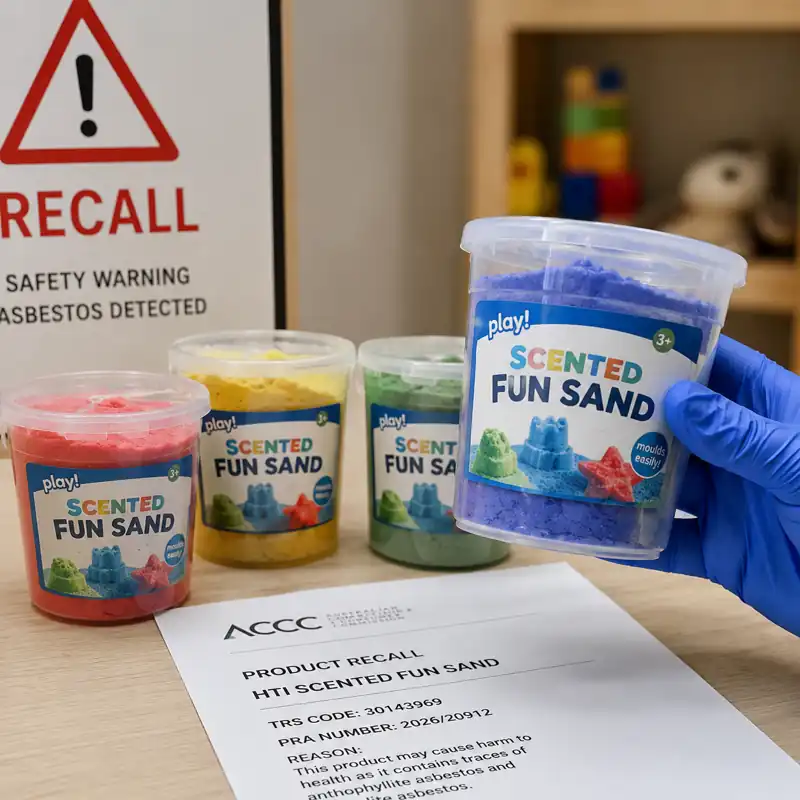
The affected item is HTI Scented Fun Sand, sold in blue, green, red and yellow. The product was available nationally through The Reject Shop from January 13, 2025, to May 7, 2026. It is a loose, coloured sand product designed for children to mould into shapes during play.
The recall was listed by ACCC Product Safety Australia after testing found traces of anthophyllite asbestos and tremolite asbestos in product samples. The recalled item can also be identified by The Reject Shop code 30143969.
The issue is not just that the product was sold as a toy. It is that this type of sand is meant to be touched, squeezed, poured and shaped by children, often on tables, floors or play mats. That close-contact use is why the recall is important for families, childcare settings and anyone who may have bought the product as a gift.
What parents should do now
Anyone who has the recalled sand should stop children from using it immediately and keep the product out of reach. Customers have been told to contact The Reject Shop with full proof of purchase to receive a refund.
Families should not allow children to continue handling the sand while they check the recall details. The product should also not be donated, resold, passed to another household or used in classrooms, sensory play sessions or childcare activities.
The recall notice says consumers should follow official safe handling and disposal advice. That matters because asbestos is not something parents can identify by sight, smell or touch. A packet of affected sand may look completely normal even if testing has detected contamination.
The ACCC has advised consumers to review official health and disposal guidance for recalled sand products. Parents who are unsure how to safely manage the product should follow regulator instructions rather than placing loose sand straight into general household rubbish.
The Reject Shop recall is the latest in a wider series of alerts involving coloured sand, sensory toys and craft products in Australia. Swikblog has previously reported on unicorn sand products recalled after asbestos concerns and asbestos-linked play sand concerns affecting schools in Australia and New Zealand.
Those earlier cases have made parents more alert to sand-based toys, especially products used in sensory play. Many of these items are bought for young children because they are colourful, soft to touch and easy to shape. But when a product is loose and handled repeatedly, any contamination warning needs to be taken seriously.
Why the recall matters
Australia has strict asbestos rules because exposure to asbestos fibres can cause serious disease over time. The risk in each consumer product recall depends on several factors, including the type of asbestos detected, how the product is used and whether fibres can become airborne. Even so, regulators act cautiously because children’s products are expected to meet a high safety standard.
Read More
In this case, the key details for families are clear: the product was sold nationally, it was available in four colours, and it was on sale for more than a year. That increases the chance that packets may still be sitting in homes, toy rooms, school supply cupboards or childcare storage areas.
Parents should check for HTI-branded Scented Fun Sand purchased from The Reject Shop between January 13, 2025, and May 7, 2026. The affected colours are blue, green, red and yellow. If the product matches those details, it should be treated as recalled.
Customers seeking a refund should keep proof of purchase and contact The Reject Shop directly. The official recall is listed under PRA number 2026/20912.
The incident also shows why toy recalls should not be ignored after the initial headline passes. A product may have been bought months earlier, packed away after a birthday, or shared between siblings. Parents who regularly check official recall notices are more likely to catch risks before products are used again.
For now, the safest response is simple: find the product, stop use, keep it away from children and follow the refund and disposal steps published by authorities. The recall is not a reason for panic, but it is a reason for quick action inside any home where the sand may still be present.

Make Swikblog your go-to source on Google for reliable updates, smart insights, and daily trends.