
Ferrari’s first fully electric car was supposed to mark a confident step into the next era of luxury performance. Instead, the Luce reveal quickly became a market test, with Ferrari stock dropping more than 4% in New York trading as investors weighed a radical design shift, a $640,000 price tag, and a luxury EV market that no longer rewards electric ambition automatically.
The reaction matters because Ferrari is not valued like a normal car company. Its premium depends on scarcity, pricing power, brand emotion, and the belief that wealthy buyers will keep paying more for machines that feel impossible to replace. The Luce challenges that formula by asking whether Ferrari can sell silence, electric speed, and design-led minimalism without weakening the emotional identity that made the brand one of the most powerful names in luxury.
Estimated starting price
Italy starting price
Reported power output
0–60 mph estimate
Electric motor at each wheel
New Ferrari layout direction
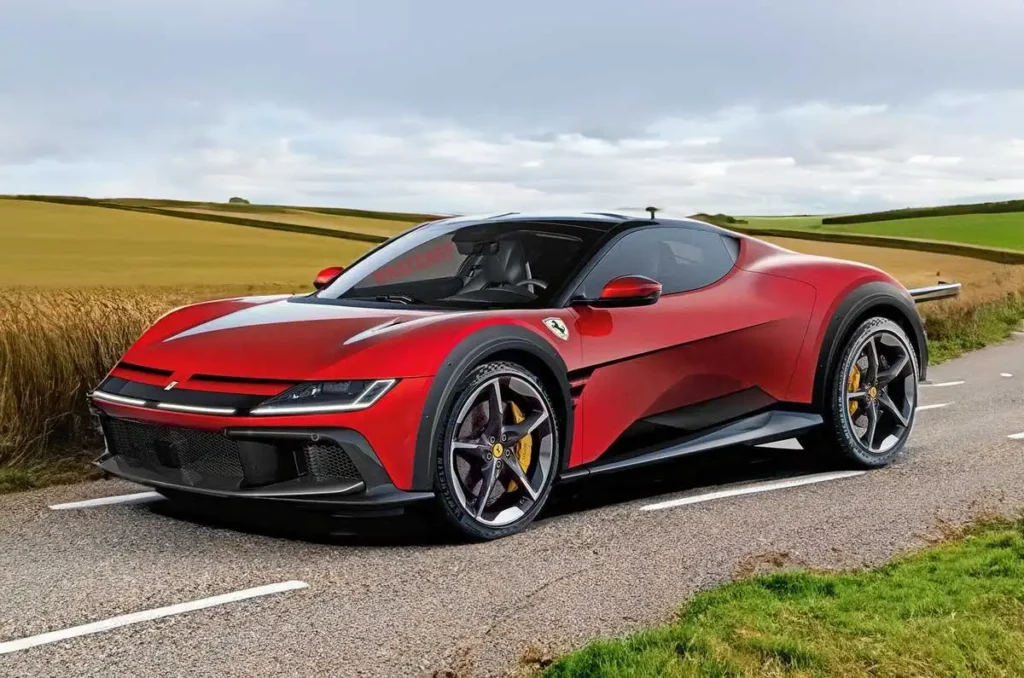
The unique angle is not simply that Ferrari has built an electric vehicle. It is that Ferrari has built an EV that appears aimed at a different kind of buyer. The Luce moves away from the muscular, low-slung aggression often associated with Ferrari sports cars and leans into a smoother, more futuristic shape influenced by LoveFrom, the creative agency founded by former Apple design chief Jony Ive.
That Apple-style design influence may be the real investor debate. Ferrari has traditionally sold drama: engine sound, sculpted bodywork, combustion theatre, racing heritage, and a sense of mechanical intensity. Luce appears to sell restraint, tactility, technology, and a cleaner visual language. That could attract ultra-wealthy technology buyers, but it also risks unsettling collectors who expect a Ferrari to feel emotional before the key is even turned.
According to Ferrari’s official Luce page, the new model focuses on a dedicated electric platform, an advanced interface, and a cabin designed around functional, intuitive driving. The performance numbers remain serious: more than 1,050 horsepower, four-motor traction, four-wheel steering, and acceleration quick enough to keep the Luce firmly inside Ferrari territory.
The timing adds pressure. Luxury EV demand has become more uneven, with several premium brands slowing or rethinking electric plans as high-end buyers remain attached to combustion engines. Ferrari’s challenge is more delicate because its customers are not simply buying speed. They are buying sound, rarity, status, memory, and a connection to decades of racing mythology.
Ferrari’s commercial case may still be stronger than Tuesday’s share move suggests. A starting price above $640,000 gives the company room for personalization, limited allocations, and high-margin options, themes that often shape stock market news and investor updates when luxury brands test new pricing power. Collectors may also treat the first electric Ferrari as a milestone model, even if the broader market debates its design. That is the difference between Ferrari and mass-market EV makers: volume is not the only measure of success.
Still, the stock drop shows that investors want proof, not just performance claims. Ferrari must show that Luce can attract new customers without weakening demand from existing collectors. If the company succeeds, the Luce could become a high-margin bridge into the next generation of luxury buyers. If it struggles, the car may be remembered as an expensive experiment that arrived before Ferrari’s core audience was ready.
For now, the Luce has done exactly what a first electric Ferrari was always likely to do: divide opinion. The numbers are powerful, the price is unmistakably Ferrari, and the design is deliberately different. The market’s first reaction was negative, but the longer test will be whether wealthy buyers see the Luce as a bold new chapter or a break from the formula that made Ferrari one of the world’s most valuable luxury performance brands.

Make Swikblog your go-to source on Google for reliable updates, smart insights, and daily trends.