
Tasmania’s freight industry is rallying behind a controversial truck stop proposal in Oatlands that supporters say could finally solve a major safety problem on the Midland Highway.
The Southern Midlands Council is set to reconsider the rejected Tas Petroleum development after intervention from the Tasmanian Planning Commission. The project, valued at more than $6 million, was initially refused in February despite support from planning officers and the Department of State Growth.
The proposal has gained attention because truck drivers travelling between northern and southern Tasmania currently face a 105-kilometre stretch with no proper heavy vehicle rest stop or public toilet facilities. Industry operators say that situation is becoming increasingly dangerous for drivers managing fatigue on one of the state’s busiest freight corridors.
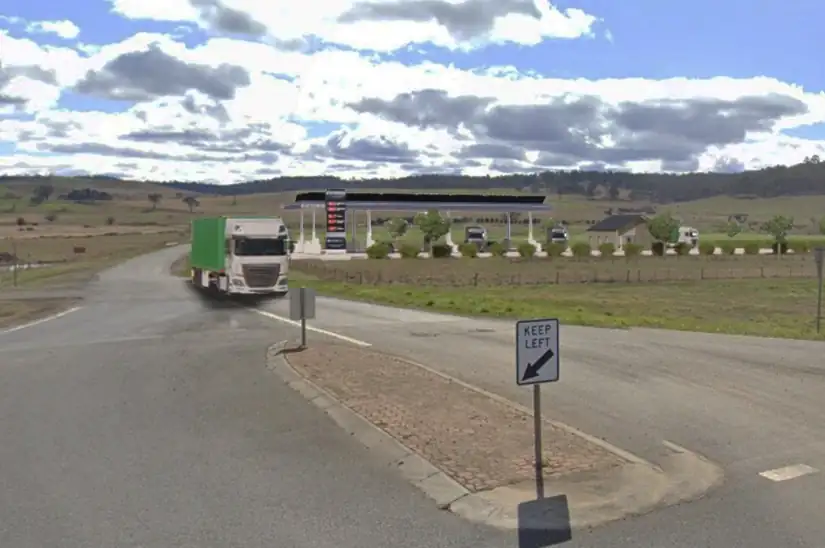
The planned 24/7 facility would be located at the corner of the Midland Highway and Interlaken Road in Oatlands. Plans include fuel access, EV charging stations, showers, toilets and a dedicated heavy vehicle rest area designed specifically for freight operators.
Truck drivers say current roadside conditions are unsafe
Scottsdale-based transport operator Calvin Jones, who has spent more than five decades driving the Midland Highway and now runs Dobson’s Transport, strongly backed the proposal in a letter to councillors.
Jones described current roadside stopping areas as unsafe and unhygienic, saying drivers regularly encounter rubbish, dirty nappies and even vomit in informal pull-over zones.
He argued that fatigue management laws leave many drivers with no option but to stop in those unsuitable areas, particularly during overnight freight runs.
Traffic figures show why the issue matters to the broader transport industry. A traffic counter near the proposed site recorded 5,453 vehicles per day in 2025, with heavy vehicles accounting for around 23% of traffic movement.
The location had already been identified as a priority site in Tasmania’s Heavy Vehicle Rest Area Strategy, which focuses on improving driver safety and fatigue management across the state’s freight network.
Read More
Industry pressure grows ahead of council rethink
More than 20 transport operators have submitted letters supporting the development, including De Bruyn’s Transport, AFI Logistics and the Tasmanian Transport Association.
AFI Logistics managing director Sam Reid said fatigue management was a critical part of the company’s safety culture, while Tasmanian Transport Association executive director Michelle Harwood argued Tasmania still falls short of national heavy vehicle rest area guidelines.
The original council refusal cited concerns about road safety, commercial competition with the existing Oatlands BP service station and potential impacts on council-owned EV chargers near the town pool.
Since then, Tas Petroleum has attempted to address those concerns by offering to donate EV charging revenue to council, add stone cladding to improve the building’s appearance and provide a rent-free space for a local coffee van.
Traffic engineer Keith Midson also submitted updated advice stating the Midland Highway intersection was safe following recent upgrades that lifted the route to a three-star AusRAP safety rating.
The debate has now become bigger than a local planning dispute. Supporters say the decision will influence freight safety standards across Tasmania’s transport network for years to come.
Swikblog recently covered another Tasmania transport story involving the Bass Highway carrot spill that caused major disruption near Lillico.

Make Swikblog your go-to source on Google for reliable updates, smart insights, and daily trends.