
Canada’s search for a new submarine fleet has become more than a defence purchase. It is now a test of how the country wants to protect the Arctic, strengthen its industrial base and position itself between NATO and the Indo-Pacific.
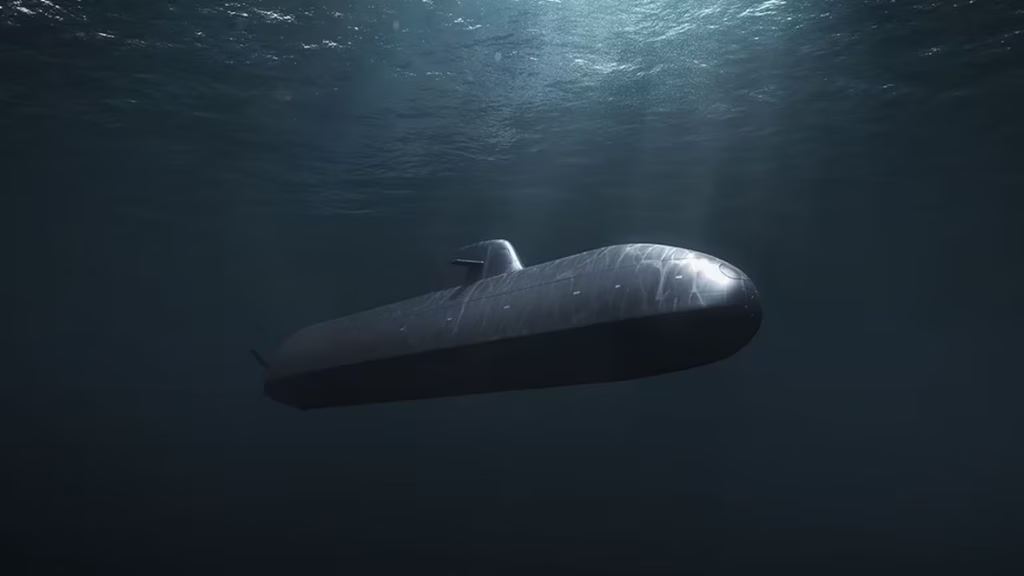
The German-Norwegian bid, led by ThyssenKrupp Marine Systems, is offering Canada the Type 212CD submarine with a wider economic package that could add about $86 billion to Canada’s economy over the life of the program. The proposal also estimates more than 654,000 job years and an average of up to 50,000 jobs during the first five years if Ottawa selects the European option.
Canada is looking to buy 12 new submarines to replace its aging Victoria-class fleet. The two leading contenders are Germany’s TKMS and South Korea’s Hanwha Ocean, which is pitching its KSS-III submarine. Both bids are being judged not only on military performance, but also on how much work, investment and long-term value they can bring to Canada.
Why Germany’s submarine offer matters for Canada
The German proposal includes two submarine maintenance facilities in Canada, one on each coast. That would be important for a country with both Atlantic and Pacific naval responsibilities, and it could reduce long-term dependence on foreign maintenance yards.
TKMS also wants to place key parts of the submarine supply chain inside Canada. The plan includes local work on propulsion systems and batteries, along with possible Canadian facilities for heavy torpedoes, anti-torpedo systems and even hypersonic missile testing or production. For Canada’s defence sector, that would mean more than assembly work; it could create specialized manufacturing capacity in areas where global demand is rising.
The package also reaches outside traditional military spending. Germany is proposing investments linked to the Port of Churchill in Manitoba, with a focus on moving critical minerals and liquefied natural gas to global markets. A separate carbon capture project with Alberta is also part of the wider pitch. These elements show how the submarine race has become tied to energy, Arctic shipping routes and Canada’s resource economy.
Another notable part of the bid is TKMS’s teaming agreements with four Indigenous development organizations. For a project of this scale, Indigenous participation could become a major factor as Ottawa weighs jobs, regional benefits and long-term economic inclusion.
NATO, the Arctic and South Korea’s challenge
The strategic choice is just as important as the economic one. Choosing the German-Norwegian submarine would likely pull Canada closer to NATO’s northern European defence network. Norway, Sweden, Finland, Denmark and Germany are all becoming more central to Arctic security planning as Russia’s military activity and northern shipping routes draw more attention.
South Korea’s Hanwha Ocean is offering a different strategic path. Its KSS-III submarine has already made a high-profile journey across the Pacific to Canada, showing endurance and sending a clear message that Seoul wants a larger role in Canada’s defence future. A Korean win would strengthen Canada’s Indo-Pacific defence links at a time when the region is becoming more contested.
Read More
The Topeka Breadbasket Farmers Market is drawing attention after expanding Triple SNAP benefits while adding new family-focused kids events this season. :contentReference[oaicite:0]{index=0}
NSW produced one of the most dramatic State of Origin comebacks after a late escape against Queensland in a stunning finish. :contentReference[oaicite:1]{index=1}
Ottawa’s decision, expected by the end of June, will shape Canada’s navy for decades. But the impact will go well beyond submarines. It could influence jobs, Arctic infrastructure, NATO cooperation, Indigenous partnerships and Canada’s place in a changing global defence order.
For related geopolitical coverage, read Swikblog’s report on Ukraine-Russia tensions and wider security risks.
Further details on the German submarine proposal and Canada’s planned fleet replacement program were reported by CBC News. Readers can also review NATO’s official overview of Arctic and High North security strategy for additional context on growing northern defence priorities.

Make Swikblog your go-to source on Google for reliable updates, smart insights, and daily trends.