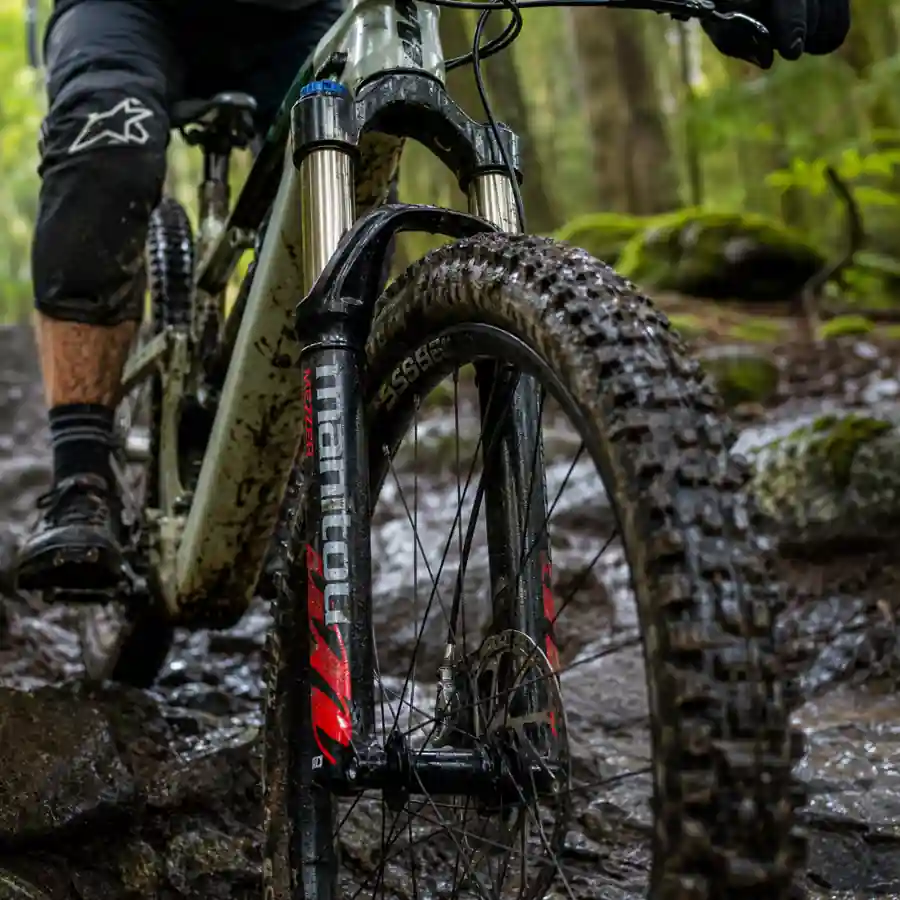

Manitou has officially introduced the Gen 2 Mezzer fork lineup, and the latest version brings far more than a cosmetic refresh. After spending years building a loyal following among aggressive trail and enduro riders, the Mezzer now returns with major updates to its chassis, spring system and damper performance. The focus is clear: improve small bump sensitivity while maintaining the supportive ride feel that made the original fork popular.
The updated lineup includes the Mezzer Pro and the longer-travel Mezzer LT. Both use 37mm stanchions, but they target different riding styles. The Pro is designed for 140mm to 170mm travel bikes and weighs around 2030 grams, while the LT stretches from 150mm to 190mm travel with additional stiffness aimed at modern enduro bikes and eMTBs.
ASP spring system changes the ride feel immediately
The biggest change comes from Manitou’s new Active Spring Piston (ASP) system. Instead of relying only on air pressure at the beginning of the stroke, Manitou added a small coil spring to handle the first few millimeters of travel. This reduces the breakaway force normally caused by air spring seal friction and allows the fork to react almost instantly to trail chatter, roots and rocks.
Early ride impressions suggest the difference is significant. Reviewers described the fork as dramatically smoother off the top compared to the previous Mezzer generation. One tester noted there was “no perceptible lag” between the front tire hitting an obstacle and the fork entering its travel.
Manitou has also retained its independently adjustable IRT chamber system, allowing riders to fine-tune the spring curve separately from the main air chamber. Riders can run a plush initial stroke while still maintaining support deeper into the travel. A hydraulic bottom-out system manages the final 30mm of travel to reduce harsh impacts during bigger hits.
Read More
Chassis and damper upgrades target aggressive riders
The new chassis also receives meaningful changes. The Mezzer LT now offers more fore-aft stiffness than the previous generation, while the Pro slightly reduces torsional stiffness to better suit shorter-travel trail bikes. Manitou says the revised lower casting improves overall bushing consistency and longevity.
A new Micromanager Bushing Alignment system helps reduce unwanted tolerance play at the axle interface. In practical riding terms, this aims to keep the fork moving smoothly under heavy braking and rough cornering loads.
On the damping side, Manitou developed nearly 70 iterations before finalizing the MC2-Pro-X damper tune. Riders now get high- and low-speed compression adjustment along with new high- and low-speed rebound controls. The updated bladder damper also uses a pressurized chamber designed to reduce cavitation during high shaft speeds.
Despite the overwhelmingly positive feedback on grip and traction, testers did note a few quirks. Some riders experienced a slight top-out “thwunk” sound during slower maneuvers or when unweighting the bike off jumps. Others felt the rebound adjustment range leaned toward the faster side even with the dials nearly closed.
Still, the overall reaction to the Gen 2 Mezzer has been highly positive. Riders praised the fork’s traction on wet roots, controlled feel through rough sections and wide setup range for different riding styles.
For riders following the latest mountain bike technology and racing trends, Swikblog also recently covered the 2026 Red Bull Hardline Tasmania results, one of the toughest downhill events in the sport.
Complete product details for the new fork lineup are available through the official Manitou Mezzer collection page.
With its major sensitivity improvements, revised chassis tuning and expanded damper controls, the Gen 2 Mezzer appears positioned to compete strongly against the biggest names in the high-performance enduro suspension market.

Make Swikblog your go-to source on Google for reliable updates, smart insights, and daily trends.