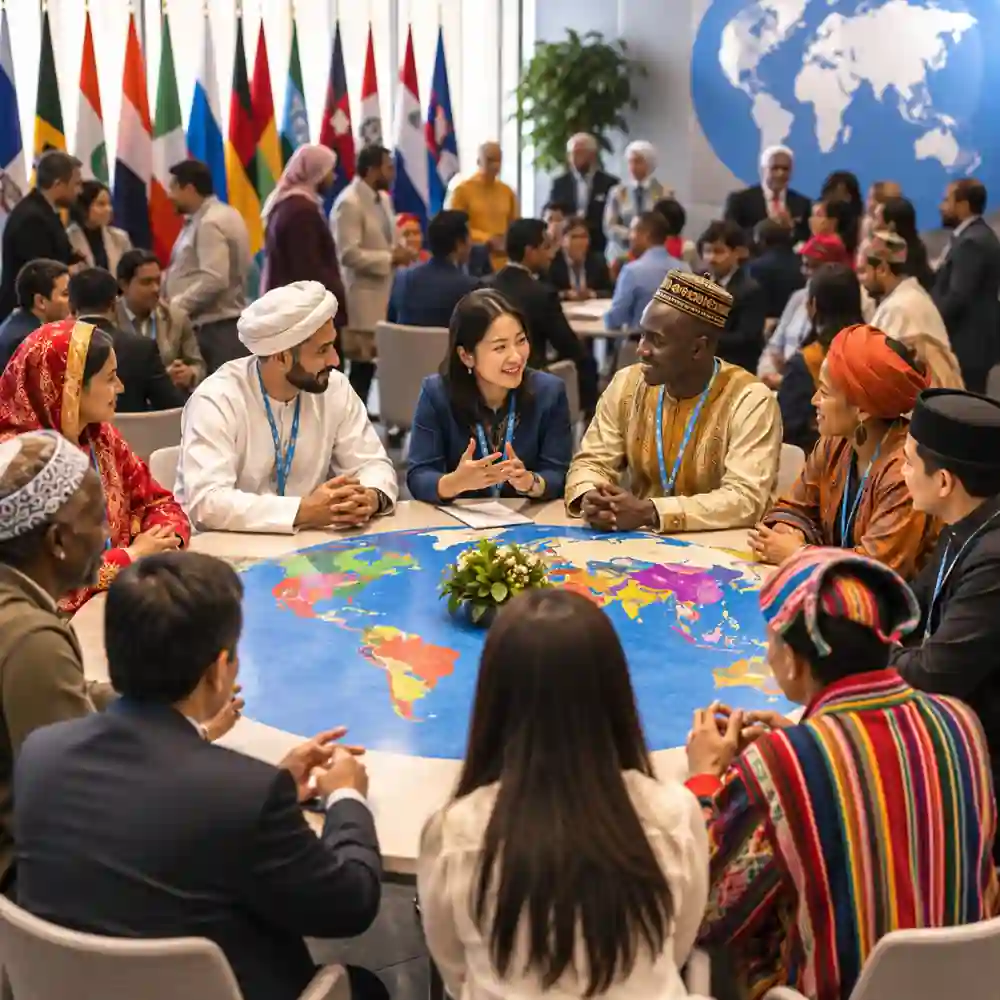

The International Day for Dialogue Among Civilizations will be observed on 10 June 2026, drawing attention to the importance of cultural diversity, mutual understanding and international cooperation at a time when many parts of the world face growing political tensions, conflicts and social divisions. Established by the United Nations General Assembly through Resolution A/RES/78/286 on 7 June 2024, the observance recognizes dialogue as a powerful tool for building trust, reducing prejudice and promoting peaceful coexistence among nations and peoples.
The resolution was proposed by China and co-sponsored by more than 80 countries. It affirms that the achievements of all civilizations constitute the collective heritage of humankind and highlights the crucial role of dialogue in maintaining global peace, advancing shared development, improving human welfare and achieving collective progress.
As the United Nations marks its 80th anniversary, the observance carries added significance. UN Secretary-General António Guterres has emphasized that at a time when the international system is being tested, dialogue has the power to reunite people and help create a more just and peaceful world.
International Day for Dialogue Among Civilizations 2026 Theme
The expected focus for the 2026 observance centers on respecting civilizational diversity and strengthening dialogue as a pathway to global peace and cooperation. The theme reflects growing concerns over hate speech, extremism, discrimination, misinformation and declining trust between communities and countries.
According to UNESCO, civilization should be understood as a universal, pluralistic and non-hierarchical reality. Rather than existing in isolation, civilizations are continuously shaped through cultural exchange while maintaining their unique identities. This understanding forms the foundation of the International Day and its goal of encouraging mutual respect instead of division.
The importance of intercultural understanding is increasingly recognized in international discussions on peacebuilding and social stability. Dialogue, mutual respect and cultural understanding are also reflected in the International Day of Living in Peace 2026 observance, which promotes reconciliation, non-violence and cooperation among communities.
Read More
Why Dialogue Matters in Today’s World
The United Nations has warned that the world is facing multiple interconnected challenges, including widening gaps in peace, development, trust and governance. In this environment, dialogue among civilizations provides a way to overcome misunderstandings, address differences peacefully and identify common ground on global issues.
The observance promotes awareness of the universal values outlined in the UN Charter and the Universal Declaration of Human Rights. It encourages governments, institutions and individuals to focus on what unites humanity rather than what divides it.
Supporting this vision, Miguel Ángel Moratinos, High Representative for the United Nations Alliance of Civilizations, has stated: “There is no clash of civilizations. There is a clash of interests and a clash of ignorance.” His remarks highlight the belief that conflicts are not inevitable consequences of cultural or religious differences but often arise from misunderstanding and lack of dialogue.
To mark the occasion, a high-level event titled “Exploring New Pathways for Dialogue Among Civilizations and Jointly Writing New Chapters for Global Governance” is scheduled at United Nations Headquarters in New York on 10 June 2026. UNESCO will also host a celebration at its headquarters in Paris, bringing together representatives, experts and cultural stakeholders to discuss ways to foster a more harmonious and interconnected world.
Additional information about the observance, its objectives and official events is available through the United Nations. As global challenges become increasingly interconnected, the International Day for Dialogue Among Civilizations serves as a reminder that respect, understanding and cooperation remain essential foundations for lasting peace and sustainable development.

Make Swikblog your go-to source on Google for reliable updates, smart insights, and daily trends.