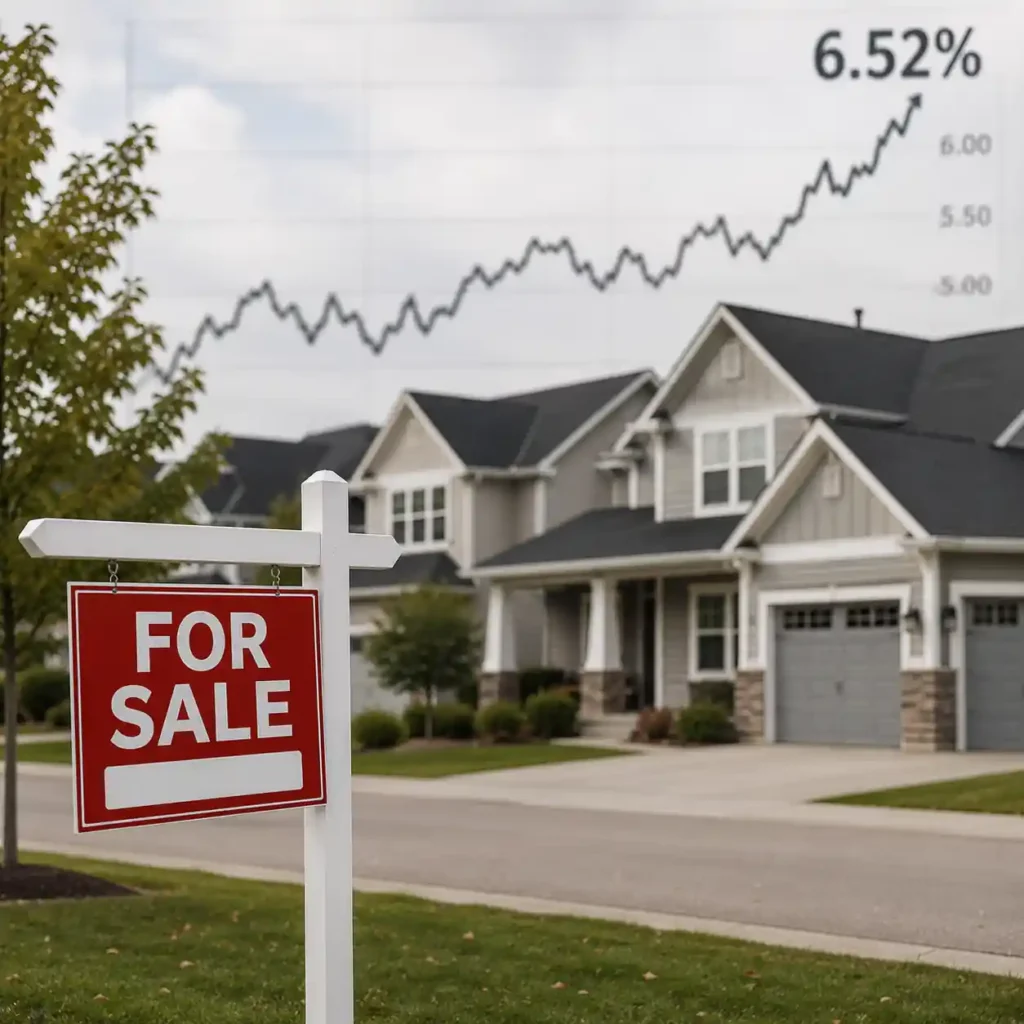

Mortgage rates are back near their highest levels of 2026, creating fresh challenges for Americans navigating an already expensive housing market. Freddie Mac reported that the average 30-year fixed mortgage rate rose to 6.52% this week from 6.48% a week earlier, extending a trend that has kept borrowing costs elevated despite expectations for relief earlier this year.
While the increase may appear modest, it highlights a broader reality facing homebuyers: inflation remains stubborn, bond yields are rising, and financial markets are becoming less convinced that interest rates will fall anytime soon. For many households, that means higher monthly payments and tougher decisions about when—or whether—to buy a home.
Why Mortgage Rates Are Refusing to Fall
The latest move higher reflects a combination of economic and geopolitical forces that continue to shape borrowing costs across the United States. Recent data showed the U.S. economy added 172,000 jobs in May, signaling that the labor market remains resilient despite higher interest rates.
At the same time, inflation accelerated to 4.2% year-over-year, driven in part by rising energy costs. Higher oil prices have become a growing concern since disruptions to crude flows from the Persian Gulf pushed energy markets higher. As fuel costs increase, investors worry that inflation could remain elevated longer than previously expected.
Those concerns have altered expectations for Federal Reserve policy. Earlier this year, many market participants expected rate cuts in 2026. Today, investors are increasingly preparing for a prolonged period of elevated borrowing costs, with some traders even pricing in the possibility of another rate hike before year-end.
The Bond Market Is Sending a Clear Message
Mortgage rates are heavily influenced by movements in the U.S. Treasury market, particularly the 10-year Treasury note. Lenders use Treasury yields as a benchmark when determining mortgage pricing because both are long-term financial products exposed to inflation risk.
The 10-year Treasury yield climbed to roughly 4.53% this week, compared with 4.47% a week earlier. The increase is even more significant when compared with late February, when the yield was below 4% before geopolitical tensions intensified.
When Treasury yields rise, mortgage lenders generally respond by increasing rates on new loans. That relationship explains why mortgage rates have remained elevated even though the Federal Reserve has not announced new policy changes.
What Higher Rates Mean for Buyers
Housing affordability remains one of the biggest challenges in the market. Every increase in mortgage rates reduces purchasing power because borrowers must devote more of their income to interest payments.
For example, a buyer financing a home purchase with a conventional mortgage today will face significantly higher monthly payments than someone who secured a loan during the low-rate environment of 2020 or 2021. Even a half-percentage-point difference in mortgage rates can add thousands of dollars in interest costs over the life of a loan.
As a result, some buyers are expanding their home searches into more affordable neighborhoods, increasing down payments, or delaying purchases altogether. The pressure is especially intense for first-time buyers who do not have existing home equity to offset higher financing costs.
Refinancing Remains Difficult
Current borrowing conditions are also limiting refinancing opportunities. Daily market data shows refinance rates remain close to purchase mortgage rates, making it difficult for homeowners to achieve meaningful savings by replacing existing loans.
Most homeowners who refinanced when rates were near historic lows continue to hold mortgages below 4%. For those borrowers, refinancing into a loan above 6% would typically increase rather than reduce monthly payments.
This so-called “lock-in effect” is also influencing housing inventory. Many homeowners are reluctant to sell because doing so would require taking on a new mortgage at a much higher rate, reducing the number of available homes in some markets.
Housing Activity Is Holding Up Better Than Expected
Despite affordability challenges, the housing market has shown surprising resilience. Home buying activity improved during May, suggesting that demand has not disappeared even as borrowing costs remain elevated.
Part of that resilience comes from strong employment conditions. Households with stable incomes continue to enter the market because life events such as relocations, marriage, growing families and career changes often outweigh interest-rate concerns.
The market has also spent several years adapting to higher borrowing costs. Buyers who initially delayed purchases while waiting for lower rates are increasingly accepting that rates may remain elevated for longer than expected. Recent movements in mortgage rates and housing affordability trends show how persistent borrowing costs have reshaped purchasing decisions across the country.
What Could Happen Next
The outlook for mortgage rates depends largely on inflation, energy prices, labor market conditions and Federal Reserve policy. If inflation begins cooling consistently and oil prices stabilize, Treasury yields could ease and provide some relief to borrowers.
Read More
However, if inflation remains above expectations or geopolitical tensions continue to support higher energy prices, mortgage rates could remain near current levels for months. For buyers and homeowners alike, the path of inflation may ultimately be more important than the next move from the Federal Reserve.
Borrowers looking to navigate the current market can monitor weekly mortgage data from Freddie Mac, while comparing lenders and loan options carefully to secure the most competitive financing available.

Make Swikblog your go-to source on Google for reliable updates, smart insights, and daily trends.