
Singapore households will see a small increase in refuse collection fees from July 1, 2026, as the cost of maintaining public waste services continues to rise.
The National Environment Agency (NEA) said the revised charges apply to HDB flats, non-landed private homes and landed properties. It is the first public waste collection fee adjustment since July 2024.
For most households, the change will add less than S$6 a year. Still, the revision matters because refuse collection is a fixed monthly charge, and fixed household costs are becoming a bigger focus for residents managing regular bills.
New Monthly Refuse Collection Fees
| Housing Type | Current Fee | New Fee (From Jul 1) | Increase |
|---|---|---|---|
| HDB flats & non-landed private homes | S$10.20 | S$10.64 | +S$0.44 |
| Landed homes | S$34.00 | S$35.50 | +S$1.50 |
The revised fees are inclusive of Singapore’s 9% Goods and Services Tax (GST).
Households living in HDB flats and non-landed private homes will pay approximately S$5.28 more a year following the increase. For landed properties, the annual increase works out to around S$18.
Non-landed private housing includes condominiums, apartments, duplex units and walk-up apartment developments.
Why The Charges Are Being Raised
NEA said the adjustment is part of a regular review of refuse collection fees. The agency added that the revised charges are intended to ensure Singapore’s overall waste management system continues operating sustainably.
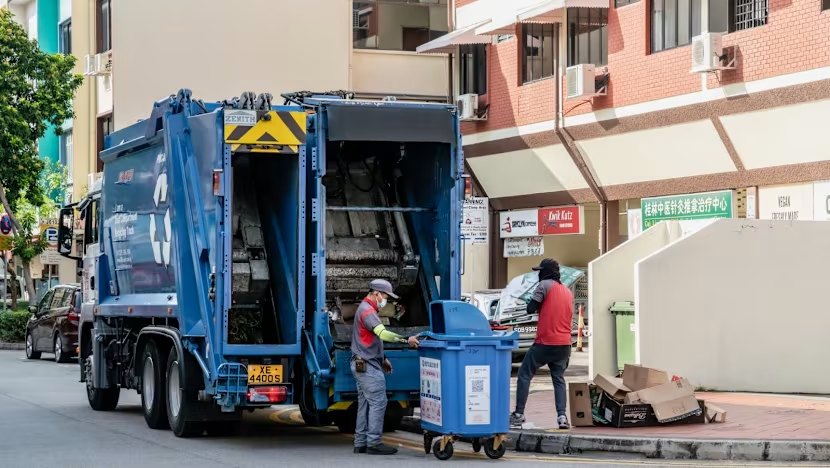
The increase reflects rising operational and manpower costs faced by public waste collectors. Behind every household collection service is a network of workers, collection vehicles, transport operations and waste management infrastructure that requires ongoing investment.
As labour and operating costs continue to increase, authorities periodically review service charges to ensure essential public services remain reliable and financially sustainable.
The latest adjustment follows the previous refuse collection fee revision introduced in July 2024.
What The Increase Means For Residents
For most HDB and condominium residents, the additional 44 cents per month is unlikely to significantly alter household budgets. However, it arrives at a time when many families are paying closer attention to recurring expenses.
Utility bills, food prices, transport costs and service charges all contribute to monthly household planning. Even small recurring increases can become more noticeable when they appear alongside other rising expenses.
For households tracking regular bills, the fee increase also fits into a wider pattern of everyday expenses becoming more important in monthly planning. Similar pressure on household budgets has been seen in rising household energy bills, where small changes can quickly affect annual spending.
For landed households, the increase is higher in absolute terms, but the annual change remains limited at about S$18.
U-Save Rebates Can Help Offset The Increase
Eligible HDB households can use U-Save rebates to offset refuse collection fees.
The rebates are part of Singapore’s permanent GST Voucher scheme and are credited directly into SP Services utility accounts. They are designed to help eligible households manage utility-related expenses, including refuse collection charges.
For the 2026 financial year, U-Save rebates are being disbursed in April, July and October 2026, followed by another tranche in January 2027.
The April payment has already been credited, while the July tranche will arrive in the same month that the revised refuse collection fees take effect.
This timing may help eligible HDB households cushion part of the increase through their utility account credits.
Why This Is More Than A Small Fee Change
The direct increase is modest, but the policy signal is broader. Essential municipal services have real operating costs, and those costs can rise even when the service itself feels routine to residents.
Singapore’s waste management system must operate within tight land constraints, high urban density and long-term sustainability goals. Reliable refuse collection supports estate cleanliness, public hygiene and environmental management.
The latest revision also shows why waste reduction remains important. When households reduce food waste, recycle correctly and avoid unnecessary disposal, they help reduce pressure on the wider waste system.
For official information on refuse collection services and environmental policies, readers can refer to the National Environment Agency.
Read More
What Households Should Do Before July
The revised fees will take effect automatically from July 1, 2026. Residents do not need to apply separately or take action for the new rates to apply.
HDB households should check their SP Services utility statements after July to see how the new refuse collection charge and any U-Save rebates are reflected.
Condominium, apartment, walk-up apartment and duplex residents should note the new S$10.64 monthly charge, while landed property owners should factor in the revised S$35.50 monthly rate.
The increase may not be large, but it is still a recurring cost. For households managing monthly budgets, the practical step is to note the new rate, check available rebates and keep track of how fixed expenses change over time.

Make Swikblog your go-to source on Google for reliable updates, smart insights, and daily trends.