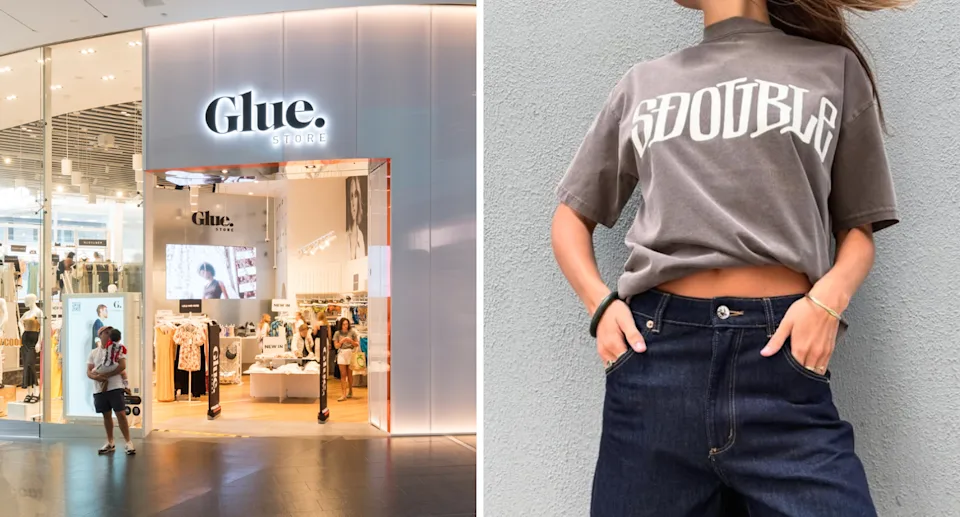

Glue Store has permanently closed after nearly three decades in business, becoming one of the latest Australian retailers to fall victim to a difficult trading environment marked by weaker consumer spending, rising operating costs and growing competition across the fashion sector.
The retailer confirmed it had ceased operations both online and in stores, bringing an end to a brand that had been a fixture in Australian shopping centres since its launch in 1998. The shutdown follows an earlier decision by parent company Accent Group to wind down or sell the remaining 16 stores after the business reported an $8.4 million first-half loss.
While the closure marks the end of a well-known fashion chain, it also highlights broader changes taking place across Australia’s retail landscape as companies adapt to shifting consumer priorities and economic uncertainty.
From Fashion Destination To Retail Casualty
For years, Glue Store built its identity around youth fashion, stocking streetwear, sneakers, denim and lifestyle brands that appealed to younger shoppers. The retailer established a strong presence in major shopping centres and became a familiar destination for fashion-conscious consumers.
Accent Group acquired Glue Store and the Next Athleisure wholesale and distribution business in 2021 for $13 million, hoping to strengthen its position within the apparel market. However, the retail environment became increasingly challenging as inflation, interest rate increases and cost-of-living pressures affected discretionary spending.
By 2026, the numbers painted a difficult picture. Glue Store recorded an $8.4 million loss during the first half of the financial year, prompting Accent Group to review the future of the chain. Industry reports later indicated that no buyer emerged for the business, leaving closure as the most practical option.
The result is the disappearance of another long-standing retail brand from Australian malls, joining a growing list of companies struggling to maintain profitability.
Why Fashion Retailers Are Under Pressure
Fashion retailers are often among the first businesses to feel the effects of a slowing economy because clothing and accessories are largely discretionary purchases. When household budgets tighten, consumers tend to prioritise mortgage repayments, rent, groceries, utilities and transport costs before updating their wardrobes.
Australia’s latest economic data suggests many households continue to feel that pressure. Discretionary spending remains subdued, while the household savings ratio has declined as consumers balance higher living costs against slower income growth.
The challenges extend beyond shoppers. Retailers are also dealing with increasing rent expenses, higher wages, rising freight costs and more expensive utilities. These factors can significantly reduce profit margins, especially for businesses operating large physical store networks.
That combination of weaker demand and higher operating costs has created a difficult environment for retailers that rely heavily on mall traffic and impulse purchases.
Glue Store Is Not The Only Retailer Facing Challenges
The closure reflects a wider trend unfolding across Australia’s retail sector. In recent months, several well-known names have announced store closures, restructures or insolvency proceedings as conditions become more difficult.
Lincraft has begun shutting its remaining physical stores, while Barbeques Galore announced plans to close dozens of company-owned locations. Other retailers including Mosaic Brands, Ally Fashion and Fletcher Jones have also faced significant challenges.
The retail sector’s transformation is extending beyond fashion, with companies reassessing physical store footprints and profitability, a trend also highlighted by 7-Eleven’s plan to shut 645 stores as consumer behavior shifts.
Retail analysts have described the current market as a “perfect storm,” where economic uncertainty, cautious consumer sentiment and rising business costs are arriving simultaneously.
Accent Group’s Focus Shifts To Growth Opportunities
Despite Glue Store’s closure, Accent Group remains one of Australia’s largest retail operators. The company oversees approximately 900 stores and manages brands including The Athlete’s Foot, Platypus, Hype DC, Stylerunner and Nude Lucy.
Rather than continuing to support a loss-making chain, Accent has redirected its attention toward expansion opportunities with international brands. The company has been investing in Sports Direct, Lacoste and HOKA, viewing these businesses as stronger long-term growth opportunities.
Its first Australian Sports Direct store opened in Victoria, while additional locations are planned over the coming years. Accent is also expanding its Lacoste presence and opening dedicated HOKA stores as part of a broader growth strategy.
The shift reflects a growing trend among retailers to concentrate investment in brands that demonstrate stronger customer demand and more resilient financial performance.
What Glue Store’s Closure Means For Consumers
For shoppers, the immediate impact is the loss of another familiar fashion retailer from Australia’s shopping centres. Consumers seeking similar products will likely turn to competitors, online marketplaces or other Accent-owned brands.
For the retail industry, the closure serves as a reminder that established brands are not immune to changing market conditions. Strong brand recognition alone is often not enough when consumer spending slows and operating costs continue rising.
Read More
More importantly, Glue Store’s exit illustrates how retailers are adapting to a new reality where profitability, efficiency and brand relevance matter more than store count alone. As economic pressures continue to influence spending habits, businesses across the sector will be closely watching whether consumer confidence improves during the second half of the year.
For official economic and retail spending data, visit the Australian Bureau of Statistics.

Make Swikblog your go-to source on Google for reliable updates, smart insights, and daily trends.