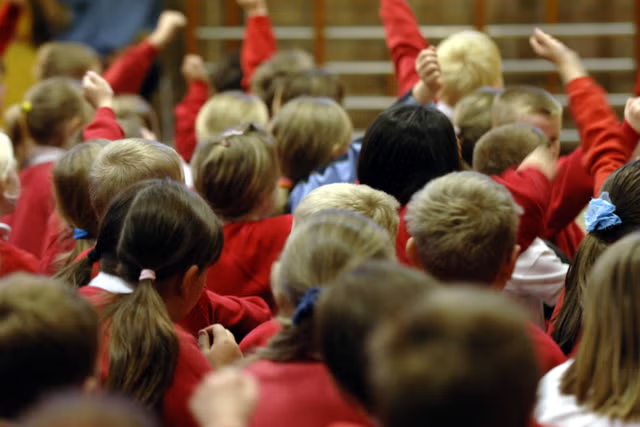

Schools across England and Wales have adjusted timetables, introduced early finishes and, in some cases, temporarily closed classrooms as the UK experienced an exceptional late-June heatwave. The disruption followed a rare Met Office Red Extreme Heat Warning, with temperatures climbing close to 40°C in some areas and setting new June temperature records.
While the most intense phase of the heatwave has now passed, education leaders say the event highlighted how vulnerable many school buildings are during prolonged periods of extreme heat. Officials continue to encourage schools to review heat safety plans as warmer summers become more common across the UK.
Schools Changed Timetables to Protect Pupils and Staff
During the peak of the heatwave, hundreds of schools across England and Wales introduced temporary changes to reduce health risks from extreme indoor temperatures. Depending on local conditions, schools shortened the school day, allowed early collection, cancelled afternoon lessons or closed for limited periods.
Several local authorities reported large numbers of affected schools. Somerset and Buckinghamshire each saw around 100 schools modify normal operations, while Gloucestershire recorded more than 80 schools making timetable changes. Other areas, including Bristol, Hampshire, London, Oxfordshire and parts of Wales, also introduced temporary measures as temperatures continued to rise.
Unlike closures caused by snow or flooding, these decisions were largely based on classroom conditions. Many older school buildings and temporary classrooms have limited ventilation, allowing indoor temperatures to climb well above the outside air during prolonged hot weather.
Areas Where Schools Were Affected
Schools in London, Bristol, Hampshire and South Wales were among those announcing changes. Some secondary schools and colleges switched to half-day sessions, while many primary schools gave parents the option to collect children earlier than usual.
Individual arrangements varied between schools. Some remained open with additional heat precautions, while others cancelled afternoon classes or suspended lessons for a day where safe learning conditions could not be maintained.
Because decisions were made locally rather than nationally, families were advised to monitor updates directly from their child’s school instead of relying on regional announcements.
Why Extreme Heat Creates Challenges Inside Schools
There is no legal maximum classroom temperature in England or Wales. However, employers and education providers have a duty to reduce health and safety risks for staff and pupils.
Many school buildings were designed to retain warmth during winter rather than cope with temperatures approaching 40°C. Classrooms with large south-facing windows, older construction or temporary portable units can become significantly hotter than outdoor conditions.
To reduce health risks, many schools relaxed uniform rules, encouraged pupils to wear PE clothing, increased drinking water access, moved activities into shaded areas and cancelled outdoor sport during the hottest hours of the day.
Record-Breaking June Heatwave Raised National Concerns
The Met Office issued consecutive Red Extreme Heat Warnings as forecasts showed temperatures could exceed previous June records across parts of England and Wales. Several locations recorded new June highs during the event, making it one of the most significant early-summer heatwaves in modern UK records.
The heatwave also placed pressure on transport, healthcare services and public infrastructure. Overnight temperatures remained unusually high in many urban areas, limiting cooling after sunset and increasing health risks for vulnerable people.
Recent periods of extreme weather have included both severe rainfall and unusually high temperatures, illustrating how rapidly weather conditions can change across the UK. Earlier weather events prompted UK weather warnings and flood alerts affecting travel and local communities.
Read More
What Parents Should Keep in Mind During Future Heatwaves
Although the June heatwave has ended, schools may introduce similar measures during future periods of extreme heat. Parents should check official school emails, websites and messaging services whenever severe weather warnings are issued.
Children attending school during hot weather are encouraged to bring refillable water bottles, wear lightweight clothing where permitted, apply sunscreen before leaving home and follow any temporary uniform guidance provided by their school.
The Met Office continues to publish the latest forecasts and weather warnings, while public health authorities provide advice on staying safe during periods of unusually high temperatures.
The June 2026 heatwave has prompted renewed discussion about improving ventilation, cooling and climate resilience in school buildings, with education leaders saying the event exposed the need for longer-term planning as extreme heat becomes more frequent across the UK.

Make Swikblog your go-to source on Google for reliable updates, smart insights, and daily trends.