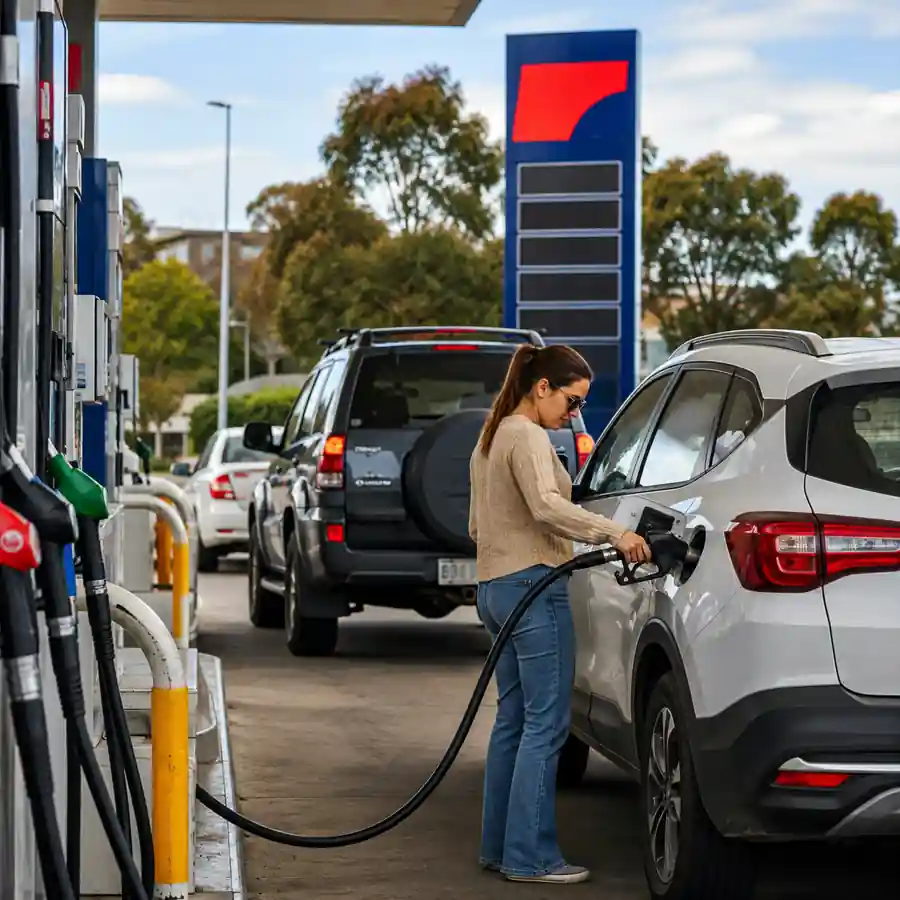

Australian drivers are continuing to receive temporary relief at the fuel pump after the federal government extended its fuel excise discount through July. Instead of ending on 30 June as originally scheduled, the discount was reduced from 32 cents per litre to 16 cents per litre from 1 July and is due to remain in place until 2 August 2026, when the fuel excise is scheduled to return to its normal rate.
The extension is designed to soften the impact of higher petrol and diesel costs while global energy markets remain unsettled. It forms part of the federal government’s broader cost-of-living measures and gives motorists a gradual transition instead of an immediate increase in fuel tax.
What the fuel excise changes mean for motorists
From 1 July, the temporary fuel tax reduction was halved to 16 cents per litre. The government estimates this continues to save motorists about $11 on a typical 65-litre tank compared with paying the full excise rate. Parliament has already approved the extension, meaning the reduced rate is now in effect nationwide.
Once the temporary relief expires on 2 August, motorists should expect fuel prices to reflect the full excise again. However, the exact increase at individual service stations will still depend on wholesale fuel costs, exchange rates, competition and local pricing cycles.
Pump prices are influenced by more than fuel tax
Fuel excise is only one part of the final price drivers pay. International crude oil prices, refining costs, shipping, the Australian dollar and retailer pricing strategies all affect the amount shown at the bowser.
That means pump prices may not move by the same amount everywhere at the same time. Some areas could see a quicker rise as fuel stocks are replaced, while others may experience smaller or delayed changes depending on local market conditions.
ACCC monitoring fuel retailers
The Australian Competition and Consumer Commission (ACCC) says it is monitoring fuel prices as the excise discount changes. The regulator has reminded retailers that motorists should receive the benefit of the reduced tax and that businesses must comply with Australian consumer law.
Fuel prices can change for several reasons, including wholesale fuel costs, global oil markets, exchange rates and local pricing cycles. The ACCC will continue tracking prices to identify unusual movements during the transition period.
Support for freight operators continues
The July extension also applies to heavy vehicles. A temporary 16-cent reduction in the Heavy Vehicle Road User Charge remains in place until 2 August, providing short-term support for freight and logistics businesses.
Transport operators face significant fuel expenses, and changes in diesel prices can affect the cost of moving goods across Australia. Higher freight costs can eventually influence prices paid by consumers for everyday products.
What drivers should expect next
Unless the government announces another extension, the temporary fuel excise relief will end on 2 August 2026. After that date, the full fuel excise is expected to apply again, which could place upward pressure on petrol and diesel prices.
Drivers can reduce fuel costs by comparing prices between service stations, filling up during cheaper parts of local pricing cycles and making use of any available state support. Eligible Western Australian households can learn more about the WA $100 Fuel Support Payment.
For official information about the fuel excise changes, visit the Prime Minister of Australia website.

Make Swikblog your go-to source on Google for reliable updates, smart insights, and daily trends.