
Australia is raising the pressure on the world’s biggest social media companies, announcing plans to double the maximum penalty for platforms that breach its under-16 social media ban to A$99 million. The move comes after evidence showed many children are still able to access restricted apps despite the landmark law taking effect on 10 December 2025.
The tougher penalty is part of updated legislation designed to give the country’s online safety regulator more power to investigate whether platforms are actually complying with the ban. Instead of relying only on company assurances, Australia’s eSafety Commissioner will be able to compel social media firms to provide evidence of the steps they have taken to keep under-16 users off their services.
The policy is being watched closely around the world because Australia was one of the first countries to introduce such a broad social media age restriction. For readers following wider digital policy and online safety developments, more technology and public policy updates are available through latest global news coverage.
Why Australia Is Increasing the Fine
Australia’s under-16 social media ban was introduced with major public attention, but enforcement has become the central challenge. Children under 16 are blocked from 10 major platforms, yet regulators and school-level reporting suggest that many young users have continued to find ways around the rules.
The maximum penalty is now set to rise from A$49.5 million to A$99 million. That increase is intended to make non-compliance a serious financial risk for major technology companies, not simply a regulatory inconvenience.
Platforms Already Under Investigation
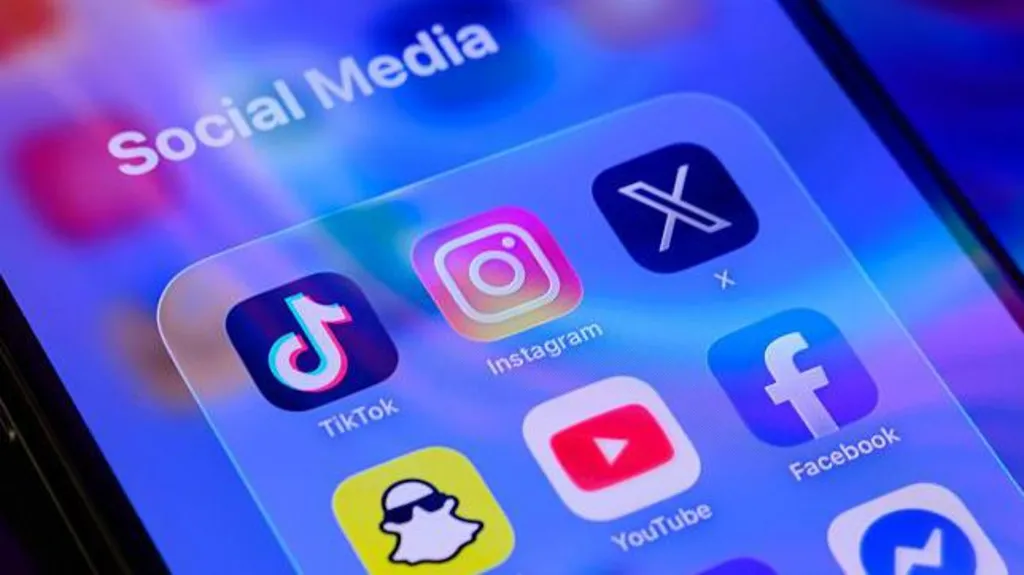
Investigations have been opened into alleged non-compliance by Facebook, Instagram, Snapchat, TikTok and YouTube. These platforms are among the most influential services for young users, making them central to whether Australia’s law succeeds or becomes difficult to enforce in practice.
The key question is whether these companies have taken reasonable and effective steps to stop underage access. Regulators are likely to examine age-check systems, account-removal processes, detection tools, appeal pathways and how quickly platforms respond when under-16 users are identified.
Evidence Shows Children Are Still Getting Access
The government’s tougher stance follows signs that the ban has not fully changed behaviour. A BBC visit to a Sydney school found that most students who had used social media before the ban said they still had access afterward.
The eSafety Commission also reported that seven out of 10 children under 16 who previously had a social media account still had “some access.” That finding is significant because it suggests the problem is not limited to isolated loopholes or a small number of users.
Government Says Big Tech Is Not Doing Enough
Prime Minister Anthony Albanese said the global conversation around social media age limits had shifted since Australia introduced its law, but he argued that large technology companies were still falling short.
His message was that too many children remain active on social media. Communications Minister Anika Wells also said she was not satisfied that platforms were doing everything possible to keep children off restricted apps.
Wells accused platforms of using tactics from the “big tech playbook” and doing only the bare minimum. That language shows the government is preparing for a tougher enforcement phase, where companies will be judged by evidence rather than broad public commitments.
What the New Powers Could Mean
The new powers for the eSafety Commissioner may become just as important as the larger fine. If platforms are required to hand over compliance evidence, regulators will be better placed to compare what companies claim publicly with what their systems are actually doing.
This could force platforms to invest more heavily in age-assurance technology, moderation systems and account-monitoring tools. It may also increase pressure on companies to close loopholes that allow children to return after being removed.
The Privacy Challenge
Stronger enforcement also raises difficult privacy questions. Verifying age online can involve sensitive data, identity checks, facial estimation tools or third-party verification systems. Governments want platforms to protect children, but users and privacy advocates may question how much personal information should be collected to prove age.
That balance will be one of the biggest tests for Australia’s model. A system that is too weak may fail to keep children off restricted platforms. A system that is too intrusive may create new risks around data collection and surveillance.
Why Other Countries Are Watching Australia
Australia’s approach is already influencing debate overseas. The UK has announced plans for a similar under-16 social media ban, expected to come into effect by spring 2027. A full list of affected platforms has not yet been released, but officials have indicated the rules would apply to services built around social interaction and user-posted content.
The UK is also considering additional measures, including an overnight curfew and restrictions designed to stop infinite scrolling for users under 18. That shows the global debate is moving beyond simple age bans toward the design features that keep young people engaged for long periods.
The next phase will depend on how strongly the eSafety Commissioner uses the expanded powers and whether platforms can show convincing evidence of compliance. If investigations find that companies failed to take reasonable steps, the proposed A$99 million penalty could become a major test case for online safety enforcement.
For families, the announcement does not mean every underage account will disappear immediately. But it does show that Australia is no longer treating the ban as a symbolic reform. The government is raising the cost of failure and demanding proof that platforms are doing more than the minimum to keep children off social media.

Make Swikblog your go-to source on Google for reliable updates, smart insights, and daily trends.