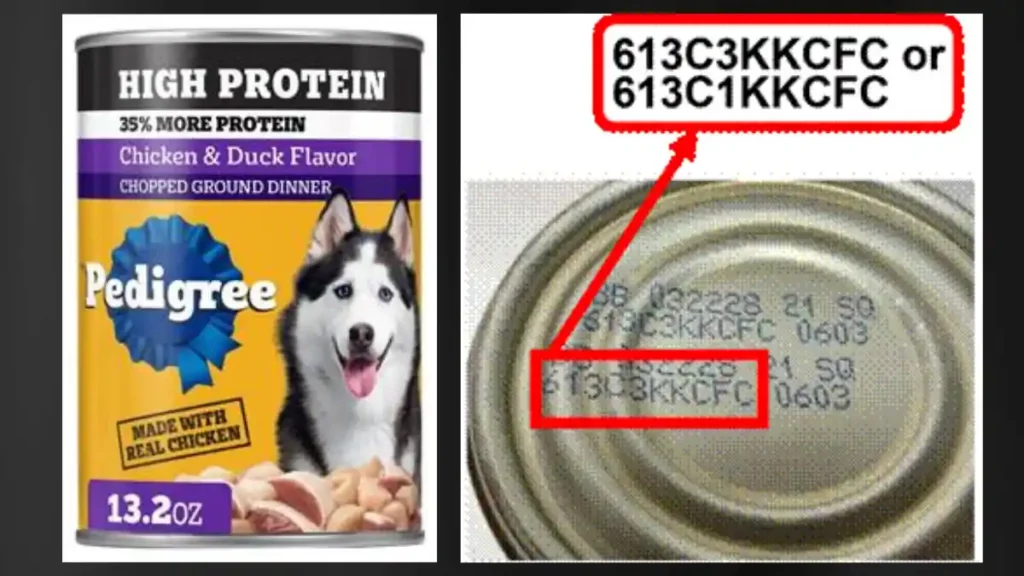

A Pedigree wet dog food recall is raising concern for pet owners because the affected cans were not supposed to be in homes, stores or online orders at all. Mars Petcare US has recalled two lots of Pedigree High Protein Chopped Chicken & Duck Flavor after the company said cans that had already been flagged for disposal appeared to have been diverted into the U.S. marketplace.
The recall involves a possible contamination risk from hard, sharp metal and plastic fragments. If swallowed, those pieces could injure a dog’s mouth or digestive tract, create a choking hazard, or cause a gastrointestinal blockage. Mars Petcare says it has received no related reports of pet illness or injury so far, but owners are being told not to take chances with the affected lot codes.
The 2 lot codes pet owners should check
The recall is limited to one Pedigree canned wet dog food product. Owners should check the bottom of each can for the lot code before feeding it to their dog.
| Product | Can size | Recalled lot codes | Main risk |
|---|---|---|---|
| Pedigree High Protein Chopped Chicken & Duck Flavor Wet Dog Food | 13.2 oz | 613C3KKCFC, 613C1KKCFC | Sharp metal and plastic fragments |
No other Pedigree or Mars Petcare US products are included in this recall, according to the official FDA recall notice.
Why these cans reached consumers
The key detail in this recall is how the product entered the market. Mars Petcare said the two lots did not meet the company’s safety and quality standards. As part of its quality control process, the affected cans were sent to a third-party vendor for destruction.
The company later discovered that the products appeared to have been fraudulently diverted and sold in the United States through unauthorized channels. That makes this recall different from a typical product pullback where a manufacturer can more easily trace shipments through normal retail records.
Because the cans allegedly moved outside the authorized distribution chain, pet owners should not assume they are safe based only on where they shop. The most reliable check is the product name, can size and lot code.
Why distribution is harder to track
In a standard recall, companies often identify specific retailers, warehouses or regions. In this case, the unauthorized diversion means sales and distribution records may be incomplete. That uncertainty is why public health officials and Mars Petcare are focusing on the lot codes instead of naming one confirmed store list.
The Hawaiʻi Department of Health also warned consumers to check their cans, even though officials said it was not certain any recalled product was sold in Hawaiʻi. The warning was issued because the lack of normal distribution records makes it difficult to rule out where the affected cans may have gone.
What can happen if a dog eats the recalled food?
This is a physical contamination concern rather than a spoilage or bacterial recall. The danger comes from possible hard, sharp fragments hidden inside soft wet food.
If a dog bites or swallows pieces of metal or plastic, the first risk is choking. A fragment may become stuck in the mouth or throat, especially if a dog eats quickly. Even if the object passes the throat, it can still cause internal cuts or become lodged farther down the digestive tract.
Potential injuries may include cuts to the mouth, throat, stomach or intestines, as well as gastrointestinal blockage. A blockage can stop food or waste from moving normally through the body and may require urgent veterinary care.
Choking symptoms to watch for
Owners should act quickly if a dog that may have eaten the recalled food shows signs of choking or airway distress. Warning signs may include:
- Leaning forward in a “tripod position” to help open the airway
- Drooling
- Gagging, retching or coughing
- Pawing at the mouth or throat
- Rubbing the mouth or face against objects
- Difficult breathing
- High-pitched, rattling or unusual breathing sounds
- Blue-tinged gums
- Collapse, weakness or unconsciousness
Blue gums, collapse or severe breathing trouble should be treated as an emergency.
Signs of a possible digestive blockage
If a dog swallows a foreign object, symptoms may not appear immediately. Pet owners should monitor for signs that may point to a gastrointestinal blockage, including:
- Vomiting
- Loss of appetite
- Weight loss
- Weakness or lethargy
- Abdominal pain
- Difficulty using the bathroom
A dog that becomes weak, repeatedly vomits or appears painful after eating the recalled food should be checked by a veterinarian.
Signs of internal cuts or laceration
Sharp fragments can also scrape or cut tissue inside the digestive tract. Possible signs of gastrointestinal laceration include:
- Vomiting with bright red blood
- Vomiting dark material that looks like coffee grounds
- Dark, tarry stool
- Abdominal pain
- Lethargy or weakness
- Loss of appetite or weight loss
- Drooling
Blood in vomit or black, tar-like stool can signal internal bleeding and should be treated as urgent.
What to do if you have the recalled cans
Pet owners should stop using any can with lot code 613C3KKCFC or 613C1KKCFC. Do not inspect the food and feed the portion that looks normal. Small fragments may be difficult to see, and the full contents of the can should be kept away from pets.
Consumers can contact Pedigree Consumer Care at 1-800-525-5273 to request a replacement. Mars Petcare says owners who fed the recalled product to their dog and are concerned should contact a veterinarian.
When calling a vet, owners should be ready to share the product name, lot code, how much the dog may have eaten and whether any symptoms have appeared. Keeping the can or a photo of the bottom lot code can help avoid confusion.
Read More:
- Disney $50 million settlement claim deadline and eligibility
- ALDI Fusia kimchi tofu kimbap recalled over tuna allergen
- Visit the Swikblog homepage for more latest news
Why lot-code checks matter in recall cases
Pet food packages can look nearly identical on a shelf, especially when the same brand sells several wet food flavors in similar cans. That is why this recall should not be checked by brand name alone. The affected product is limited to one flavor, one can size and two lot codes.
Product recalls involving possible distribution mistakes can also create uncertainty for consumers. A similar issue appeared in a separate food safety case involving recalled tuna shipped to stores in multiple states, showing why households should pay attention to lot codes, product dates and official recall instructions rather than relying only on where an item was purchased.
What pet owners should remember
The recalled Pedigree product is High Protein Chopped Chicken & Duck Flavor Wet Dog Food in 13.2 oz cans with lot codes 613C3KKCFC and 613C1KKCFC. The concern is possible hard, sharp metal and plastic material that could harm dogs if consumed.
Mars Petcare says it is working with authorities to determine how the cans entered the market. Until that investigation provides more clarity, the safest step for consumers is to check every matching can, stop feeding recalled product immediately and contact Pedigree or a veterinarian if needed.

Make Swikblog your go-to source on Google for reliable updates, smart insights, and daily trends.