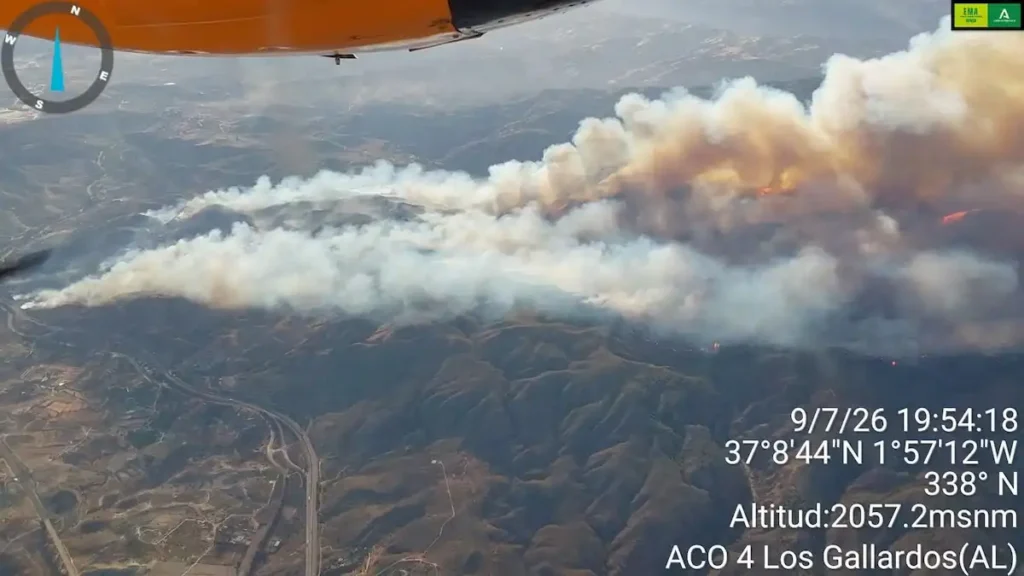

At least 11 people have died and eight others have been injured after a fast-moving wildfire swept through the Los Gallardos and Bédar area of Almería in southern Spain, trapping victims as they attempted to escape through difficult rural terrain.
The Junta de Andalucía revised the confirmed death toll from an earlier figure of 12 to 11 on Friday morning. Emergency crews were still searching affected areas, while four people with serious burns were being prepared for transfer from Torre Cárdenas Hospital in Almería to Virgen del Rocío Hospital in Seville. Four other injured people were described as being in a less serious condition.
The fire had affected approximately 3,150 hectares by the latest official update. Its speed, steep terrain and proximity to scattered homes made the emergency especially dangerous for residents, tourists and firefighters working across the mountainous area.
Quick Facts
- Confirmed deaths: 11
- People injured: 8, including 4 seriously
- Land affected: Around 3,150 hectares
- Emergency personnel: 464
- Emergency vehicles: 124
- INFOCA firefighters: About 150
- People rehoused: 122
- Emergency calls received: More than 150
- Major roads affected: A-7 and N-340A
Why the evacuation became so dangerous
The wildfire began near Los Gallardos before moving rapidly toward neighboring Bédar, where officials faced changing conditions throughout Thursday evening.
Authorities initially began evacuating parts of the area. As the fire accelerated and threatened the main exit route, emergency managers instructed many remaining residents to stay inside because confinement was considered safer than trying to drive through smoke, flames and blocked roads.
Officials later said that decision helped prevent a higher death toll because the central residential area of Bédar was not ultimately reached by the fire.
The victims are believed to have tried to leave by a route that was not part of the official evacuation plan. According to the regional government, they attempted to travel through a rambla, a normally dry riverbed common in southeastern Spain, but were overtaken by the rapidly advancing blaze.
Four victims were found inside a right-hand-drive vehicle, leading authorities to suspect they may have been British visitors. Their identities and nationalities had not been formally confirmed in the latest information available.
The remaining seven victims were found elsewhere in the affected zone, including outside vehicles. Officials believe some may have abandoned their cars and continued on foot after routes became impassable.
The circumstances show why emergency instructions can change during a wildfire. A road that appears safe may become unusable within minutes, while smoke can hide flames, fallen branches, power lines and stationary vehicles.
Similar evacuation risks were seen during the Pocket Fire near Sedona, where residents were ordered to leave as flames threatened homes and closed a major highway.
Steep ravines slow the firefighting response
The terrain around Los Gallardos and Bédar has made containment particularly difficult. Emergency officials described an area of steep slopes, deep ravines and narrow access roads where heavy machinery could not reach several parts of the fire line.
Firefighters were able to work on some sections of the blaze, but parts of the left flank remained difficult to access. A nearby highway was expected to provide a possible barrier if the flames continued moving in that direction.
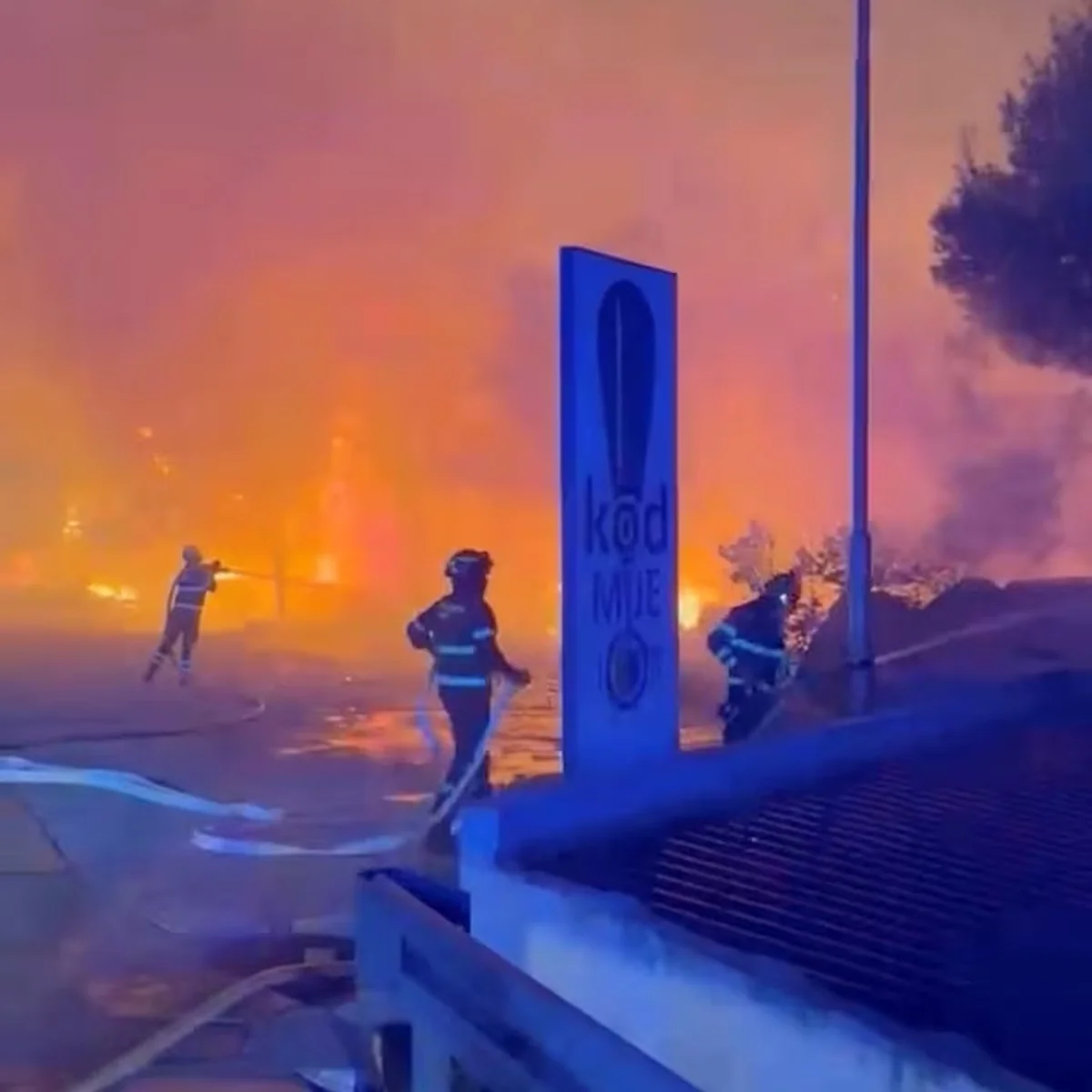
A total of 464 personnel and 124 vehicles were involved in the response. The operation included approximately 150 INFOCA wildfire specialists, nine fire engines, members of Spain’s Military Emergency Unit, medical teams, meteorological personnel, communications units and command staff.
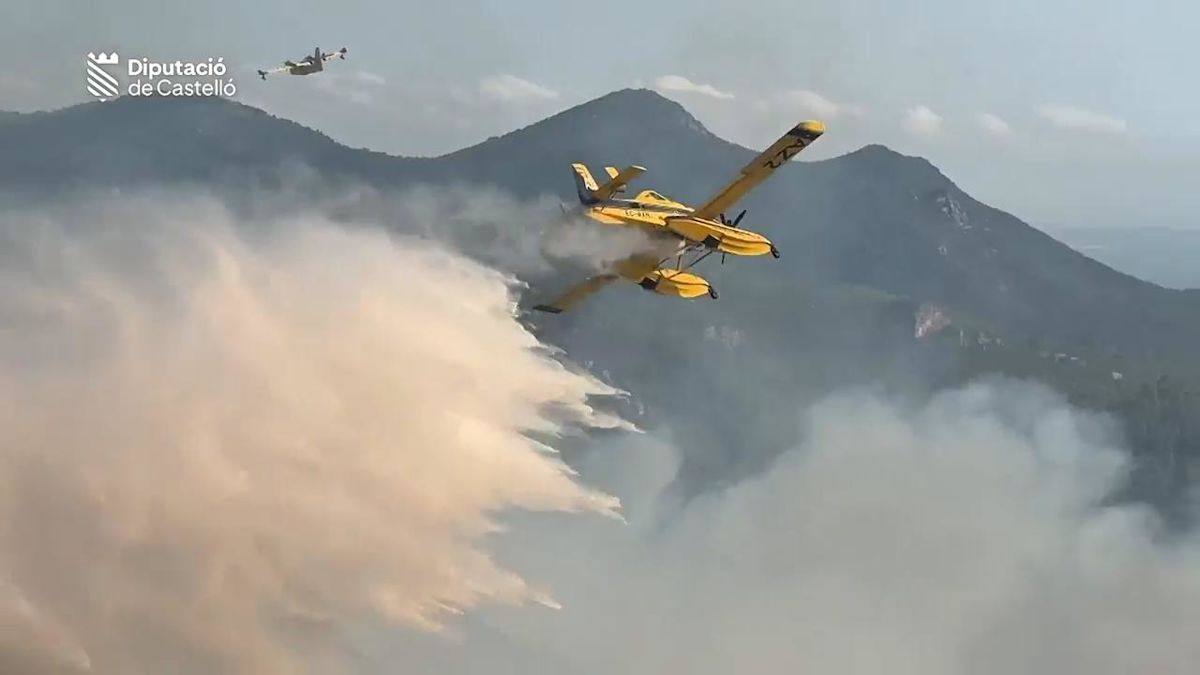
Sixty-four UME personnel were reported among those deployed. Aerial firefighting resources resumed operations after sunrise, subject to visibility and safe flying conditions. As many as 16 aircraft had taken part during the earlier phase of the emergency.
The evacuation zone included Almocáizar, Fuente del Albarico, Los Pinos, La Serena and Pinar de Bédar, along with a nearby tourist complex.
At least 122 displaced people were being accommodated in a theatre and sports centre, most of them from Bédar. Around 100 evacuees were also received in Lubrín after the main road out of Bédar became unsafe.
Local authorities and residents in Lubrín helped provide food, shelter and essential supplies. A telephone number, 677 904 624, was established for people affected by the fire.
The wider pattern of weather-related emergencies has placed increasing pressure on local authorities. In Asia, communities were also preparing for the possible impacts of Typhoon Bavi as Taiwan and parts of China monitored the powerful storm.
Read More:
Road closures, fire origin and official investigation
The wildfire forced authorities to close sections of the A-7 motorway in one direction between approximately kilometres 709 and 714. The N-340A was also affected as flames and dense smoke moved near the road.
Emergency services handled more than 150 calls from members of the public after the first sightings of the fire. The volume of reports reflected how quickly the smoke and flames became visible across the area.
Witnesses suggested that a fallen power line may have been connected to the outbreak, but officials had not confirmed the cause. Investigators will need to examine the suspected ignition area before determining whether electrical infrastructure, human activity or another factor started the blaze.
Residents and travellers can follow verified updates through the Junta de Andalucía’s official active wildfire information service.
The provisional death toll makes the Los Gallardos fire the deadliest wildfire recorded in Andalusia. Earlier deadly fires elsewhere in Spain include the 1979 Lloret de Mar disaster, which killed 21 people, the 1984 La Gomera fire, which left 20 dead, and the 2005 Riba de Saelices fire, where 11 members of a firefighting team lost their lives.
The scale of the tragedy prompted the Andalusian Government to postpone the scheduled inauguration of its new regional administration. Regional President Juanma Moreno expressed condolences to the victims’ families and urged the public to follow official instructions.
A separate wildfire was also burning near Benahavís in Málaga, where around 1,000 people were evacuated as a precaution. Some residents were later allowed to return. That incident is unrelated to the Los Gallardos fire and should not be confused with the deadly blaze in Almería.
Emergency crews continued searching isolated homes, vehicles and areas that had been difficult to reach overnight. Authorities also warned drivers and residents not to enter closed roads or attempt to find unofficial escape routes while firefighting and recovery operations remain active.

Make Swikblog your go-to source on Google for reliable updates, smart insights, and daily trends.