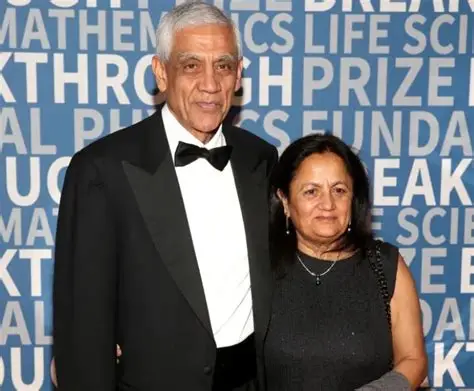

The Seattle Seahawks are moving toward a new ownership era after the family of billionaire technology investor Vinod Khosla agreed to buy the NFL franchise for a reported $9.6 billion, a price that would establish a new league record if the transaction receives final approval.
Although Vinod Khosla led the investment group behind the agreement, his wife, Neeru Khosla, is set to become the Seahawks’ controlling owner. That makes her the person expected to represent Seattle in NFL ownership meetings and take the lead on major league-level decisions affecting the franchise.
The distinction corrects early reports that identified Vinod as the proposed controlling owner. The couple would oversee the team together, but Neeru is expected to hold the formal role recognised by the NFL.
For Seahawks supporters, the deal is about more than a change in wealthy investors. It would end the ownership period connected to Microsoft co-founder Paul Allen, who bought the team in 1997 and helped turn Seattle into one of the NFL’s most stable and successful franchises.
Who is Vinod Khosla?
Vinod Khosla is an Indian-born American entrepreneur and venture capitalist whose career has been closely tied to the development of Silicon Valley.
He co-founded Sun Microsystems in 1982 alongside Scott McNealy, Andy Bechtolsheim and Bill Joy. The company became an important force in computing infrastructure and helped popularise network-based technology during the early expansion of the internet.
Khosla later moved into venture capital and founded Khosla Ventures in 2004. The investment firm has supported companies working in artificial intelligence, healthcare, robotics, financial technology, biotechnology and clean energy.
His business record is built around making long-term bets on emerging technologies, including projects that may require substantial investment before producing reliable returns. That background makes his entry into NFL ownership notable because sports franchises are also long-term assets whose value depends on media rights, brand strength, facilities and sustained fan support.
Vinod has already been connected to the NFL through a minority investment in the San Francisco 49ers. Because the 49ers and Seahawks are divisional rivals in the NFC West, that interest must be sold before the Seattle transaction can be completed.
NFL rules are designed to prevent an individual from holding financial stakes in competing teams, particularly franchises that regularly play each other and could have conflicting commercial interests.
Why Neeru Khosla will be the controlling owner
Neeru Khosla is an education philanthropist and the co-founder of the CK-12 Foundation, a nonprofit organisation focused on making educational materials more widely available through digital technology.
The foundation develops free learning resources for students and teachers, particularly in mathematics, science and other school subjects. Her work has centred on improving access to education rather than building a public profile through professional sport.
As the proposed controlling owner, Neeru would become the Seahawks’ primary voice in NFL governance. Controlling owners attend league meetings and vote on important matters such as team sales, broadcasting agreements, competition rules, international expansion and revenue distribution.
The position does not necessarily mean she would make every football decision. Coaching appointments, player contracts and roster planning are generally managed by a team’s football executives, although ownership sets the wider direction and determines how much financial support is available.
Her proposed appointment would also make her one of the most prominent Indian-American women in professional sports ownership. It reflects a gradual change in a league where controlling ownership roles have historically been dominated by men from long-established business families.
Why the Seahawks are worth a record price
The reported $9.6 billion valuation illustrates how rapidly NFL franchise values have increased. The previous league record was established when the Washington Commanders were sold for $6.05 billion in 2023.
Several factors help explain the increase. The NFL benefits from enormous national broadcasting contracts, shared commercial revenue and a limited supply of teams. Only 32 franchises exist, and controlling stakes rarely become available.
The Seahawks also enter the transaction from a position of sporting strength rather than instability. Seattle won Super Bowl LX after defeating the New England Patriots 29-13, adding another championship to the franchise’s history.
The title gave the team additional national exposure and strengthened the commercial appeal of an already valuable organisation. The club later marked that achievement by unveiling its Super Bowl 60 championship rings, featuring details connected to the team’s title-winning season.
Seattle also benefits from a loyal regional following, strong merchandise demand and one of the league’s most recognisable home environments at Lumen Field. Those advantages provide the prospective owners with a strong foundation rather than an expensive rebuilding project.
The wider NFL business is also expanding internationally. The league’s 2026 international games schedule includes its first regular-season game in Australia, showing how the NFL is seeking new audiences and commercial opportunities outside the United States.
Read More:
- EU Entry/Exit System: Why airport delays are affecting travel across Europe
- ETIAS delayed to 2026: What the €20 EU travel authorisation means for visitors
- Visit the Swikblog homepage for more latest news
What happened to Paul Allen’s ownership?
Paul Allen purchased the Seahawks for approximately $194 million in 1997 at a time when the team’s future in Seattle had become uncertain.
His ownership helped keep the franchise in the city and supported the development of the stadium now known as Lumen Field. During the Allen era, Seattle reached several Super Bowls and won its first championship following the 2013 season.
After Allen died in 2018, his sister Jody Allen oversaw the franchise through the Paul G. Allen Trust. The sale follows the broader instructions attached to his estate, under which major assets were expected to be sold and the proceeds directed toward philanthropic causes.
The Khosla transaction remains subject to NFL review and approval. League officials will examine the financing, ownership structure and any participating investors before owners vote on the agreement.
At least 24 of the NFL’s 32 owners must support the sale for it to proceed. Until that happens, the Seahawks remain under the control of the Allen estate, and the Khoslas are prospective owners rather than the franchise’s completed successors.
An authoritative report from The Associated Press said the proposed transaction is expected to be considered by NFL owners after the league completes its formal review.
What could change under the Khosla family?
No immediate relocation plan or major restructuring has been announced. The Seahawks continue to play at Lumen Field, and the team remains closely identified with Seattle and the wider Pacific Northwest.
The first priorities are more likely to involve leadership continuity, investment in training facilities, commercial development and the long-term future of the stadium.
The new owners would also inherit a championship organisation, making sudden changes particularly risky. Supporters are likely to expect the Khoslas to preserve the team’s identity while providing the resources needed to remain competitive.
The record purchase price creates high expectations, but the family’s long-term reputation will depend less on the headline valuation than on how it handles football operations, stadium planning and its relationship with Seahawks fans.

Make Swikblog your go-to source on Google for reliable updates, smart insights, and daily trends.