The Pan Am Flight 526A wreckage has been identified nearly 2,000 feet beneath the Atlantic Ocean off Puerto Rico, resolving a 74-year mystery surrounding an accident that killed 52 passengers and influenced modern preflight safety briefings.
The Douglas DC-4, named Clipper Endeavor and registered as NC88899, was found on June 2, 2026. The Air/Sea Heritage Foundation announced the discovery on July 21 after underwater photographs revealed identifying marks on the aircraft.
What happened to Pan Am Flight 526A?
Flight 526A departed San Juan’s Isla Grande Airport at 12:11 p.m. on Good Friday, April 11, 1952. The aircraft was carrying 64 passengers and five crew members to New York’s Idlewild Airport, now John F. Kennedy International Airport.
Shortly after takeoff, the No. 3 engine developed a serious problem and its propeller was feathered. Trouble then affected the No. 4 engine, reducing power from both engines on the aircraft’s right side.
Captain John C. Burn attempted to return to San Juan, but the plane could not maintain altitude. About nine minutes after departure, he made an emergency water landing northwest of the airport. Returning after a technical problem remains an important safety option, as demonstrated by a more recent United Airlines Boeing 787 emergency landing.
Why did 52 passengers die?
All 69 people aboard survived the initial impact, but the tail separated and the main cabin began flooding. The plane sank in less than three minutes.
Life jackets and life rafts were available, but passengers had not received a demonstration explaining where the equipment was stored or how to use it. Preflight safety briefings were not mandatory at the time.
Heavy seas, language barriers and the absence of a coordinated evacuation caused further confusion. The US Coast Guard and Air Force rescued 12 passengers and all five crew members. Fifty-two passengers died, while the bodies of 39 victims were never recovered.
The accident became known in Puerto Rico as La Tragedia del Viernes Santo, meaning “The Good Friday Tragedy.”
Read More
- Southwest flight lands safely after windshield cracks at 37,000 feet
- Adelaide flight school resumes operations after fatal Parafield plane Crash
How the Pan Am Flight 526A wreckage was found
The Air/Sea Heritage Foundation led the investigation with Deep Sea Vision and Discovery Channel’s Expedition Unknown, hosted by explorer Josh Gates.
Foundation president and aviation historian Russ Matthews began researching the missing aircraft in 2019. Investigators studied accident reports, survivor testimony, communications transcripts and a chart created by US Air Force pilots who witnessed the crash and directed rescuers to the area.
The evidence narrowed the search zone to approximately 10 square nautical miles. When the research vessel Fugro Brasilis passed near San Juan in 2026, its team agreed to assist.
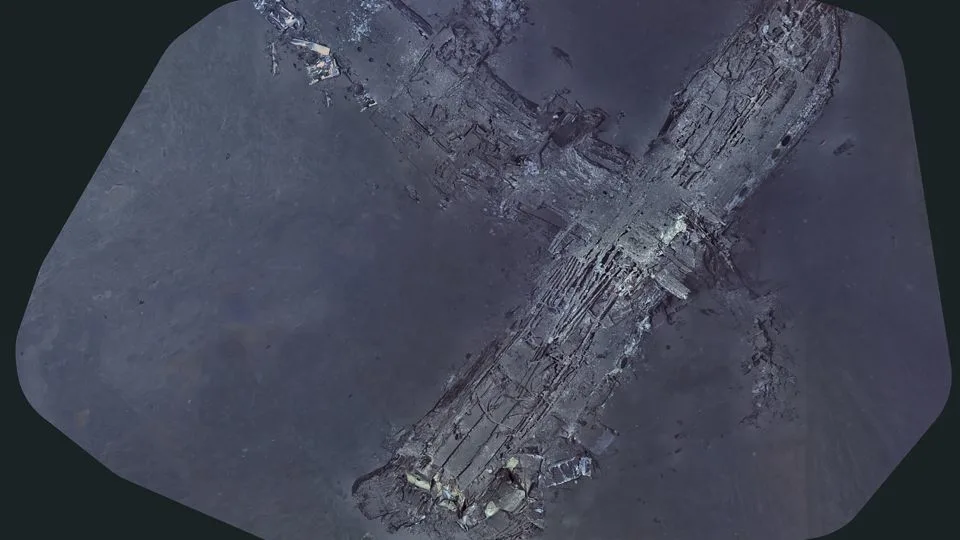
Deep Sea Vision deployed a HUGIN autonomous underwater vehicle equipped with high-resolution sonar. After approximately 30 hours of scanning, it detected the aircraft at 7:14 p.m. Atlantic Standard Time on June 2.
How was Clipper Endeavor identified?
The aircraft was found in two main sections at a depth of almost 2,000 feet, or about 600 metres. A photographic survey showed the landing gear, cabin windows, Pan American’s winged emblem and lettering from the name “Endeavor.”
These details conclusively identified the wreckage. Physical evidence remains central to aviation investigations, including the NTSB investigation into the Wimberley plane crash, where wreckage, weather information and maintenance records are being examined together.
Will the wreckage be recovered?
No recovery operation has been announced. Because 39 victims were never found, the wreck is considered their final resting place.
The Air/Sea Heritage Foundation is working with the Puerto Rican government to expand protection for the site and advocate for a permanent memorial. Discovery photographs and confirmed expedition details are available through the foundation’s official Clipper Endeavor project.
How the crash changed aviation safety
The Civil Aeronautics Board investigated the engine failures, maintenance, evacuation and survival equipment. The disaster demonstrated the danger of carrying emergency equipment without ensuring passengers knew how to locate and use it.
Flight 526A became a catalyst for standardized preflight briefings covering emergency exits, life jackets and evacuation procedures. These demonstrations are now routine on commercial flights.
The Clipper Endeavor search is expected to appear in a forthcoming episode of Expedition Unknown. Discovery had not announced an exact broadcast date as of July 23, 2026.

Make Swikblog your go-to source on Google for reliable updates, smart insights, and daily trends.