
Federal investigators have released disturbing new details about the deadly Wimberley plane crash that killed five people after a small aircraft reportedly broke apart in mid-air while flying through freezing conditions over Central Texas.
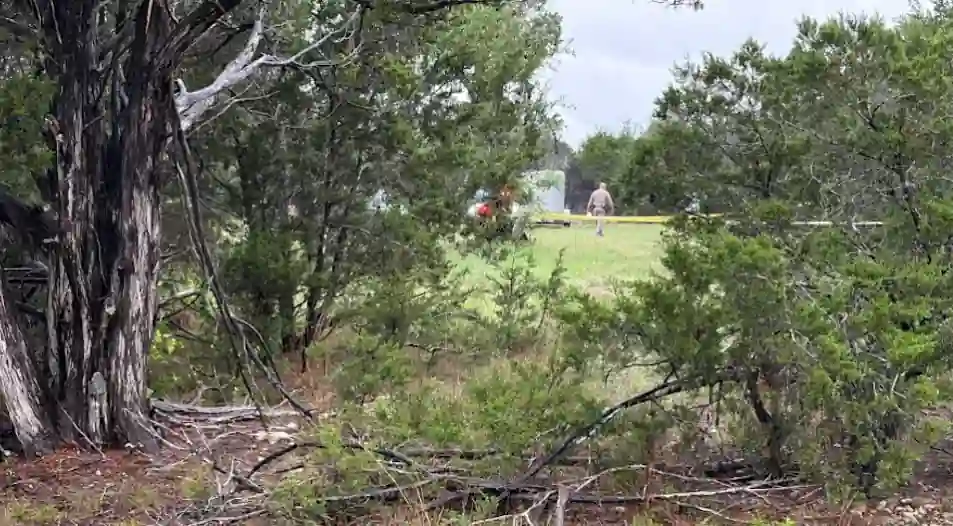
According to a preliminary report released by the National Transportation Safety Board (NTSB), the crash happened around 11:03 p.m. on April 30 in a wooded area near a private residence off Round Rock Road near Wimberley.
The aircraft involved was a Cessna 421C carrying a pilot and four passengers from the Amarillo area. All five people on board were killed.
The twin-engine plane had departed River Falls Airport in Amarillo at approximately 9:10 p.m. and was headed toward New Braunfels National Airport on a personal flight operating under instrument flight rules, commonly known as IFR.
Investigators say the pilot encountered problems during the flight and informed air traffic controllers that the aircraft’s pitot heat system was not working. The pilot also reported that the pitot tube had iced over.
The pitot tube is one of the most important systems on an aircraft because it provides airspeed information to pilots. When ice blocks the system, airspeed readings can become unreliable or completely inaccurate, creating a dangerous situation during night flying or poor weather conditions.
According to the preliminary report, the pilot told controllers he was relying on backup gauges after the instrument problems developed.
The pilot then requested permission to descend to a lower altitude in hopes of warming the aircraft and escaping the icing conditions.
Air traffic controllers approved the descent request. Shortly afterward, the pilot acknowledged a frequency change instruction from controllers. That transmission became the aircraft’s final known radio communication.
No further radio transmissions were received from the aircraft after that point.
Flight tracking data showed unusual movements before contact was lost
The NTSB report states that flight tracking data captured several erratic maneuvers in the final minutes before the crash.
Investigators said the plane made abrupt directional changes, including a near 180-degree turn, before radar and tracking signals disappeared about one minute before impact.
Weather conditions also appear to have played a significant role in the incident.
The report said the aircraft encountered freezing temperatures between approximately minus 2 and minus 6 degrees Celsius during the final stage of the flight. Those temperatures created conditions favorable for structural icing and instrument icing.
Aviation experts have repeatedly warned that icing is among the most dangerous weather threats for smaller aircraft because it can impact lift, aircraft control and instrument reliability at the same time.
According to the report, a nearby homeowner heard the crash and saw flames shortly afterward before calling emergency responders.
When authorities arrived, they located wreckage spread across nearly 1.25 miles of wooded terrain. Investigators said the large debris field was consistent with an in-flight breakup, indicating the aircraft likely came apart before crashing into the ground.
The aircraft was destroyed in the crash, and officials confirmed a post-impact fire occurred after the wreckage landed in the wooded area.
The NTSB emphasized that the findings released so far are only preliminary. The agency said the investigation remains ongoing and no official probable cause has yet been determined.
Federal investigators are expected to continue reviewing the aircraft’s maintenance records, weather conditions, pilot qualifications, flight instruments, air traffic control communications and wreckage evidence as part of the final investigation process.
Read More
NTSB investigation could take more than a year
Under normal aviation investigation procedures, the NTSB typically releases a preliminary report within days or weeks of a crash, while the final report and probable cause determination can take 12 to 14 months or longer.
The agency’s final report may also include safety recommendations designed to prevent similar accidents in the future.
The Wimberley tragedy has drawn national attention because of the combination of severe icing conditions, reported instrument failures, unusual flight maneuvers and evidence suggesting the aircraft broke apart before impact.
The Federal Aviation Administration has long warned pilots about the dangers of in-flight icing, especially for aircraft operating at night under instrument flight rules. More information about aviation icing safety can be found through the FAA’s official aviation icing guidance.
The crash has devastated families connected to the victims and shaken communities in both the Texas Hill Country and Amarillo.
Swikblog recently covered another major aviation safety investigation involving an in-flight emergency in this Southwest Airlines windshield crack incident that forced an emergency landing.
Readers following ongoing FAA and NTSB investigations can also read Swikblog’s report on the Air Canada and American Airlines near-collision investigation at JFK Airport.
While investigators continue piecing together exactly what happened during the final moments of the flight, the preliminary findings already paint a troubling picture of a pilot battling icing, instrument failures and deteriorating flight conditions moments before the aircraft disappeared from radar over Central Texas.

Make Swikblog your go-to source on Google for reliable updates, smart insights, and daily trends.