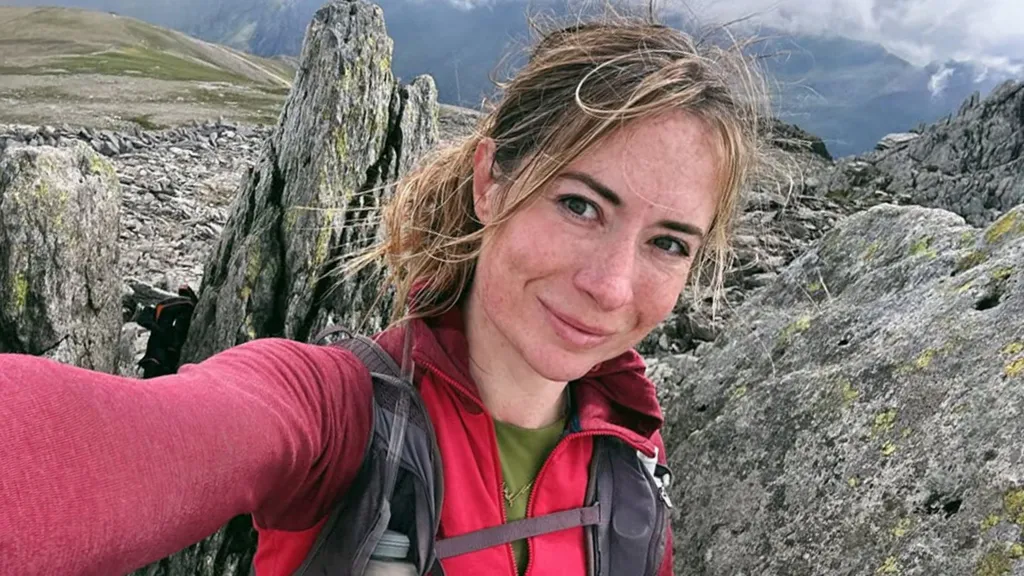

Scottish hillwalker Laura Baillie has completed all 1,072 summits required for the rare “Full House” challenge, joining an elite group of only about 100 people registered as having achieved one of hillwalking’s most extensive milestones.
The 38-year-old completed the challenge on Carn na h-Easgainn near Tomatin, south of Inverness. She deliberately saved the relatively accessible 617m (2,025ft) hill for last so friends and family could join her, including her 89-year-old grandmother, who turns 90 next month.
What is the 1,072-peak Full House?
The Full House goes far beyond completing Scotland’s famous Munros. The challenge recognised by the Scottish Mountaineering Club requires climbers to complete six different hill classifications.
Baillie’s 1,072 summits comprise 282 Munros, 226 Munro Tops, 222 Corbetts, 219 Grahams, 89 Donalds and 34 Furths.
Munros are Scottish mountains above 3,000ft, while Munro Tops reach the same height but lack sufficient separation from neighbouring peaks to be independent Munros. Corbetts are Scottish peaks between 2,500ft and 3,000ft, Grahams cover qualifying hills from 600m to 762m, and Donalds are hills in the Scottish Lowlands.
The 34 Furths are mountains above 3,000ft in England, Wales and Ireland. That geographical detail matters: despite the challenge being dominated by Scottish hills, completing a Full House also requires travelling beyond Scotland and outside the UK to Ireland.
Why the lower Corbetts proved so difficult
Height alone does not determine the difficulty of this challenge. Baillie described the Corbetts as the hardest category because some involve pathless terrain, thick bracken and less obvious approaches.
Munros often have well-defined routes because they attract large numbers of walkers. More isolated hills can demand greater navigation and route-planning skills. Baillie said experience eventually gave her the confidence to study maps, design her own routes and combine hills in different ways.
The Full House therefore represents much more than accumulating summit numbers. It can involve years of early starts, weekends away, wild camping, long journeys and walking through widely varying weather and terrain.
Baillie completed most of her walks alone
Baillie is not a professional athlete. She works as a property manager in Glasgow and fitted the challenge around everyday working life.
She estimated that she walked alone around 75% of the time, including in isolated areas of Scotland where mobile-phone coverage can disappear. Her safety routine included giving family and friends her intended route and an estimated finishing time before leaving.
Such precautions are important in remote mountain environments, where weather, navigation and isolation can quickly complicate an outing. The dangers of difficult mountain terrain were also highlighted by a fatal Longs Peak climbing incident, underscoring why preparation and route awareness matter even for experienced climbers.
Missing Hiker Found Alive After 14 Days in Malaysia Mountains
Why she deliberately saved an easy hill for last
Carn na h-Easgainn was not chosen because it was the toughest summit remaining. Baillie intentionally left a straightforward final hill with an estate track so people close to her could participate.
She contacted estate owners and energy companies while establishing who owned the land and arranging access. Permission ultimately allowed her grandmother to be driven to the summit.
Around 20 relatives and friends gathered for the occasion, giving an unusually social ending to a challenge Baillie had largely pursued alone.
Only around 100 people have completed it
Just over 100 people are registered with the Scottish Mountaineering Club as Full House completers, illustrating how uncommon the achievement remains.
The challenge even has an unusual canine record. In April 2025, nine-year-old Kerry Blue Terrier Betty became the first dog to complete the Full House alongside her owner, Shona Marshall.
A challenge rooted in Scottish mountaineering history
The Scottish Mountaineering Club dates to 1889. Sir Hugh Munro’s original tables of Scottish mountains above 3,000ft were published in the club’s journal in 1891, creating the foundation for the tradition now widely known as “Munro bagging.”
The club’s membership expectations also illustrate the level of mountain experience associated with the organisation. Prospective members are expected to have climbed at least 50 Munros and to have rock-climbing and hillwalking experience across different seasons and weather conditions.
Baillie’s achievement extends far beyond completing the Munros. She worked through six hill classifications across Scotland, England, Wales and Ireland while maintaining her career in Glasgow.
Major endurance achievements can take very different forms. The record turnout at the 2026 Manitoba Marathon similarly demonstrated the preparation and sustained effort behind ambitious personal endurance goals.
After hundreds of remote outings, Baillie’s 1,072-summit journey ended surrounded by the people closest to her, with her grandmother able to witness the final milestone from the summit.

Make Swikblog your go-to source on Google for reliable updates, smart insights, and daily trends.