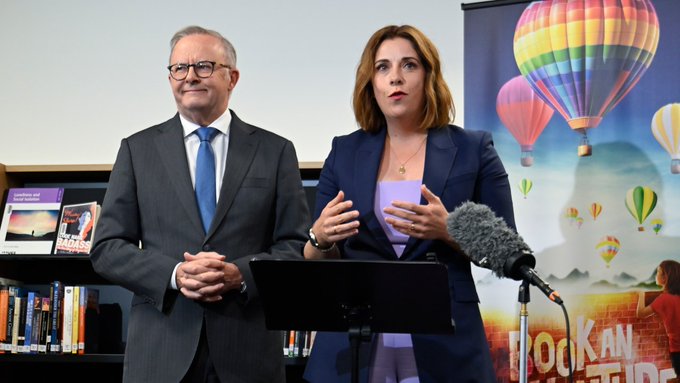

CANBERRA — Australians could soon be able to choose whether social media platforms show them personalised recommendations or a feed limited to accounts they follow, under draft online safety laws unveiled by the Albanese government on Tuesday, September 8.
The proposal, called “My Feed, My Way,” forms part of a broader Digital Duty of Care framework designed to place greater responsibility on technology companies for the safety of their products.
Under the plan, social media companies would have to notify both new and existing users and offer a clear choice over their default feed. People aged over 16 could opt into an algorithmically personalised feed or opt out and see content from friends and creators they have chosen to follow.
Prime Minister Anthony Albanese said the measure was intended to give individuals—not the government—greater control over what appears on their screens.
“This is not about giving government control, it is about giving people control,” Albanese said in the official announcement.
What Australia’s proposed online duty of care would do
The reforms extend beyond social media feeds. Online games, apps, messaging services and artificial intelligence chatbots would be expected to protect users under 18 from harmful design features, including addictive functions and tools that may damage a young person’s self-esteem.
Platforms would also be required to address content promoting eating disorders, hostility towards women and gender equality, pornography, dangerous stunts, crime, abuse and bullying.
Digital services would need to identify risks, document the steps taken to reduce them and review whether those safeguards remain effective. The eSafety Commissioner would oversee compliance and enforcement.
The draft laws would also allow eSafety to issue removal notices targeting so-called “nudify” apps and websites, while streamlining the handling of child cyberbullying and adult cyber-abuse complaints.
Companies that fail to comply with the proposed duty could face penalties of up to A$109.2 million.
Communications Minister Anika Wells compared the approach with safety standards applied to products such as cars, food and toys. She said Australians over 16 should be able to make an easy choice about their preferred feed—and have platforms respect that decision.
Political criticism and reaction on X
The announcement quickly triggered a divided response online. Supporters described the feed choice as a practical way to reduce the influence of engagement-driven recommendation systems while leaving personalised content available to people who want it.
Others were unconvinced that new legislation was necessary. Responding to Albanese’s statement that the government was giving Australians more power over their feeds, X user @bear_ing wrote that block buttons had existed “for ages,” reflecting an argument that users already have tools to manage unwanted content.
Critics questioned whether the wider duty of care could expand into political moderation or censorship. One Nation leader Pauline Hanson has warned against giving government greater influence over what Australians see online, while Coalition figures have called for close scrutiny of the bill’s scope and ministerial powers.
Albanese rejected the censorship claim, saying the proposal is focused on individual choice and requiring large technology companies to identify and reduce risks on their services. For adults, officials said the content-related duty would focus on illegal material, while the proposed protections for children would cover a broader group of serious harms.
Questions about public trust also featured prominently in the online discussion. X user @WhosFibbing disputed the government’s framing and argued that Australians’ distrust of political leaders could not simply be blamed on social media algorithms.
Another critic, @TruthFairy131, questioned how the government might define “harm, hate and misinformation,” highlighting fears among opponents that political judgment could influence future enforcement.
Some posts on X also alleged the policy was motivated by falling trust in the government or recent political setbacks. Those claims reflect partisan reaction to the announcement; no evidence establishing that as the purpose of the legislation was presented in the official release.
The government is now seeking feedback from digital platforms, industry groups, civil society organisations and advocates. It says legislation will be introduced to Parliament later in 2026, meaning the details could still change before a final vote.
Readers can follow more Australia and technology news on Swikblog.
This report is based on the Australian government’s September 8 announcement, public reporting and reaction posted on X. It will be updated if the draft legislation changes or further parliamentary details are released.

Make Swikblog your go-to source on Google for reliable updates, smart insights, and daily trends.