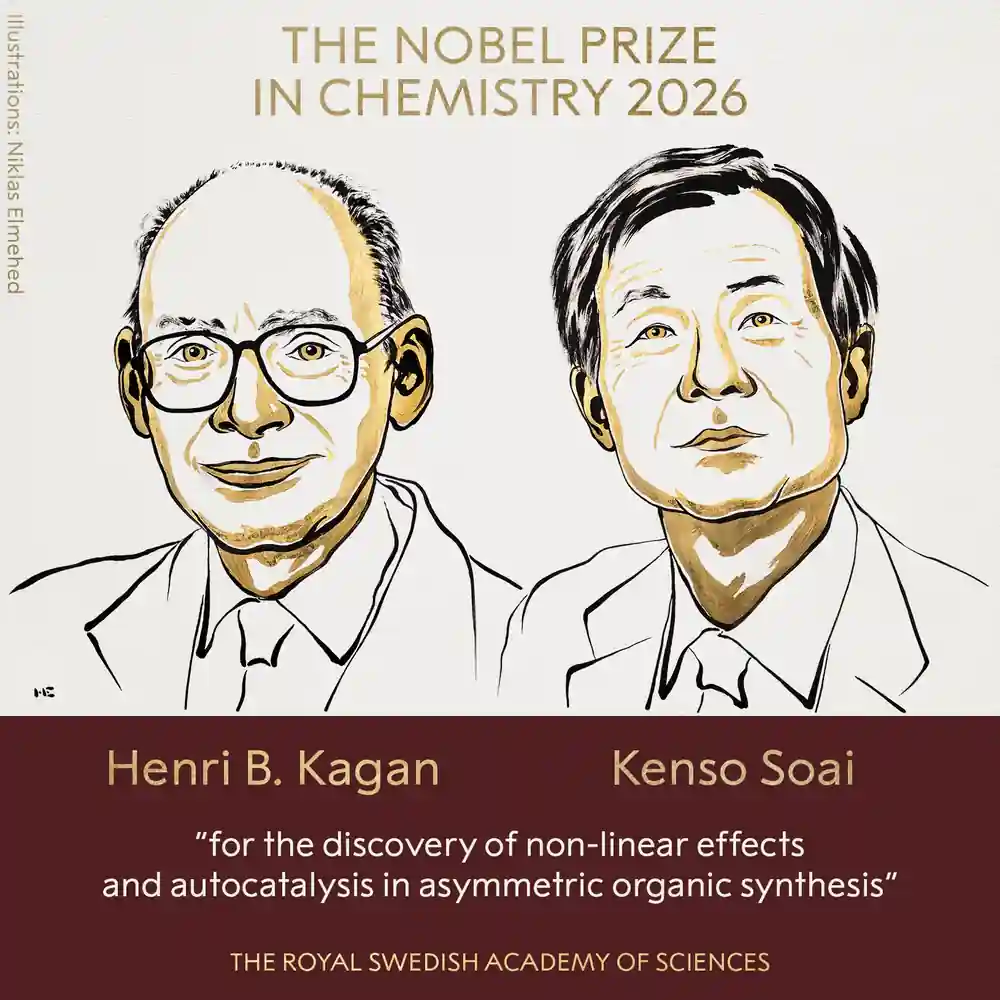

STOCKHOLM — French chemist Henri B. Kagan and Japanese chemist Kenso Soai have won the 2026 Nobel Prize in Chemistry for discoveries showing how tiny differences between mirror-image molecules can be dramatically amplified — work that has reshaped asymmetric synthesis and has important implications for pharmaceuticals and understanding the chemistry of life.
BREAKING NEWS The Royal Swedish Academy of Sciences has decided to award the 2026 #NobelPrize in Chemistry to Henri B. Kagan and Kenso Soai “for the discovery of non-linear effects and autocatalysis in asymmetric organic synthesis.” https://t.co/nH090ql1Xc
— The Nobel Prize (@NobelPrize) October 7, 2026
The Royal Swedish Academy of Sciences announced the prize on Wednesday, October 7, honoring Kagan and Soai “for the discovery of non-linear effects and autocatalysis in asymmetric organic synthesis.” They will share 12 million Swedish kronor, worth about $1.2 million.
Kagan and Soai’s Nobel-winning discoveries explained
The science centers on chirality. Some molecules exist in two forms that are mirror images of each other, comparable to a person’s left and right hands. They contain the same basic components but cannot be perfectly superimposed.
That difference is critical in biology and medicine because two mirror-image versions, known as enantiomers, can behave differently when they interact with enzymes, receptors and other biological molecules.
Kagan, 95, who is affiliated with Université Paris-Sud in Orsay, France, demonstrated an important phenomenon known as the non-linear effect. His research showed that a relatively small imbalance in a chiral catalyst could sometimes create a much larger preference for one mirror-image product.
The breakthrough gave chemists new insight into how asymmetric reactions work and how they could be controlled more precisely.
The Soai reaction showed chemistry can amplify itself
Soai, affiliated with Tokyo University of Science, made another major advance through asymmetric autocatalysis.
In autocatalysis, a product helps catalyze the production of more of itself. Soai demonstrated that such a process could also amplify molecular handedness: even a very small initial imbalance could become increasingly pronounced as the reaction continued.
The phenomenon became famous as the Soai reaction and offered experimental evidence for how small molecular differences can grow into overwhelming preferences.
International Literacy Day 2026: Theme, Date and Significance
Nelson Mandela International Day 2026: Theme, History and Significance
the discovery matters to the chemistry of life
The research addresses a much bigger scientific puzzle known as homochirality.
Living organisms strongly favor particular molecular orientations. Proteins, for example, are built overwhelmingly from amino acids of one handedness. Scientists have long sought to understand how such dominance could emerge if early chemical systems initially contained nearly equal amounts of both mirror-image forms.
Kagan’s non-linear effects and Soai’s self-amplifying reactions demonstrate mechanisms through which a tiny initial imbalance can become much larger. The work does not, by itself, establish exactly how life originated, but it gives scientists an experimentally demonstrated route through which molecular asymmetry can develop.
Impact on medicines and chemical manufacturing
The discoveries also matter beyond fundamental chemistry. Drug researchers frequently need to make predominantly one enantiomer of a molecule because different forms can interact differently with the human body.
Greater control over asymmetric synthesis has therefore become important in pharmaceutical development as well as the production of fine chemicals and other specialized materials.
Readers can find the Academy’s information on the award through the official Nobel Prize chemistry page.
2026 Nobel Week continues in Stockholm
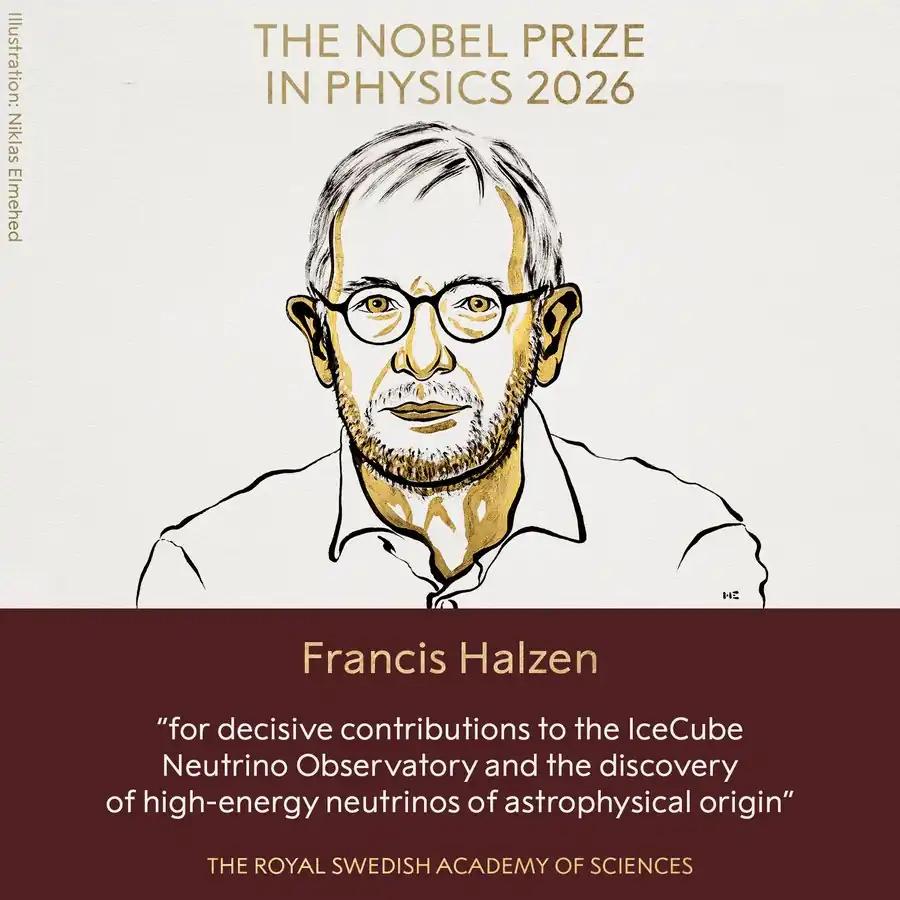
The Chemistry Prize follows this week’s Nobel awards in Medicine and Physics. Swikblog has also covered Francis Halzen’s 2026 Nobel Prize in Physics, another major scientific honor announced during Nobel Week.
The 2026 chemistry announcement follows last year’s award for metal-organic frameworks and again puts fundamental molecular science in the spotlight. For broader Nobel-related science context, readers can also explore C.V. Raman’s Nobel-winning scientific legacy.
Kagan and Soai are expected to receive their Nobel medals and diplomas at the traditional ceremony in Stockholm on December 10, the anniversary of Alfred Nobel’s death.

Make Swikblog your go-to source on Google for reliable updates, smart insights, and daily trends.