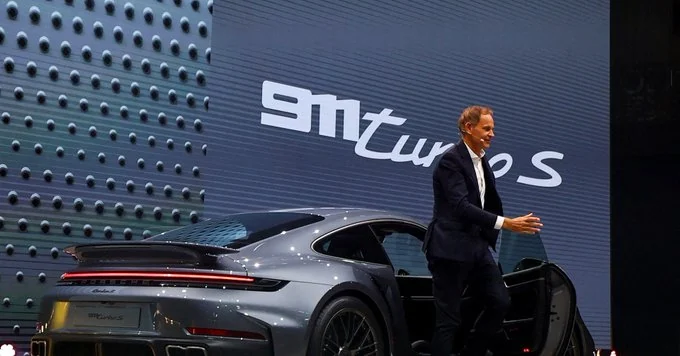

STUTTGART, Germany — Porsche is preparing for a sweeping overhaul that will reduce around 9,000 positions as the sports-car maker shifts toward fewer vehicles, higher-priced models and a leaner business built to remain profitable at significantly lower sales volumes.
#Porsche plans to cut 9,000 jobs and raise prices of top-end #Sportscars by about 20% https://t.co/HK80zvl84M
— CNBC-TV18 (@CNBCTV18News) October 7, 2026
The German automaker unveiled its “Sportwagenschmiede ’35” strategy on October 7, outlining changes through 2035. The plan comes as Porsche faces weaker global deliveries, a steep decline in China and pressure to improve profitability.
Porsche Targets Around 9,000 Job Reductions
Porsche says its restructuring measures amount to the socially responsible reduction of around 9,000 positions. That does not mean 9,000 employees will be immediately laid off.
Measures include natural attrition, partial retirement and voluntary severance. Porsche has also extended employment and site protections for its core workforce through 2035.
The restructuring reaches management too. Porsche plans to reduce management positions by around 40%. Its workforce in direct and indirect functions is targeted to become 25% smaller in the medium term, with a longer-term strategic target of 30%.
The cuts come amid wider restructuring across the auto industry, including Jaguar Land Rover’s plans affecting thousands of jobs.
Porsche Prepares for a Lower-Sales Future
One of the biggest changes is Porsche’s new break-even target. The company wants to be able to cover its costs at fewer than 200,000 vehicles annually, compared with roughly 279,000 deliveries last year.
Porsche delivered 122,306 vehicles in the first half of 2026, down about 16% year over year. Revenue fell 5.1% to €17.23 billion.
Instead of assuming sales will quickly recover, Porsche is restructuring around a smaller and more conservative sales base.
Fewer Models and More Expensive Cars
The strategy centers on what Porsche calls “Value over Volume.” Rather than maximizing deliveries, the company wants to generate more profit from each vehicle.
Porsche plans to cut its number of model variants by around 20%. It also expects the average selling price of its top models to increase by roughly 20% in the medium term.
Higher-margin D and E segment vehicles are targeted to represent about 45% of Porsche’s portfolio. The company will also expand personalization through Exclusive Manufaktur and its Sonderwunsch bespoke-car program.
New Sports Car Could Sit Above the 911
Porsche’s overhaul is not limited to cost reductions. The company is developing a mid-engine super-sports-car platform that could underpin a new model line positioned above the 911.
More high-end 911 derivatives are also planned, while Porsche is examining another SUV positioned above the Cayenne. The strategy calls for at least one brand-defining new product every year by 2030.
Volkswagen Plans 50,000 More Job Cuts as Restructuring Deepens
Combustion Engines Remain Part of Porsche’s Future
Porsche is keeping a three-way powertrain strategy covering combustion engines, plug-in hybrids and battery-electric vehicles.
Electric 718 Boxster and Cayman models are expected to contribute to sales from 2028. Porsche also plans another SUV with combustion and plug-in hybrid powertrains alongside its electric offerings.
The approach gives Porsche greater flexibility if EV adoption develops more slowly than previously expected.
China Slump Adds Pressure
China is central to Porsche’s reset. Annual sales in the country have roughly halved over four years to around 42,000 vehicles amid changing luxury demand and stronger competition from domestic manufacturers.
CEO Michael Leiters has indicated Porsche could ramp up again if Chinese demand recovers. However, the new business model uses a conservative China outlook, reducing Porsche’s dependence on such a recovery.
Porsche Targets Major Cost Savings
Porsche wants future vehicle-development costs reduced by up to 20%, production personnel costs by as much as 30% and sales and distribution costs by around 20%. Warranty costs are targeted to fall by up to 45% in the medium term.
The company is also narrowing its focus on its core sports-car business. Workforce restructuring is occurring across other industries as well, including HSBC’s plans to reduce UK financial adviser roles.
Porsche Sets New Profit Targets
According to Porsche’s official strategy announcement, the company is targeting medium-term group sales of €41 billion to €45 billion and an operating return on sales of 10% to 15%.
The longer-term operating-margin target is 15%. Porsche’s bet is that a smaller workforce, fewer variants and more expensive, personalized vehicles can restore stronger profitability without requiring a return to record sales volumes.

Make Swikblog your go-to source on Google for reliable updates, smart insights, and daily trends.