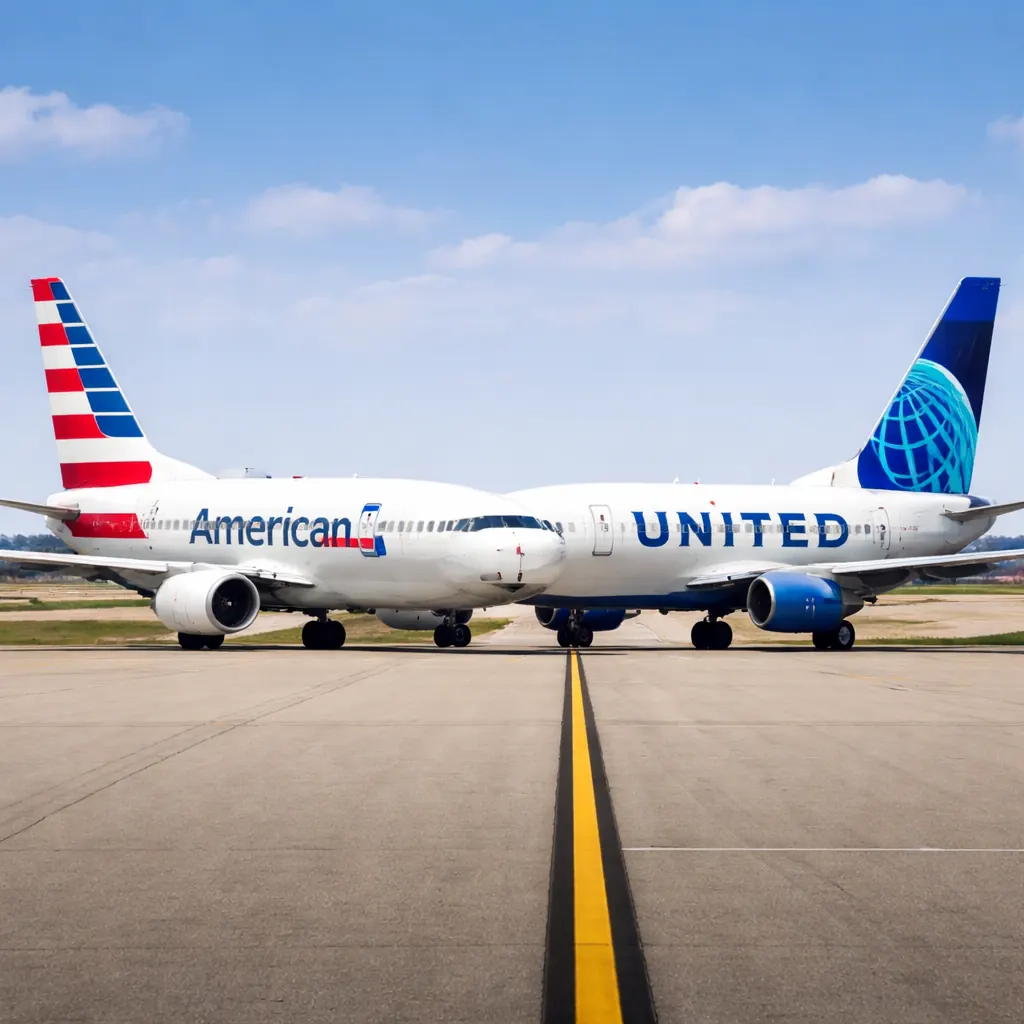

American Airlines Group Inc. (NASDAQ: AAL) moved into focus on Friday after the company firmly rejected any possibility of a merger with United Airlines (NASDAQ: UAL), putting an end to speculation around a potential tie-up between two of the largest U.S. carriers. Shares of American Airlines gained around 4% following the announcement, while United Airlines stock was also higher, reflecting broader market reaction to the news.
The response came after reports that United’s leadership had floated a merger proposal — a move that, if pursued, would have created a dominant force in the airline industry but also triggered immediate concerns around competition and regulation.
American Airlines Issues Clear Statement From Fort Worth
In an official statement released from its headquarters in Fort Worth, Texas, American Airlines made its position unmistakably clear. “American Airlines is not engaged with or interested in any discussions regarding a merger with United Airlines,” the company said.
Beyond rejecting the idea outright, the airline explained why such a deal does not align with its view of the industry. Management stated that a combination with United would be “negative for competition and for consumers,” signaling strong opposition based on antitrust principles.
The company also referenced the broader regulatory environment, noting that its position is consistent with what it understands to be the current administration’s philosophy toward maintaining competition in the airline sector.
American Airlines went a step further by acknowledging the role of government leadership, expressing appreciation for President Trump, Transportation Secretary Sean Duffy, and other officials for their continued focus on strengthening the U.S. aviation industry. This political context underscores how closely major airline decisions are tied to regulatory oversight.
At the same time, the airline emphasized that its core focus remains unchanged: executing its long-term strategy and positioning the company to compete independently rather than pursuing large-scale consolidation.
Why the Merger Was Always a Long Shot
A merger between American Airlines and United Airlines would have combined two of the “Big Four” U.S. carriers, creating an airline with enormous control over domestic routes, airport hubs, and international traffic. While such a move could theoretically improve efficiencies, it would almost certainly face intense scrutiny from regulators.
Industry officials and analysts have consistently pointed out that a deal of this size would raise significant antitrust concerns. Fewer major airlines typically mean reduced competition, which can lead to higher ticket prices and fewer choices for consumers — a key issue for lawmakers.
In recent years, U.S. regulators have taken a tougher stance on consolidation, especially in sectors that directly impact everyday consumers. The airline industry, already heavily consolidated over the past two decades, remains under close watch.
Given this backdrop, even early-stage discussions of a merger between American and United were always likely to face resistance long before reaching any approval stage.
More details on the merger discussion and regulatory concerns are outlined in this New York Times report.
Stock Reaction and Market Signals
Despite the rejection, both airline stocks moved higher — a signal that investors were not necessarily counting on the merger to go through. Instead, the gains suggest that markets welcomed the clarity.
Uncertainty around large mergers can weigh on stocks due to the risks involved, including regulatory delays, legal challenges, and the complexity of integrating two massive operations. By shutting down the proposal early, American Airlines removed a potential overhang.
For American, the roughly 4% gain reflects confidence in its standalone strategy. Investors appear to be backing management’s decision to stay focused on execution rather than engaging in a high-risk, politically sensitive deal.
United Airlines’ stock also gained more than 7%, indicating that the broader airline sector remains supported by strong demand trends and investor optimism, regardless of merger outcomes.
The reaction highlights a key theme in today’s market: stability and strategic clarity often matter more than ambitious but uncertain expansion plans.
What Comes Next for American Airlines
With merger speculation now off the table, American Airlines is expected to continue focusing on operational improvements, cost management, and network optimization. The company has been working to strengthen its competitive position in a market shaped by fluctuating fuel prices, labor costs, and evolving travel demand.
The airline also signaled its willingness to work with regulators and policymakers as broader industry changes unfold, suggesting that collaboration — rather than consolidation — will play a larger role in its strategy going forward.
For the industry as a whole, the episode serves as a reminder that while consolidation can offer scale advantages, it must align with regulatory expectations and consumer interests. In this case, American Airlines made it clear that the trade-offs were not worth it.
As the aviation sector continues to evolve, investors will be watching closely to see how both American and United navigate growth, competition, and policy pressures in the months ahead.
Author: Swikriti Finance Desk
You may like: Wisconsin tornado warnings and severe storm flood risk in April 2026

Make Swikblog your go-to source on Google for reliable updates, smart insights, and daily trends.