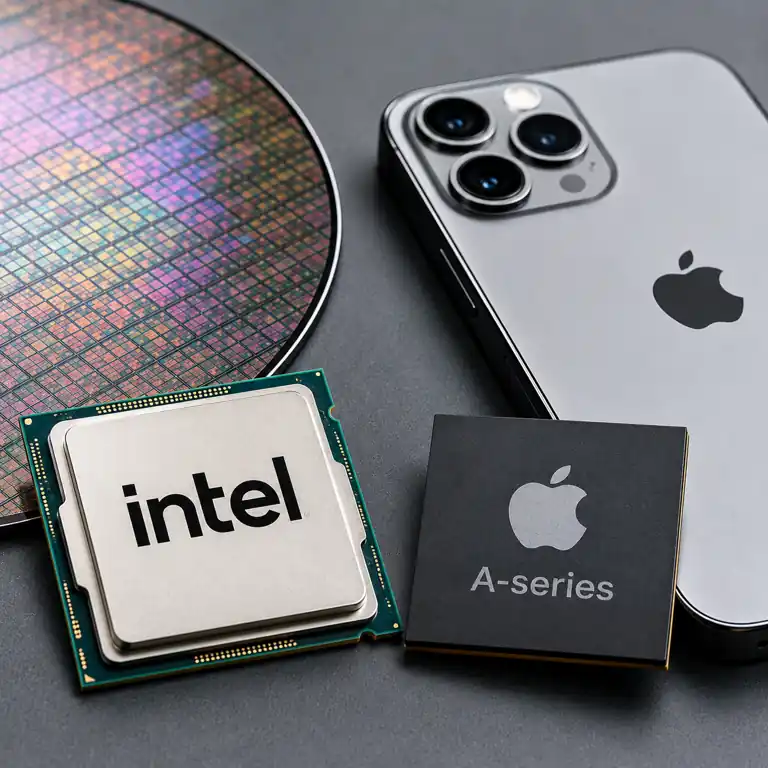

Apple’s reported preliminary chip-making agreement with Intel may turn into one of the most closely watched technology partnerships of 2026, not only because of what it means for future Apple devices, but also because of what it says about the changing balance of power in global semiconductor manufacturing.
The reported arrangement would allow Intel to manufacture some chips used in Apple products, according to reports citing people familiar with the matter. The two companies have reportedly spent more than a year in talks before reaching a formal preliminary agreement in recent months. Apple and Intel have not publicly confirmed the details, and the exact products involved remain unclear.
That uncertainty matters. Apple sells more than 200 million iPhones a year and continues to ship millions of Macs and iPads globally. Even a limited manufacturing role in Apple’s supply chain would be a major achievement for Intel, which has been working to rebuild confidence in its chipmaking operations after years of pressure from Taiwan Semiconductor Manufacturing Co. and Samsung.
The market reaction showed how seriously investors viewed the report. Intel shares jumped around 14% to 15% after the news, while Apple stock also moved higher by nearly 2%. For Intel, the rally reflected hopes that the company’s foundry business may finally be gaining momentum with one of the world’s most demanding technology customers.
For Apple, the possible agreement is less about replacing its existing chip partners overnight and more about flexibility. The company has relied heavily on TSMC for its most advanced processors, including the custom silicon used across iPhones, iPads and Macs. That relationship has been highly successful, helping Apple deliver faster devices, longer battery life and tighter integration between hardware and software.
But the semiconductor world has become more complicated. Geopolitical tensions, supply-chain disruptions and rising demand for artificial intelligence chips have pushed major technology companies to rethink where and how their components are made. Apple’s reported talks with Intel and Samsung suggest the company is exploring ways to reduce reliance on a single manufacturing path while keeping its long-term product roadmap protected.
Why Intel Needs Apple More Than Apple Needs Intel
Intel’s challenge is not demand for chips. The world already needs more advanced semiconductors for smartphones, data centers, electric vehicles, robotics and AI infrastructure. Intel’s bigger challenge has been proving that it can compete as a world-class contract manufacturer after losing ground in advanced process technology.
An Apple deal would help change that perception. Apple is known for strict performance, efficiency and production standards. If Intel can meet Apple’s requirements, it would send a powerful message to other technology companies considering Intel as a foundry partner.
The timing is important. Intel has been investing heavily in its manufacturing revival, including U.S.-based fabrication projects and advanced foundry services. The company is trying to become a credible alternative to TSMC at a time when Washington is encouraging more semiconductor production inside the United States.
The U.S. government has also been pushing domestic chipmaking through major policy support, including the CHIPS for America program. Reports indicate that the Trump administration supported closer cooperation between Apple and Intel as part of a broader effort to strengthen American semiconductor production.
Intel has also been linked to other high-profile manufacturing efforts, including partnerships tied to Tesla and SpaceX for Elon Musk’s Terafab project. That broader activity shows Intel is trying to position itself at the center of the next wave of AI, robotics and advanced computing demand.
Still, Apple’s reported involvement would carry a different kind of weight. Tesla and SpaceX are major technology names, but Apple’s device ecosystem touches hundreds of millions of consumers each year. Supplying chips for Apple would immediately raise Intel’s credibility in the global foundry race.
What It Could Mean for iPhone and Mac Supply Chains
The biggest unanswered question is what Intel would actually manufacture for Apple. The reports do not confirm whether Intel would make chips for iPhones, Macs, iPads or supporting components used inside Apple devices.
That distinction is important because not every chip inside an Apple device requires the same manufacturing process. Apple’s most advanced A-series and M-series processors need cutting-edge production. Other components may have different technical requirements and could be easier to move across suppliers.
Read More
A practical first step could involve Intel producing selected chips rather than Apple’s flagship processors. That would allow Apple to test Intel’s manufacturing reliability without immediately risking its most important silicon products. Over time, however, a successful partnership could open the door to deeper cooperation.
The deal could also help Apple strengthen its U.S. manufacturing story. Apple has already highlighted its role in supporting American suppliers, and working with Intel would fit neatly into that message. As more governments focus on technology independence, companies like Apple face growing pressure to show that critical parts of their supply chain are not overly concentrated overseas.
For consumers, the short-term impact may not be obvious. An Intel-made chip would not automatically mean a faster iPhone or cheaper Mac. The real importance is behind the scenes: more supply options, lower geopolitical risk and stronger production resilience if demand spikes or disruptions occur.
For investors, however, the story is more immediate. Intel’s share-price jump shows that Wall Street sees Apple as a possible validation point for the company’s foundry turnaround. Apple’s smaller gain suggests investors view the move as strategically useful, but not yet transformational for Apple’s earnings.
There are still risks. A preliminary agreement does not guarantee large-scale production. Chip manufacturing is complex, expensive and highly technical. Apple will likely demand proof that Intel can deliver quality, volume and efficiency before expanding any relationship.
TSMC also remains deeply important to Apple. The Taiwanese company is still widely viewed as the leader in advanced chip manufacturing, and Apple is unlikely to move away from it quickly. Instead, the reported Intel deal should be seen as a diversification strategy rather than a full supply-chain reset.
Even so, the symbolism is hard to ignore. Apple once moved away from Intel processors in Macs, a shift that was widely seen as a blow to Intel’s status in personal computing. Now the two companies may be reconnecting in a different way, with Intel potentially serving as a manufacturing partner rather than the designer of Apple’s main chips.
If the agreement moves forward, it could become a turning point for Intel’s foundry ambitions and a signal that Apple wants more control over where its future device chips are made. In a market shaped by AI demand, national security concerns and global supply-chain risk, that kind of flexibility may become just as valuable as raw chip performance.
For more technology market updates and semiconductor industry coverage, read the latest analysis on Swikblog.

Make Swikblog your go-to source on Google for reliable updates, smart insights, and daily trends.