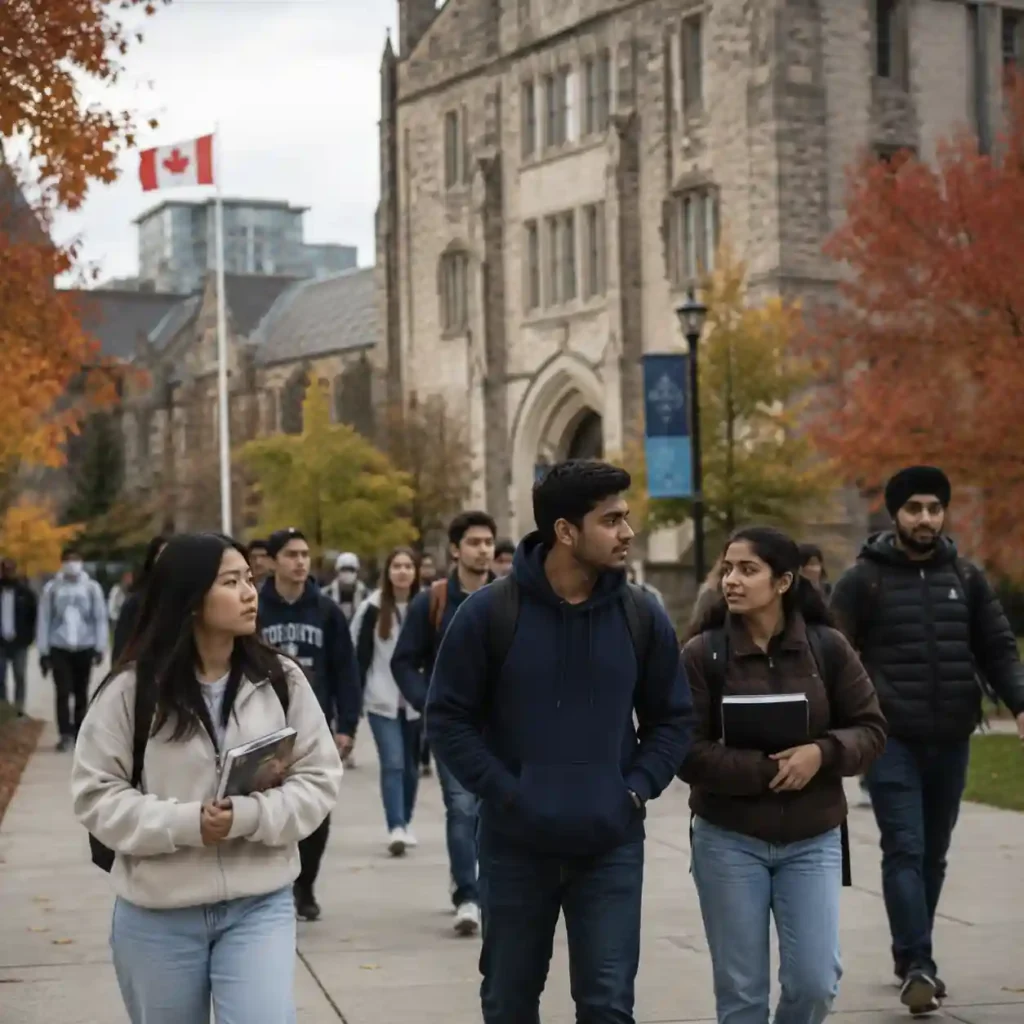

Ontario’s post-secondary sector is heading into a difficult new phase as Canada’s international student permit cap begins to reshape enrolment, revenue and long-term planning across colleges and universities.
New preliminary estimates from Statistics Canada suggest Ontario could lose about 92,000 full-time international students in public post-secondary institutions during the 2025–26 academic year. That would represent a decline of more than one-third of the province’s international student population, making Ontario the province most exposed to Ottawa’s tighter student visa rules.
The issue goes beyond immigration numbers. For years, international students helped support Ontario’s college and university system through higher tuition fees, local spending and campus participation. Now, with fewer students expected to arrive, institutions are being forced to confront a funding model that many faculty groups say was already under pressure before the federal cap was introduced.
Why Ontario Is Facing the Biggest Hit
Ontario has long been Canada’s largest destination for international students. Its colleges and universities attracted students from India, China, Nigeria, the Philippines and other fast-growing education markets, partly because of Canada’s reputation for quality education and post-study work opportunities.
That growth also made Ontario more vulnerable when the federal government announced a national cap on international student permits in January 2024. Ottawa said the move was needed to reduce pressure on housing, healthcare and public services, while also addressing concerns that some institutions had grown too aggressively around international recruitment.
Statistics Canada said the cap has already caused a sharp decline in new international students, though the overall enrolment decline is expected to be more moderate because many students already in Canada remain enrolled.
The federal government had initially framed the cap as a two-year measure, but its latest immigration plan shows further reductions are expected. Canada now plans to admit 155,000 international students in 2026, followed by 150,000 in both 2027 and 2028.
For Ontario, that means the pressure may not be temporary. Colleges and universities that built budgets around steady international enrolment growth may need to adjust to a smaller, more uncertain student pipeline for several years.
Read More
Colleges and Universities Face a Revenue Problem
The financial concern is especially serious because international students often pay far higher tuition than domestic students. In some cases, international tuition can be several times higher, making it an important source of revenue for institutions dealing with rising costs and limited public funding.
Faculty representatives argue that international students were never the real problem. Instead, they say students became a financial bridge for a system that had been underfunded for years.
Jeff Brown, a professor at George Brown Polytechnic and faculty union representative, said the effect of the student cap would not have been so severe if the system had not already been “starved” of funding. His comments reflect a broader concern across Ontario’s post-secondary sector: colleges and universities became too dependent on international tuition because stable public funding did not keep pace with institutional needs.
The Ontario government has pushed back against criticism, saying it has made a major investment in post-secondary education. Provincial officials have pointed to an additional $6.4 billion in funding support for the sector, announced alongside changes to student assistance programs.
Still, many institutions may face hard decisions if international enrolment falls as sharply as projected. Program cuts, hiring freezes, campus restructuring and reduced student services could become more common if lost tuition revenue is not replaced.
For more education and policy coverage, readers can follow updates on Swikblog, where major immigration, student visa and Canada policy developments are tracked with context for students and families.
International Students Say the Mood Has Changed
The policy shift has also affected how international students feel about Canada. Many students chose Canada because it was seen as welcoming, stable and open to global talent. But the debate around housing, affordability and temporary residents has changed that perception for some.
Amir Moghadam, an international PhD student at the University of Toronto, said students have been caught in a political and economic storm they did not create. He argued that international students were first treated as a revenue source and later blamed when public opinion shifted.
That frustration is important because Canada competes with countries such as the United Kingdom, Australia, Germany and the United States for international talent. If students believe Canada is becoming unpredictable or less welcoming, they may choose other destinations with clearer rules and more stable post-study pathways.
The federal government says the cap is designed to bring control back to a system that expanded too quickly. Ottawa has also argued that some students were being exploited by institutions that accepted more applicants than communities could properly support.
Both arguments can be true at the same time. Canada may need stronger oversight of student recruitment, housing capacity and institutional accountability. But a sudden drop in students also creates serious financial risk for campuses and economic risk for communities that rely on student spending.
Ontario’s challenge now is to rebuild a more balanced education system. That means reducing overdependence on international tuition while still protecting Canada’s reputation as a serious destination for global education.
The projected loss of 92,000 students is not just an enrolment statistic. It is a warning sign for policymakers, institutions and future applicants. If Ontario wants to remain competitive, it will need a clearer funding plan, stronger student protections and a more stable immigration message.
For now, the province faces a difficult adjustment period. The next few admission cycles could determine whether Ontario’s colleges and universities recover confidence or enter a longer period of financial strain.
Author: Swikriti News Desk

Make Swikblog your go-to source on Google for reliable updates, smart insights, and daily trends.