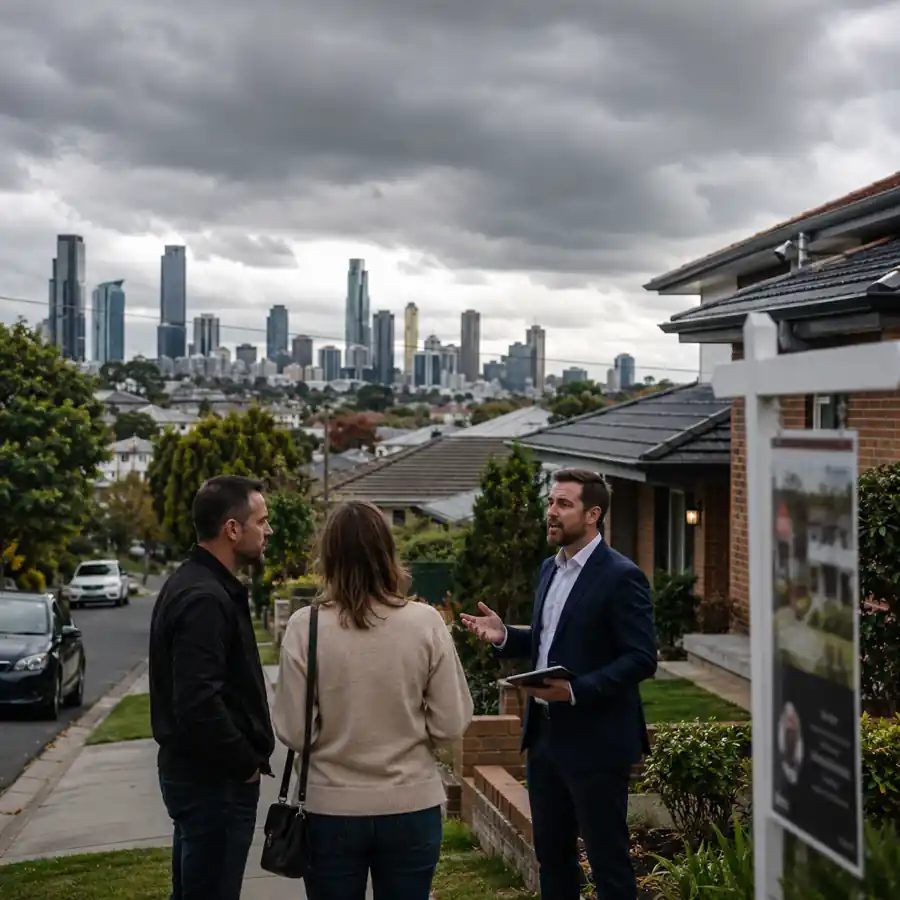

Melbourne’s housing market is showing a quieter kind of weakness in 2026. Prices have only softened gradually, but the bigger shift is happening behind the scenes, where more homes are changing hands before they ever appear on the major property websites.
Buyers’ agent Emily Wallace says vendors are increasingly choosing off-market sales as confidence cools and landlords continue to sell up. Instead of launching public campaigns, some sellers are testing the market privately through agents, buyer networks and low-profile negotiations.
Wallace told Yahoo Finance Australia that there is something “funny” happening in the property market, with sellers still willing to accept offers but less comfortable putting their homes under public scrutiny.
“They are prepared to sell, but not in public,” she said.
The trend points to a market where hesitation is becoming just as important as price movement. Melbourne’s median house price fell 0.6 per cent over the March quarter, but seller behaviour suggests the mood has shifted more sharply than headline values alone show.
Off-market sales rise as vendors avoid public pressure
Wallace said many vendors are avoiding traditional campaigns because they do not want their property exposed in a turbulent market. A failed auction, a long online listing or a visible price cut can weaken a seller’s position quickly, especially when buyers are already cautious.
For some owners, an off-market sale works like a safety net. It allows them to test buyer demand without committing to a public asking price, paying for a full marketing campaign or risking the reputational damage of a property sitting online for weeks.
The numbers from Wallace’s agency show how quickly the trend has grown. In one recent month, the agency bought six properties for clients, and five of those deals were off-market. That means 83 per cent of its purchases that month happened outside a public listing campaign.
Across 2025, the agency’s average was already high, with 58 per cent of purchases completed off-market. Wallace said the recent lift suggests sellers are becoming more cautious as Melbourne’s housing market cools.
Private sales can also be cheaper for vendors. Sellers may avoid large listing portal fees, auction costs and premium advertising packages. Listing a home on realestate.com.au can reportedly cost as much as $5,000 depending on the area, compared with about $75 in 2009.
However, the quieter route can come at a cost. PropTrack, which is part of REA Group, has indicated that homes sold off-market may sell for around 4.3 per cent less than properties advertised publicly.
That trade-off is becoming part of the calculation for nervous sellers. A public campaign may bring more competition, but it also brings more pressure. An off-market deal may deliver less exposure, but it can feel safer in a softer market.
Landlords selling up adds another strain to supply
The second major shift is coming from investors. Wallace said many of the properties now reaching buyers are owned by landlords who are choosing to exit the market.
“So many investors are selling out,” she told Yahoo Finance Australia.
Higher mortgage repayments, increased holding costs, state taxes and tighter rental rules have made investment property harder to justify for some Victorian landlords. When capital growth slows, those costs become harder to absorb.
The impact is showing up in rental supply. Residential tenancy bond data in late 2025 showed 10,274 fewer active rental bonds across Victoria, a sign that fewer properties may be remaining in the rental system.
When investor-owned homes are sold to first-home buyers or owner-occupiers, they often leave the rental pool. That can help some buyers get into the market, but it can also leave renters facing fewer available homes.
Wallace said some real estate agencies are already noticing smaller rent rolls as landlords sell properties that were previously managed as rentals. For agencies, that means less recurring rental income. For tenants, it can mean tighter competition for the homes that remain.
Industry estimates suggest about one in five Australian properties, or roughly 100,000 homes each year, may be sold off-market before being listed on platforms such as Domain or realestate.com.au. The Real Estate Buyers Agents Association of Australia has also estimated that up to 20 per cent of properties nationally are sold off-market, although exact figures are difficult to confirm because private sales are not always visible.
For wider housing market data, readers can follow updates from CoreLogic Australia.
Melbourne buyers face a market moving out of sight
For buyers, the shift means the market may look quieter online than it really is. Fewer public listings do not necessarily mean fewer sellers. In some cases, the property may be available, but only through agent networks or private conversations.
Wallace said buyers who feel they are not seeing much come online may be missing homes that are being sold offline. That changes the way buyers need to read the market, especially in suburbs where public stock appears limited.
Melbourne now sits in an unusual position. Prices are softer, investor confidence is under pressure and off-market selling is becoming more common. For first-home buyers, that could create opportunities. For renters, the same trend may add pressure if more investor-owned homes leave the rental system.
The city is not showing signs of a dramatic housing crash, but it is showing a clear change in market psychology. Sellers want less exposure, landlords are reducing risk and buyers may need to look beyond public listings to understand what is really for sale.
You may like: Cheltenham Festival 2026: 66/1 Longshot Zeus Power Headlines Day 2 Betting Picks

Make Swikblog your go-to source on Google for reliable updates, smart insights, and daily trends.