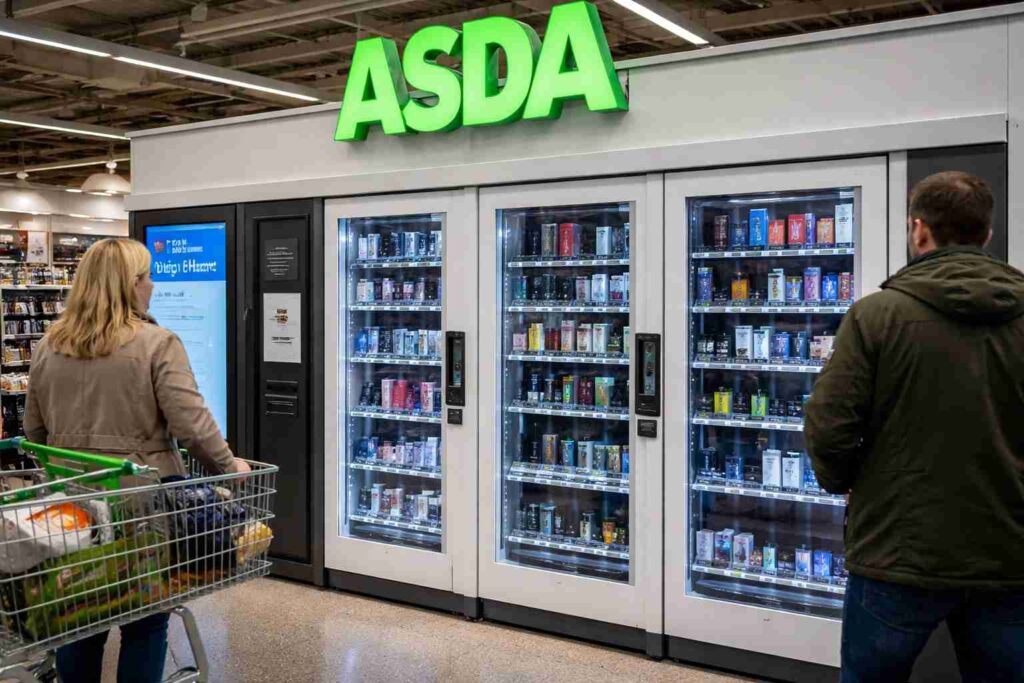

Asda is exploring the use of vending machines inside its supermarkets as Britain faces a sharp rise in shoplifting, marking one of the clearest signs yet that retailers are redesigning stores in response to persistent theft. The proposal, currently under discussion and trial in Greater Manchester, would place high-theft items such as perfume, batteries and cosmetics into secure units that release products only after payment is completed.
The move comes as shoplifting in England and Wales has surged to more than 430,000 recorded offences, according to official crime data, while industry estimates suggest the true scale is far higher. The British Retail Consortium has said customer theft now exceeds 16 million incidents annually, reflecting a shift from opportunistic shoplifting to repeat and often organised activity targeting specific goods.
For supermarkets, the response is becoming structural rather than reactive. Asda’s proposal does not involve a full store redesign but focuses on a narrow category of products that are consistently stolen and easily resold. These include fragrances, small electronics, cosmetics and other compact branded items that carry high resale value.
From open shelves to controlled access
The vending machine model replaces traditional shelf access with a pay-first system. Customers would select an item via a digital interface, complete payment, and then receive the product from a secure unit. In some trial formats, the process involves a ticket system where shoppers pay at the till before collecting the item from a dispensing machine.
This approach is already being tested at Asda’s Ashton-under-Lyne store for products such as cigarettes and vapes, and reflects a broader shift in how retailers manage risk. Unlike CCTV or security tagging, which record or deter theft after access is granted, controlled-access systems remove the possibility of handling goods without payment.
Across the industry, existing measures such as locked cabinets, security tags and in-store monitoring have shown limits. Cabinets slow customer access, tags can be bypassed, and CCTV remains largely reactive. The vending model, by contrast, changes the sequence entirely — preventing access before a transaction occurs.
Retail crime reshapes the shopping experience
The pressure to act has been building for several years, but retailers now point to a change in the nature of shoplifting itself. Industry reporting indicates that theft is increasingly targeted and repeat-based, often involving the same product categories across multiple stores. High-footfall locations in cities such as London, Manchester and Birmingham have seen particularly concentrated activity.
Supermarkets have already invested billions in security over the past five years, including additional staff, surveillance systems and protective store layouts. Yet concerns are growing over staff safety, with retailers seeking to reduce situations where employees are required to intervene directly.
The shift towards vending-style systems highlights a divergence between policy and practice. While government efforts have focused on tackling organised crime and theft-related tools, retailers are implementing immediate operational changes inside stores to limit losses. The burden of prevention remains largely at store level, driving innovation in layout and access control.
For shoppers, the changes may be subtle but noticeable. Open access to certain goods is gradually being replaced by structured purchasing systems, where browsing is restricted and transactions occur earlier in the process. Retailers argue this is necessary to maintain availability of high-risk products while protecting margins in categories where losses can quickly erode profitability.
Asda has said no immediate rollout is planned while trials continue, but the direction is clear. As shoplifting continues to rise and traditional deterrents lose effectiveness, supermarkets are moving towards environments where access to certain goods is no longer assumed, but controlled — a shift that is quietly redefining the everyday shopping experience across the UK.
More on UK retail crime trends can be explored through official statistics published by the Office for National Statistics, which continue to highlight the scale and persistence of shoplifting across the country.
You may like: Bitcoin Falls to $70,964 — Down 4.2% as ETF Inflows Rebound

Make Swikblog your go-to source on Google for reliable updates, smart insights, and daily trends.