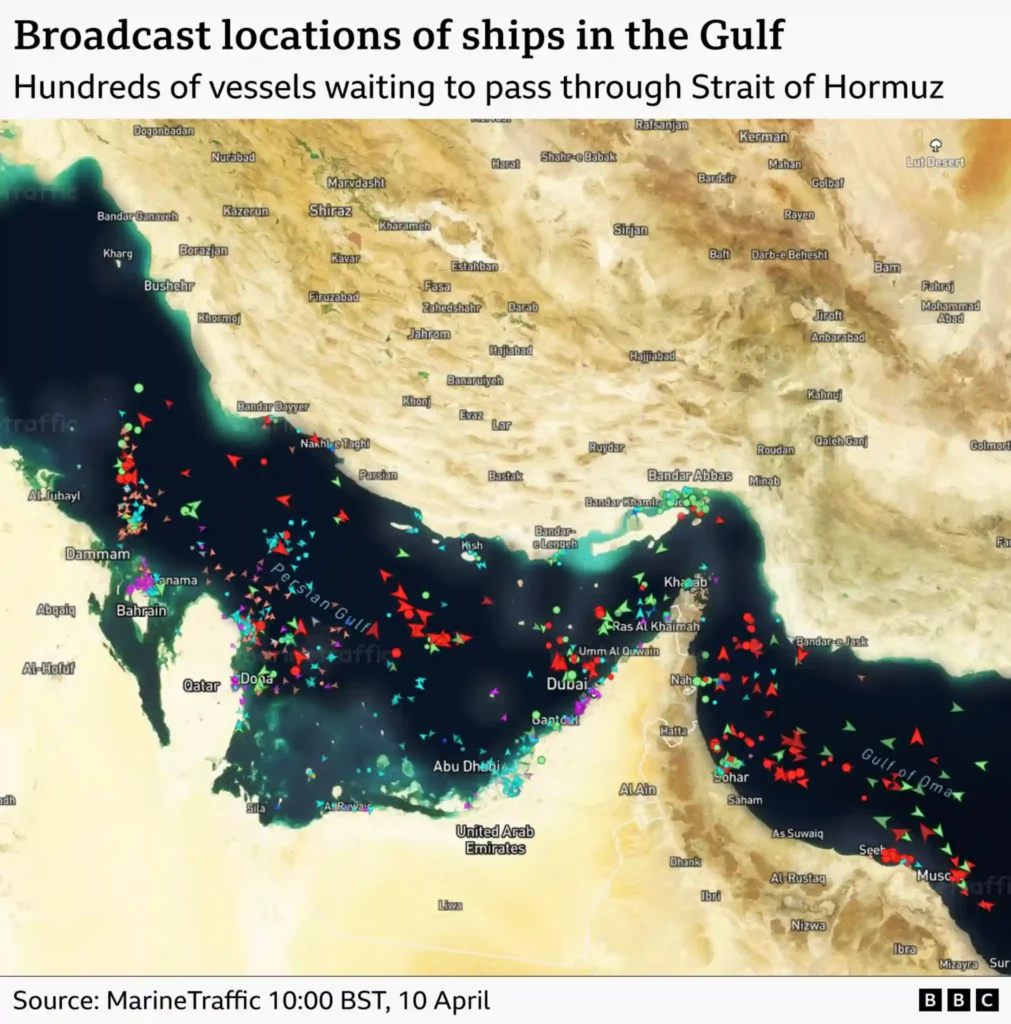

A dramatic escalation in global tensions unfolded as US President Donald Trump announced an immediate naval blockade of the Strait of Hormuz, one of the world’s most critical oil shipping routes. The move signals a sharp shift in strategy following failed diplomatic efforts with Iran, raising fresh concerns across global markets and geopolitical circles.
The announcement came shortly after high-stakes negotiations between the United States and Iran collapsed without agreement on nuclear issues. The talks, held in Pakistan and stretching late into the night, had been seen as a possible opening for de-escalation after weeks of conflict in the Middle East.
Blockade order puts focus on a vital oil chokepoint
Trump said the US Navy would begin blockading all vessels entering or leaving the Strait of Hormuz effective immediately. The narrow waterway remains one of the most important arteries for global energy trade, with a large share of the world’s seaborne oil flows moving through it.
Beyond restricting ship movement, the directive also takes aim at vessels that had paid tolls to Iran. Trump said US forces would seek and interdict ships in international waters if they had made such payments, framing the policy as a response to what he described as Iranian extortion.
He also claimed other countries would take part in the blockade effort, though no names were given. The development sharply raises the possibility of wider international involvement if the maritime standoff deepens.
Failed diplomacy leaves the region on edge
The blockade follows the collapse of direct talks between Washington and Tehran. While Trump suggested parts of the discussions went well, he made clear that the nuclear issue remained unresolved and became the central reason the effort failed.
That breakdown has now pushed the confrontation back into a military and strategic phase. With diplomacy unable to deliver a breakthrough, the focus has shifted from negotiation tables to naval power, shipping lanes, and the risk of escalation across the wider Gulf region.
According to reporting from The Times of Israel, the statement came amid renewed warnings over the security of the strait and growing fears of a broader regional fallout.
Military warning adds to market anxiety
Trump paired the blockade announcement with a stark warning to Iran, saying any attack on US forces or peaceful vessels would bring overwhelming retaliation. The tone echoed the more aggressive rhetoric seen during earlier phases of the recent crisis.
He also repeated plans for de-mining operations in the Strait of Hormuz after accusing Iran of threatening the route with mines. That combination of blockade enforcement, ship interdiction, and possible mine-clearing activity marks one of the most forceful maritime responses seen in the region in years.
For markets, the implications are immediate. Any disruption in the Strait of Hormuz can send shockwaves through oil prices, shipping costs, insurance rates, and investor sentiment. Even without a direct clash, the threat of restricted passage is enough to put global energy traders on alert.
The wider concern now is not only whether the blockade can be enforced, but whether it triggers direct retaliation or a prolonged crisis around one of the world’s most strategically important waterways. With diplomacy stalled and military language hardening, this confrontation is already moving beyond a regional flashpoint into a story with global economic consequences.

Make Swikblog your go-to source on Google for reliable updates, smart insights, and daily trends.