Asian equities opened the week with renewed momentum after a dramatic intervention by the U.S. Supreme Court reshaped President Donald Trump’s tariff strategy, injecting fresh volatility into global trade policy while offering near-term relief to investors across the region.
The court ruled that the administration’s use of the International Emergency Economic Powers Act to justify sweeping tariff measures was unlawful, stating the statute does not grant authority to impose broad import levies. The decision effectively dismantled a key legal foundation behind last year’s tariff escalation — a move that had rattled markets, disrupted supply chains, and triggered retaliatory threats from major trading partners.
Tariffs Recast — Not Removed
Despite the ruling, Trump swiftly pivoted. Within hours, the White House introduced a 10 percent global tariff under alternative legal authority, later raising the figure to 15 percent over the weekend. However, those measures carry limitations: they include carve-outs for specific sectors and are legally capped at 150 days unless extended or replaced.
Market strategists caution that the shift marks not the end of tariff risk, but the beginning of a more complex legal and political contest.
Rodrigo Catril of National Australia Bank noted that while the IEEPA mechanism may be “dead,” the broader trade agenda remains active. Analysts expect further litigation and possible legislative maneuvering, potentially prolonging uncertainty for businesses and investors.
Charu Chanana, chief investment strategist at Saxo Markets, described the moment as less a clean reversal and more a recalibration: effective tariffs may now be lower than feared, but policy ambiguity remains elevated.
Tech Leads the Asian Rally
Equity markets across Asia responded positively to the ruling, interpreting it as a short-term de-escalation in global trade tensions.
The strongest gains came from technology stocks, continuing a rotation trend away from expensive U.S. valuations toward comparatively discounted Asian counterparts.
In Hong Kong, the Hang Seng Index surged 2.7 percent to 27,121.21. E-commerce giants Alibaba Group and JD.com each jumped more than 3 percent, supported by expectations that a softer tariff environment would ease export and supply chain pressure.
You May Also Like
Seoul extended its record-setting run, powered by semiconductor heavyweights Samsung Electronics and SK Hynix. Investors continue to view Korean chipmakers as key beneficiaries of sustained global demand for AI and high-performance computing components.
Singapore, Wellington, Taipei, Mumbai, Bangkok, and Manila all registered gains, while Sydney dipped modestly. Tokyo and Shanghai remained closed for public holidays.
The positive tone followed a solid Wall Street finish on Friday, where the Dow Jones Industrial Average climbed 0.5 percent to 49,625.97 and London’s FTSE 100 added 0.6 percent to 10,686.89.
Currency and Commodity Moves
The U.S. dollar weakened broadly as investors digested the ruling and recalibrated expectations for trade-driven inflation risks.
The euro strengthened to $1.1828, while the pound climbed to $1.3529. The Japanese yen appreciated as well, with dollar-yen falling to 154.35 from 155.02.
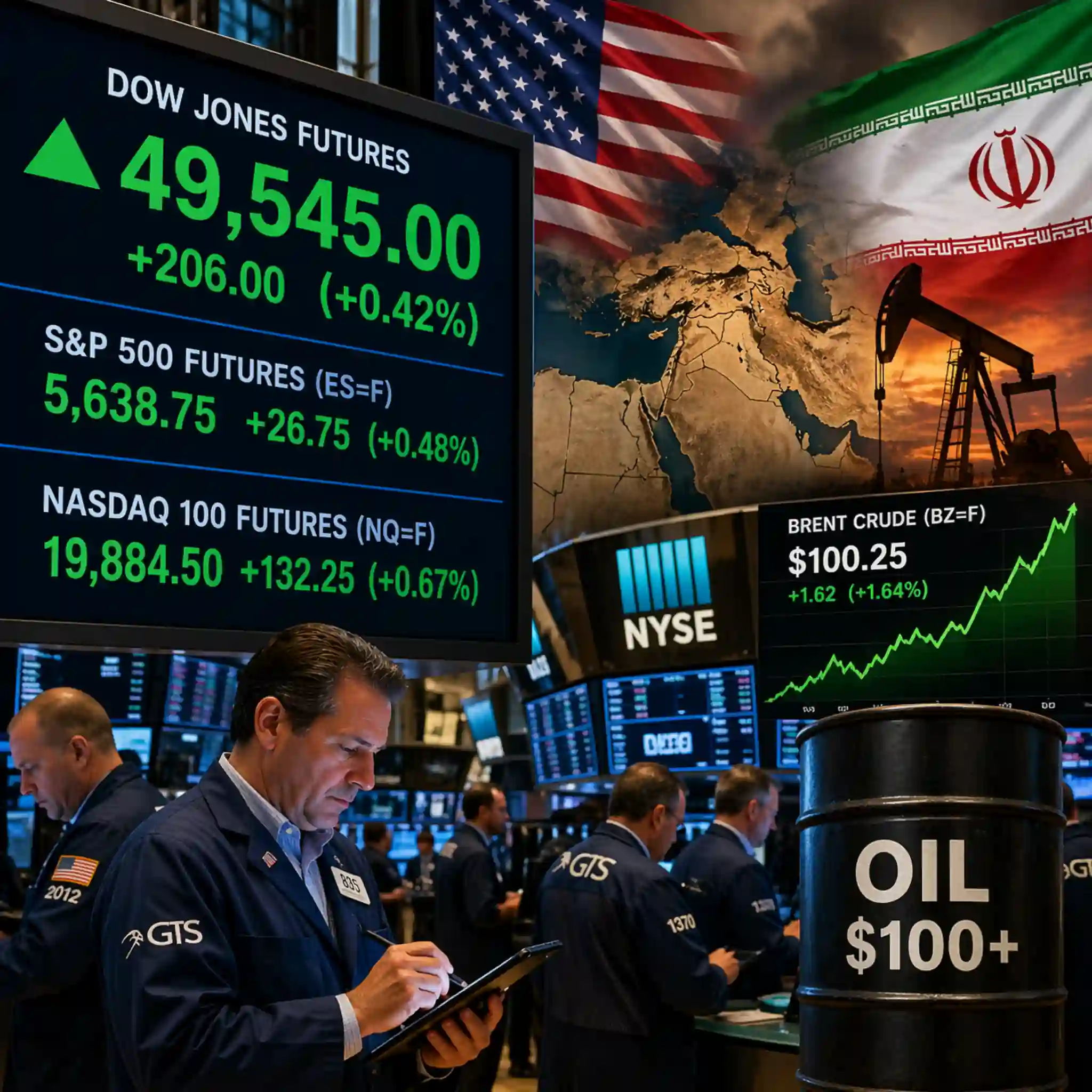
Oil prices retreated roughly 1 percent. West Texas Intermediate slipped to $65.78 per barrel, and Brent crude eased to $71.05. Part of the decline reflects renewed speculation around a potential diplomatic opening with Iran, tempering concerns of military escalation in the Middle East after Trump last week warned that “bad things happen” amid heightened regional deployments.
Trade Deals in Limbo
Beyond market reactions, the ruling has introduced uncertainty into ongoing international negotiations.
European officials had been preparing to approve a revised EU-U.S. trade framework, but lawmakers signaled they may pause legislative work pending legal clarity from Washington.
Reports from Bloomberg indicate that Indian trade representatives are postponing a planned trip to the United States aimed at finalizing an interim agreement, citing the shifting legal landscape.
China’s commerce ministry said it is conducting a “comprehensive assessment” of the ruling’s impact and urged Washington to withdraw unilateral tariff measures. Beijing reiterated that trade wars yield no winners and called for a return to multilateral cooperation.
Growth Concerns Linger
The legal drama also overshadowed weaker-than-expected U.S. economic data. Fourth-quarter 2025 growth slowed sharply, weighed down by the prolonged federal government shutdown late last year.
While equity markets welcomed the tariff setback, analysts warn that slower growth combined with policy volatility creates a fragile backdrop for global assets.
The overarching narrative now centers on whether the administration can construct a legally durable tariff framework — or whether repeated court challenges will produce a cycle of announcement, reversal, and renewed escalation.
For investors, the immediate takeaway is relief mixed with caution. Asian technology shares may continue to outperform if capital rotation persists, but currency swings and legal ambiguity suggest volatility is far from over.

Make Swikblog your go-to source on Google for reliable updates, smart insights, and daily trends.