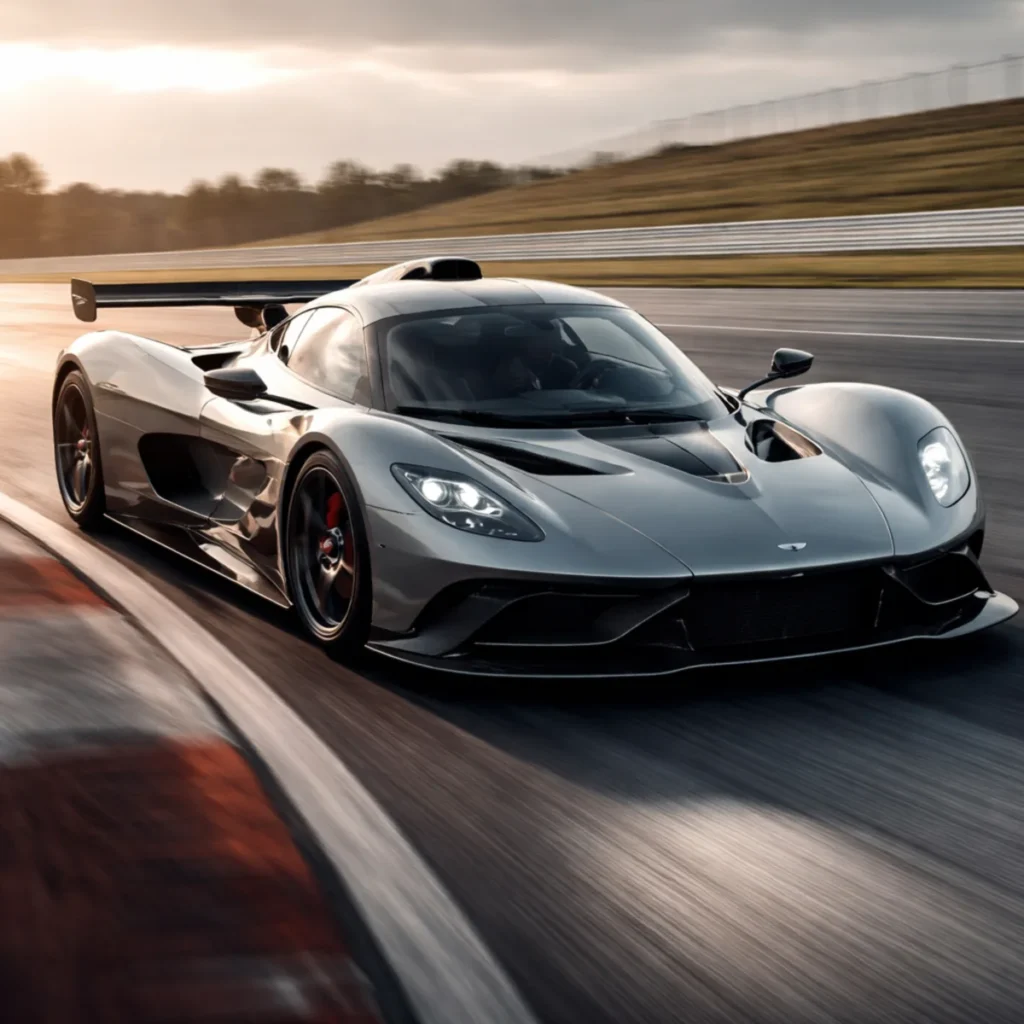

Aston Martin has begun delivering its long-awaited Valhalla hypercar in early 2026, marking a defining moment for the British automaker as it pushes deeper into hybrid performance technology. The model is trending not just for its headline numbers, but for what it represents — a critical product aimed at reshaping Aston Martin’s position in the ultra-competitive hypercar market.
With a starting price of just over $1 million and production capped at 999 units, the Valhalla enters a rarefied segment dominated by rivals like Ferrari. Its headline output of 1,064 horsepower immediately places it among the most powerful road cars in the world, but the real story lies in how that power is delivered — and why it matters now.
This is Aston Martin’s first plug-in hybrid supercar, combining a 4.0-litre twin-turbocharged flat-plane crank V8 with three electric motors. Two motors sit on the front axle, enabling precise torque vectoring, while a third integrates with the transmission to smooth gear shifts and eliminate turbo lag. The system is engineered not for fuel savings, but for relentless performance and control.
Hybrid power meets Formula One-inspired engineering
The Valhalla’s architecture reflects Aston Martin’s growing connection to Formula One technology. Up front, the car uses pushrod double wishbone suspension with inboard-mounted springs and dampers — a setup rarely seen in road cars. At the rear, a multi-link configuration balances stability with agility, while advanced active aerodynamics continuously adjust airflow for maximum efficiency and grip.
In full performance mode, the rear wing alone can generate over 600kg of downforce, actively adapting to driving conditions in real time. The result is a car that remains planted even at extreme speeds, delivering track-level performance without the unpredictability often associated with hypercars.
What sets the Valhalla apart is how approachable that performance feels. The front-axle torque vectoring system actively corrects driver inputs, helping rotate the car through corners and keeping it on line even when pushed beyond typical limits. It creates a driving experience that feels controlled rather than intimidating — a rare trait in a car with over 1,000 horsepower.
Yet despite its track capability, the Valhalla is not limited to closed circuits. In Sport mode, the hybrid system softens its behavior, drawing more heavily on the battery to create a smoother, quieter drive. The car offers around nine miles of all-electric range, enough for short urban trips or low-emission zones without engaging the V8 engine.
A billion-dollar bet on performance and brand revival
The Valhalla’s importance extends well beyond engineering. For Aston Martin, this car is a financial and strategic cornerstone. With nearly 1,000 units planned, the model could generate more than $1 billion in revenue when customization and high-margin options are included. That level of contribution is significant for a company that has spent recent years navigating financial pressure and restructuring efforts.
Early deliveries — with more than 100 cars already reaching customers — suggest the rollout is gaining momentum at a crucial time. As upcoming earnings reports approach, the Valhalla is expected to play a key role in shaping investor perception and demonstrating the brand’s ability to execute high-value programs.
Beyond immediate revenue, the model is also designed to influence the broader market around Aston Martin. Limited-run hypercars often have an outsized impact on brand perception and resale values. Strong performance in the collector market can reinforce confidence among buyers, encouraging repeat purchases and long-term loyalty.
This is particularly relevant for Aston Martin, which has faced challenges in maintaining strong secondary-market values compared to some rivals. The Valhalla offers an opportunity to shift that narrative by delivering a product that combines exclusivity, cutting-edge technology and real-world usability.
The competitive landscape makes that challenge even more urgent. Ferrari’s latest hypercars and hybrid supercars have set new benchmarks for both performance and desirability. Aston Martin’s response is not just to match those numbers, but to offer a different balance — one that blends extreme capability with everyday drivability.
The Valhalla appears to be built around that philosophy. It is aggressive in design, advanced in engineering and deliberate in its positioning. More importantly, it signals a transition toward a new generation of Aston Martin vehicles built on hybrid architectures and modern performance expectations.
Further details on the model’s specifications and design philosophy can be explored on the official Aston Martin Valhalla page. For Aston Martin, the arrival of the Valhalla is not simply a product launch — it is a test of whether bold engineering, limited production and strategic timing can come together to redefine the brand’s trajectory in a rapidly evolving market.
You may like: Canada’s oldest man dies at 110: Burd Sisler remembered for a remarkable life
Author Bio
Swikriti is a Swikblog writer with 9 years of experience covering finance, markets, and high-impact news with strong editorial judgment and meaningful reader-focused context.

Make Swikblog your go-to source on Google for reliable updates, smart insights, and daily trends.