
Monday’s petrol increase is not the result of one price change alone. Australian motorists are facing the end of temporary fuel-tax relief at the same time as the standard excise rate rises with inflation and international oil markets become more volatile.
The immediate impact will vary between service stations, but the direction is clear: replacing discounted fuel with stock carrying the full 53.7-cent excise will make filling a car, truck or diesel vehicle more expensive.
Key changes for drivers
- Temporary relief ended after August 2.
- Excise increased from 36.6 to 53.7 cents per litre.
- The change applies to petrol and diesel.
- A 50-litre fill could cost about $8.55 more from excise alone.
- Higher prices may appear gradually as stations receive new supplies.
How Australia reached the new rate
The government cut fuel excise from 52.6 cents to 20.6 cents per litre on April 1. The 32-cent discount was introduced as temporary cost-of-living assistance after disruption around the Strait of Hormuz placed pressure on global oil supplies.
That larger reduction remained until June 30 and cost the federal budget approximately $2.9 billion. A smaller 16-cent discount then operated from July 1 through August 2.
When the remaining relief expired, the rate returned to its full setting and incorporated the regular inflation indexation. This lifted excise from 36.6 cents to 53.7 cents per litre—a difference of 17.1 cents.
Your estimated cost per fill
The simplest way to measure the immediate impact is to multiply the 17.1-cent increase by the amount of fuel purchased.
- 40-litre fill: approximately $6.84 extra
- 50-litre fill: approximately $8.55 extra
- 60-litre fill: approximately $10.26 extra
- 70-litre fill: approximately $11.97 extra
These calculations cover the excise difference only. GST, wholesale prices, freight expenses, currency movements and retail margins can produce a different final increase at the pump.
Higher diesel costs also matter beyond individual motorists. Transport operators, farms and businesses use much larger volumes, allowing fuel expenses to flow into freight rates, food prices and other consumer bills.
Why Monday’s increase was initially smaller
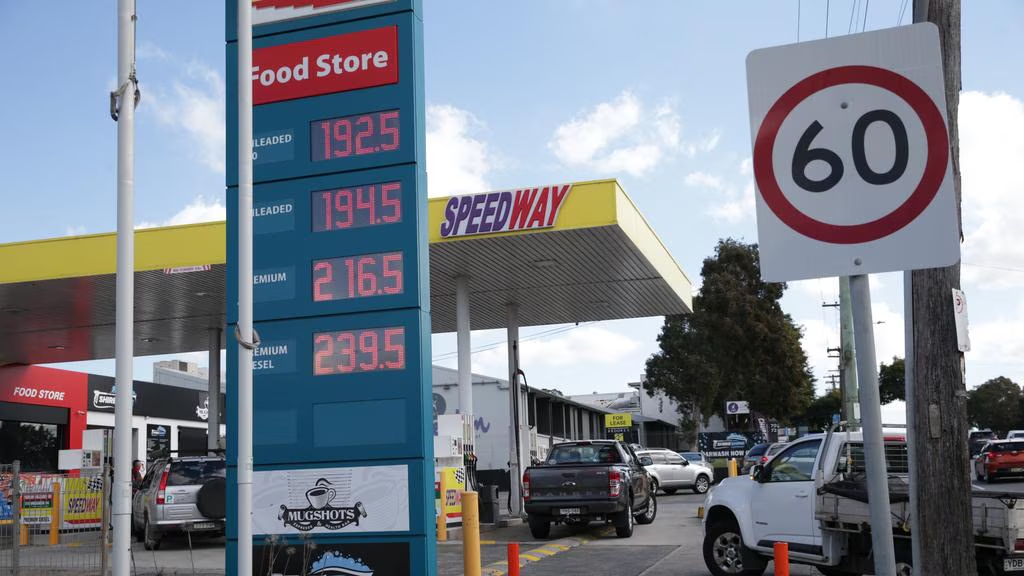
NSW FuelCheck showed the state’s average petrol price moving from approximately $1.95 per litre on Sunday to $1.97 on Monday. That two-cent rise was well below the full excise difference.
This is possible because service stations do not replace their fuel stocks simultaneously. A retailer may continue selling petrol purchased under the discounted rate until its next delivery arrives.
Prices can therefore adjust over several days. Local retail cycles may also cause some stations to increase prices by more than 17.1 cents while others remain temporarily cheaper.
Where prices could go next
Unleaded petrol is already above $2 per litre at some locations. Warnings that prices could approach $2.20 apply to higher-priced markets and should not be interpreted as a confirmed nationwide price.
Australia’s wholesale market follows Asian refined-fuel benchmarks and is sensitive to the Australian dollar. International oil costs can add to the tax increase or soften its effect if markets fall.
Three global risks behind the pressure
Strait of Hormuz: Oil transit recovered only briefly before weakening again. Continued disruption around this major export route could restrict supply and keep crude prices elevated.
Red Sea attacks: Houthi strikes on vessels threaten routes used to bypass other Middle Eastern disruptions. The risk can increase insurance costs even when physical supplies continue moving.
Russian diesel supply: Ukrainian attacks on Russian refineries and restrictions on Russian diesel exports have tightened parts of the refined-fuel market.
Treasury information indicated Brent crude had risen 28% following the breakdown of an agreement between the United States and Iran. Oil has also traded above US$100 a barrel amid renewed uncertainty.
What the US$200 warning actually means
The 2026–27 Budget examined a severe scenario in which oil reaches US$200 a barrel during the September quarter. It is a risk model, not the government’s central forecast.
Under that scenario, annual inflation could reach approximately 7% in the December quarter of 2026. Expensive energy would affect road transport, aviation, freight and the cost of goods, potentially complicating future interest-rate decisions.
Read More:
Can petrol stations charge more?
Treasurer Jim Chalmers has asked the competition regulator to increase scrutiny of fuel prices. Retailers have been warned against using the tax change to support false, misleading or otherwise unjustified claims.
The ACCC monitors fuel prices in capital cities and more than 190 regional locations. It can investigate misleading conduct and competition concerns, but it does not set the price at individual stations.
Practical steps for motorists
Drivers are being urged not to panic-buy. Instead, compare prices through services such as NSW FuelCheck, WA FuelWatch, FuelCheck Tasmania and MyFuel NT. The difference between nearby stations can exceed the excise increase.
Motorists can also review Victoria Police’s free number-plate security upgrade, which aims to reduce crimes involving stolen registration plates.
Another developing vehicle issue is whether China’s hidden car-door handle ban could influence Australian safety standards.
The higher tax is now fixed, but the final cost of filling up will continue to move with oil prices, exchange rates and competition. Checking live prices before travelling remains the most useful response.

Make Swikblog your go-to source on Google for reliable updates, smart insights, and daily trends.