
Last Updated: July 6, 2026
Australia’s clean energy transition is entering a more complex phase as battery storage expands faster than expected while electricity demand from artificial intelligence data centres continues to rise. The Australian Energy Market Operator, known as AEMO, says rapid growth in household batteries and large-scale storage is changing how the National Electricity Market will need to be planned through 2050.
The shift is important because batteries are reducing some future pressure on transmission networks, but they are not removing the need for major investment in renewable energy, new power lines and grid reliability. AEMO’s latest outlook estimates the transition will require about $106 billion in private investment by 2050.
Battery storage is changing Australia’s grid plan
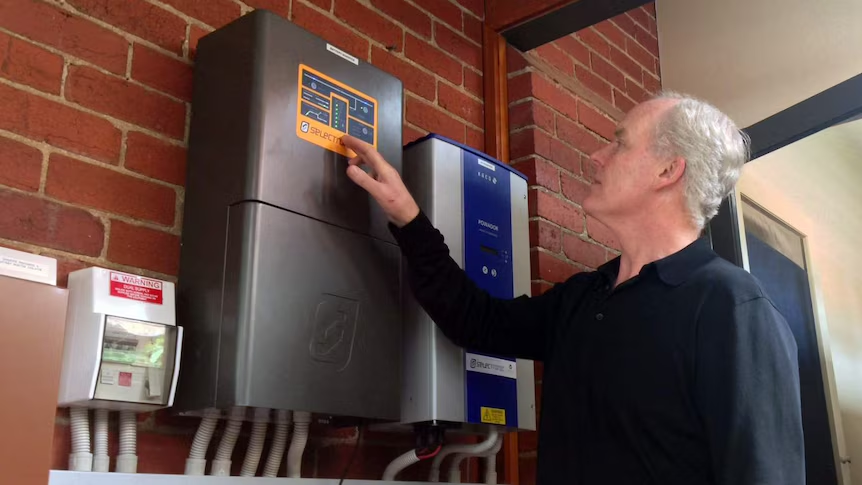
AEMO says Australia now has around 600,000 household batteries, while battery projects seeking connection to the grid total about 45 gigawatts. That pipeline is already larger than earlier forecasts expected would be needed by the end of this decade.
Batteries are becoming more important because they can store excess rooftop solar during the day and release electricity later when demand rises. This helps balance supply closer to homes and businesses instead of relying only on long-distance electricity flows.
That change has reduced AEMO’s expected need for new high-voltage transmission lines. The latest outlook points to around 6,000 kilometres of new transmission, about 1,500 kilometres less than earlier planning suggested.
New power lines are still needed
The lower transmission estimate does not mean Australia can avoid building new power lines. Large wind and solar projects still need stronger connections to move electricity from renewable energy zones to major population centres.
Transmission also helps move power between regions when demand is high, weather conditions change or unexpected outages affect supply. Batteries can support the system, but they work alongside transmission rather than replacing it.
New power line projects can take years because of planning approvals, environmental checks, landholder negotiations and construction challenges. That makes timing one of the biggest risks in Australia’s electricity transition.
More details about the long-term electricity roadmap are available through AEMO’s Integrated System Plan.
AI data centres are adding new electricity demand
A major change in the latest outlook is the expected rise in electricity use from AI-driven data centres. These facilities support cloud computing, artificial intelligence tools, online services and digital infrastructure.
Data centres currently account for about 2% of electricity supplied through the National Electricity Market. By 2050, AEMO expects their share could rise to nearly 10% of underlying electricity demand.
This matters because data centres need stable electricity around the clock. Unlike rooftop solar demand patterns or household use, they require continuous power, which increases the need for reliable generation, storage, backup capacity and strong network connections.
Coal retirements keep pressure on renewable investment
AEMO continues to identify renewable generation backed by batteries and flexible gas generation as the lowest-cost pathway for keeping electricity reliable as coal exits the system.
Current planning expects around two-thirds of Australia’s coal-fired generation to retire by 2035, with coal no longer included in the projected electricity mix by 2050.
Batteries are critical, but they do not generate electricity. They store power produced by wind, solar or other sources. That means Australia still needs enough new renewable generation to replace ageing coal plants and meet rising demand from homes, businesses and digital infrastructure.
The wind pipeline remains a concern
One challenge highlighted in the latest planning outlook is the pace of wind development. AEMO has indicated that only about half of the new wind capacity required by 2030 is currently progressing through development and approval pipelines.
Wind power is important because it can generate electricity at different times from rooftop solar, including overnight and during winter periods. A slower wind rollout could increase pressure on storage, backup generation and transmission planning.
What the $106 billion estimate means
The $106 billion figure is not a direct government spending promise. It is AEMO’s estimate of the private-sector investment needed through 2050 for renewable generation, battery storage, transmission infrastructure and supporting grid technologies.
The estimate shows the scale of capital required to replace retiring coal generation, support more renewable energy and meet new sources of demand, including AI data centres.
Further information about national energy policy is available from the Department of Climate Change, Energy, the Environment and Water.
Community batteries are becoming more important
Community batteries are also becoming a larger part of the electricity system. These shared storage units collect excess rooftop solar from local areas and send power back into neighbourhoods during evening demand peaks.
They can help households that do not own a battery benefit from local solar generation. They can also reduce pressure on local distribution networks when rooftop solar output is high.
A more flexible but harder-to-manage power system
Australia’s electricity system is becoming more flexible, but also harder to manage. Homes, businesses, batteries, renewable energy zones, data centres and ageing coal plants are all changing the shape of supply and demand.
For businesses, the shift comes as wider economic pressures continue to affect investment decisions across the country, including in sectors such as housing and infrastructure. Recent coverage of Australia’s weakening auction clearance rates shows how higher costs and cautious sentiment are influencing major parts of the economy.
The latest AEMO outlook makes clear that batteries are now central to Australia’s energy transition. But the country will still need new renewable generation, stronger transmission links, flexible backup power and smarter demand management to keep the grid reliable through 2050.
How quickly those projects are delivered will help determine whether Australia can maintain affordable electricity while supporting a growing digital economy powered by AI and cloud infrastructure.

Make Swikblog your go-to source on Google for reliable updates, smart insights, and daily trends.