
Updated: July 3, 2026
Banff’s popular skijor competition will not return in 2027 after organizers concluded that the event had grown beyond what the mountain town could safely manage. Following a detailed review involving tourism officials, municipal leaders, police and emergency responders, organizers said public safety and reliable emergency access outweighed the benefits of continuing the annual event under its current format.
The decision was announced by Banff and Lake Louise Tourism (BLLT) after a five-month assessment completed with Skijor Canada, the Town of Banff, the RCMP and emergency services. Officials stressed that attendance has never been stronger, but the infrastructure needed to host such large crowds has not kept pace with the event’s rapid growth.
Safety Review Changed the Future of the Event
Skijoring has become one of Banff’s signature winter attractions, transforming Banff Avenue into a snow-covered racecourse where horseback riders pull skiers and snowboarders through the town centre. The event blends western heritage with winter sports and has become a major attraction during the annual SnowDays Festival.
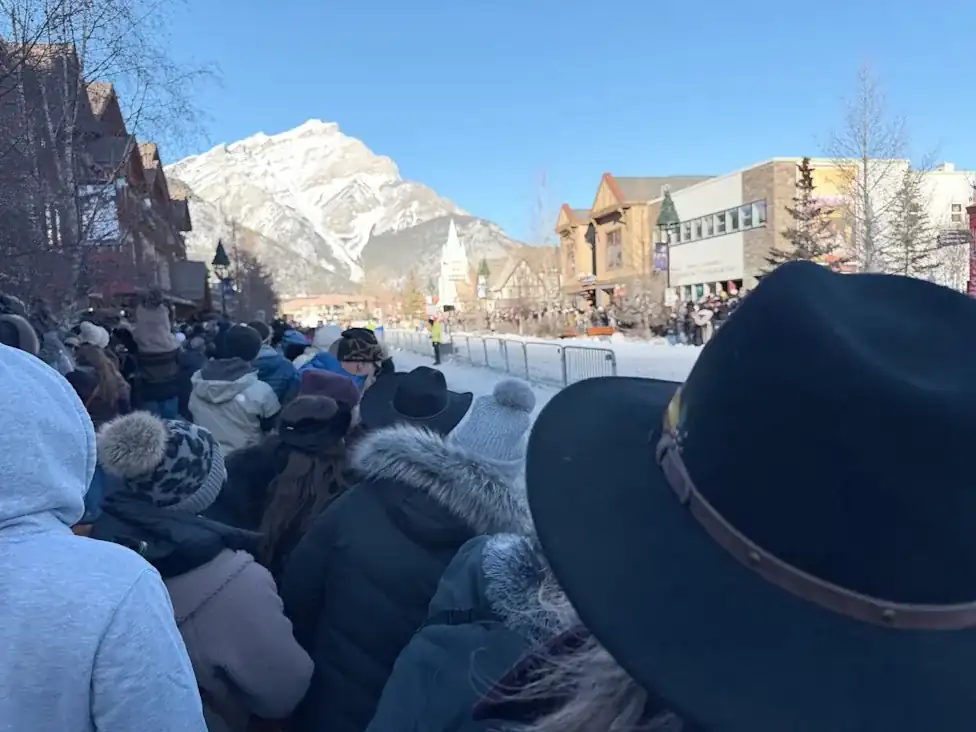
Attendance reached a record level in 2026, prompting organizers to examine whether the event could continue safely. The review focused on crowd movement, emergency vehicle access, transportation planning, policing requirements and overall event operations.
After months of discussions, organizers concluded there was no practical way to deliver the event in 2027 without major operational changes that would significantly increase costs while reducing public access.
Growing Crowds Put Pressure on Banff’s Infrastructure
Banff Mayor Corrie DiManno said municipal parking lots were full by around 10 a.m. on the day of the event. As more visitors arrived, many vehicles were left in restricted areas, creating traffic congestion throughout parts of the town.
Town officials issued about 160 parking tickets, and several vehicles had to be towed after blocking driveways, bus stops, fire hydrants and traffic lanes. Those issues raised concerns that ambulances, fire crews or police could face delays during an emergency.
Visitors planning future trips to the national park can find official parking guidance through the Town of Banff parking information page.
Ticketed Entry Was Studied but Rejected
One option considered during the review was turning the free public event into a ticketed attraction with controlled entry points, security fencing and designated viewing areas.
While that approach could have helped manage crowd sizes, organizers estimated it would have nearly doubled operating costs. At the same time, only around one-third of the spectators who attended this year’s event would have been able to watch in person.
Officials said those trade-offs would have fundamentally changed the community-focused nature of the event while placing additional financial pressure on organizers.
Decision Protects the Wider SnowDays Festival
Skijoring is one of several activities held during Banff’s SnowDays Festival, a winter tourism program that takes place throughout January and February.
According to BLLT, directing more funding toward fencing, staffing and security for skijoring could have forced organizers to scale back or cancel several other festival activities.
By suspending the skijor competition, organizers believe the broader festival can continue offering a range of winter experiences while avoiding the financial burden created by one increasingly large event.
Large public gatherings across Canada are facing similar planning challenges as attendance continues to grow. Similar crowd management strategies have been introduced at events such as Canada Day fireworks celebrations across Toronto and the GTA, where transportation and public safety planning have become increasingly important.
Social Media Expanded the Event’s Reach
BLLT President Leslie Bruce said online exposure played a major role in the event’s rapid growth. Videos shared across social media platforms reached audiences far beyond Alberta, attracting visitors from several U.S. states even though the event was not actively promoted there.
That international attention helped raise Banff’s profile but also made attendance far more difficult to predict from year to year, creating additional challenges for local services and event organizers.
A Longstanding Part of Banff’s Winter Heritage
Skijoring has deep roots in Banff’s history. Variations of the sport appeared during the community’s winter carnivals more than a century ago before the modern event revived the tradition for contemporary audiences.
Its mix of horseback riding, skiing and snowboarding against the backdrop of Banff Avenue helped establish it as one of Alberta’s most recognizable winter attractions and an important feature of the SnowDays calendar.
Organizers Have Not Ruled Out a Future Return
Skijor Canada founder Sam Mitchell said the decision was disappointing but acknowledged that safety had to remain the first priority. She confirmed the organization will continue holding its Calgary event while discussions continue about the future of the Banff competition.
Both Mitchell and BLLT say they remain open to bringing skijoring back to Banff if a workable model can be developed. Until then, the pause gives local authorities and organizers time to explore new options that could better balance tourism, community needs and public safety.

Make Swikblog your go-to source on Google for reliable updates, smart insights, and daily trends.