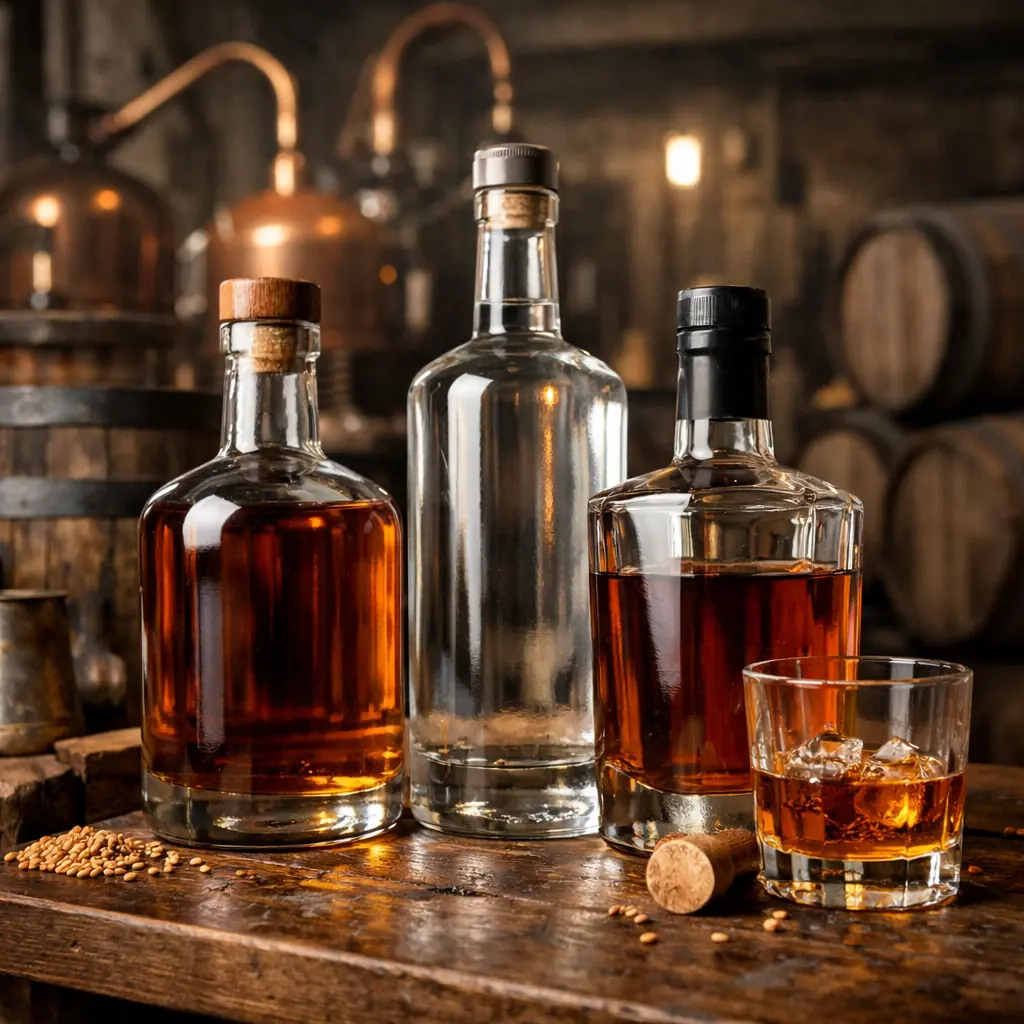

A beloved craft liquor brand has filed for Chapter 7 bankruptcy and is now headed for liquidation, adding to the growing list of distilleries struggling in the current U.S. alcohol market. Rotten Little Bastard Distillery, a South Carolina-based producer known for handcrafted rum, vodka, gin, moonshine, and bourbon-style whiskey, has officially shut down after financial pressure, shifting consumer behavior, and a failed effort to find a buyer pushed the business to the edge.
The closure comes at a difficult time for the spirits industry. While Americans are still buying alcohol, economic pressure, high borrowing costs, and changing social habits are reshaping the market. Readers following broader business distress can also explore our finance coverage and recent bankruptcy news for more developments across retail and consumer-facing industries.
Rotten Little Bastard Distillery Files Chapter 7 Bankruptcy
RLB Distillery Company Inc., doing business as Rotten Little Bastard Distillery, filed for Chapter 7 bankruptcy on March 10, 2026, in the U.S. Bankruptcy Court for the District of South Carolina. A Chapter 7 filing means the company will not attempt to restructure or continue operating. Instead, its assets will be sold under court supervision and the proceeds will be distributed to creditors.
According to the filing, the company listed total assets of $152,554.72 and liabilities of $395,265.12. That major gap left little room for recovery and made liquidation the only realistic path forward. A court-appointed trustee will now oversee the sale of the business’s remaining assets and repayment process. More about this process can be found through the U.S. Courts Chapter 7 bankruptcy basics guide.
Assets and Liabilities Show the Financial Strain
The bankruptcy filing provides a detailed look at the company’s financial condition. Rotten Little Bastard Distillery reported just $1,061.47 in cash and $2,169.25 in deposits and prepayments. Its inventory was valued at $80,000, while machinery, equipment, and vehicles accounted for another $66,740. These assets were not enough to offset the company’s debts.
The biggest liability was a secured U.S. Small Business Administration loan through United Community Bank in Bluffton worth $321,445.52. The remainder of the debt included unsecured credit accounts and obligations connected to a rejected lease. The company stated in the filing that funds will be available for distribution to unsecured creditors, but the numbers make clear that the business had been operating under serious financial stress for some time.
Owners Tried to Find a Buyer Before Closing
The shutdown was also confirmed on the company’s Facebook page, where owners Brian and Brigid Fackrell shared the reasoning behind their decision. According to their statement, they recognized that their level of stress had become unsustainable. They contacted a broker and began looking for investors or someone willing to buy the distillery, but the current economy and changes in drinking behavior worked against them.
The owners said they could not find a buyer and ultimately decided to close. That makes the bankruptcy not just a story about debt, but also one about how difficult it has become for small alcohol brands to attract investors in a market where consumer demand is becoming less predictable.
A Retirement Dream Turned Into a Distillery Business
Rotten Little Bastard Distillery began as what the company described as a “retirement dream turned reality.” Brian and Brigid Fackrell moved from Nevada to South Carolina and launched the business as a new chapter in life. The distillery operated at 2139 Boundary Street in Beaufort, South Carolina, and built its brand around handcrafted spirits that included vodka, moonshine, gin, rum, and bourbon-style whiskey.
For local customers and craft spirits fans, the shutdown marks the end of a unique independent label that had carved out a place in a crowded but loyal niche market.
Remaining Bottles Will Still Be Sold
Even though the business is shutting down, some of its products will still be available for a limited time. Brigid Fackrell said the remaining inventory will continue to be sold through South Carolina liquor stores as well as online alcohol distributors Cellar.com and Tipxy.com while supplies last.
That means loyal customers may still have one final chance to buy bottles from the brand before the liquidation process fully wraps up and the label disappears from the market.
U.S. Spirits Sales Fell 1.1% in 2024
The broader environment for liquor brands has become increasingly difficult. According to data from the Distilled Spirits Council, supplier sales in the United States fell 1.1% in 2024 to $37.2 billion, even as volumes rose 1.1% to 312.2 million 9-liter cases. That mix suggests consumers are still purchasing spirits, but they are becoming more selective and price-sensitive.
DISCUS President Chris Swonger said consumers were contending with some of the highest prices and interest rates seen in decades, putting pressure on their budgets and forcing many to cut back on small luxuries like distilled spirits. More industry data is available from the Distilled Spirits Council.
Industry Leaders Say Wallet Pressure Is Real
Major liquor companies are seeing the same trend. Brown-Forman CEO Lawson Whiting said consumers simply do not have as much money in their wallets and are directing more of their spending toward vacations, lodging, and other experiences. When they get to the grocery store, spirits are increasingly falling out of the basket.
That is a major concern for both global brands and small distillers. The issue becomes even more severe for independent producers that lack the scale, distribution reach, and marketing budgets of larger companies.
Tariff Uncertainty Adds Another Layer of Risk
The industry is also watching tariff uncertainty closely. Brown-Forman CFO Leanne Cunningham described the tariff situation as highly volatile, saying nobody can confidently predict what will happen next. Those concerns have been echoed across the sector, with industry leaders warning that tariffs could create additional pain for producers already facing weak consumer sentiment and cost pressure.
For smaller operators, uncertainty alone can be enough to delay expansion plans, reduce investment interest, and make long-term planning harder.
Craft Distillers Are Disappearing Fast
Rotten Little Bastard Distillery’s collapse is not an isolated event. According to the American Craft Spirits Association, the number of active U.S. craft distillers dropped from 3,069 in August 2024 to 2,282 in August 2025. That is a decline of 787 operations in just one year.
That sharp drop shows just how difficult the environment has become for small alcohol producers. Rising costs, financing challenges, weaker consumer spending, and heavy competition are all contributing to a broader shakeout across the craft spirits industry.
Younger Americans Are Drinking Less
Economic pressure is only part of the problem. Social change is also weighing on the alcohol industry. A Gallup poll found that young adults in the United States have become progressively less likely to consume alcohol over the past two decades. Among Americans aged 18 to 34, the share who say they never drink, drank in the past week, or sometimes drink more than they should has declined over time.
At the same time, drinking trends have moved up among older Americans and remained relatively steady among middle-aged adults. That shift matters because younger consumers are often the group that helps drive future growth and brand discovery.
The Bottom Line
Rotten Little Bastard Distillery’s Chapter 7 bankruptcy reflects the growing strain facing the U.S. spirits industry. The brand entered liquidation with $395,265.12 in liabilities and only $152,554.72 in assets, after efforts to sell the business failed. Its shutdown also comes as industry sales slip, tariff concerns rise, craft distillers disappear, and younger consumers show less interest in alcohol.
For the wider liquor market, this is another clear sign that the current slowdown is hitting smaller brands especially hard. For customers, it marks the end of a once-promising craft distillery that started as a retirement dream and ended in liquidation during one of the toughest periods the spirits market has faced in years.
You May Also Like
- Tory Johnson’s “GMA” Deals & Steals for March 11 Cuts Sleep Essentials Up to 70% Off
- Tory Johnson’s GMA Deals & Steals March 10, 2026: Sleep Products at Up to 70% Off
- GMA Digital Deals & Steals: Tory Johnson’s Top Picks for March 9, 2026 – Save 75%!
- Trump’s Favorite Florsheim Shoes Spark Debate Over U.S. Manufacturing Costs

Make Swikblog your go-to source on Google for reliable updates, smart insights, and daily trends.