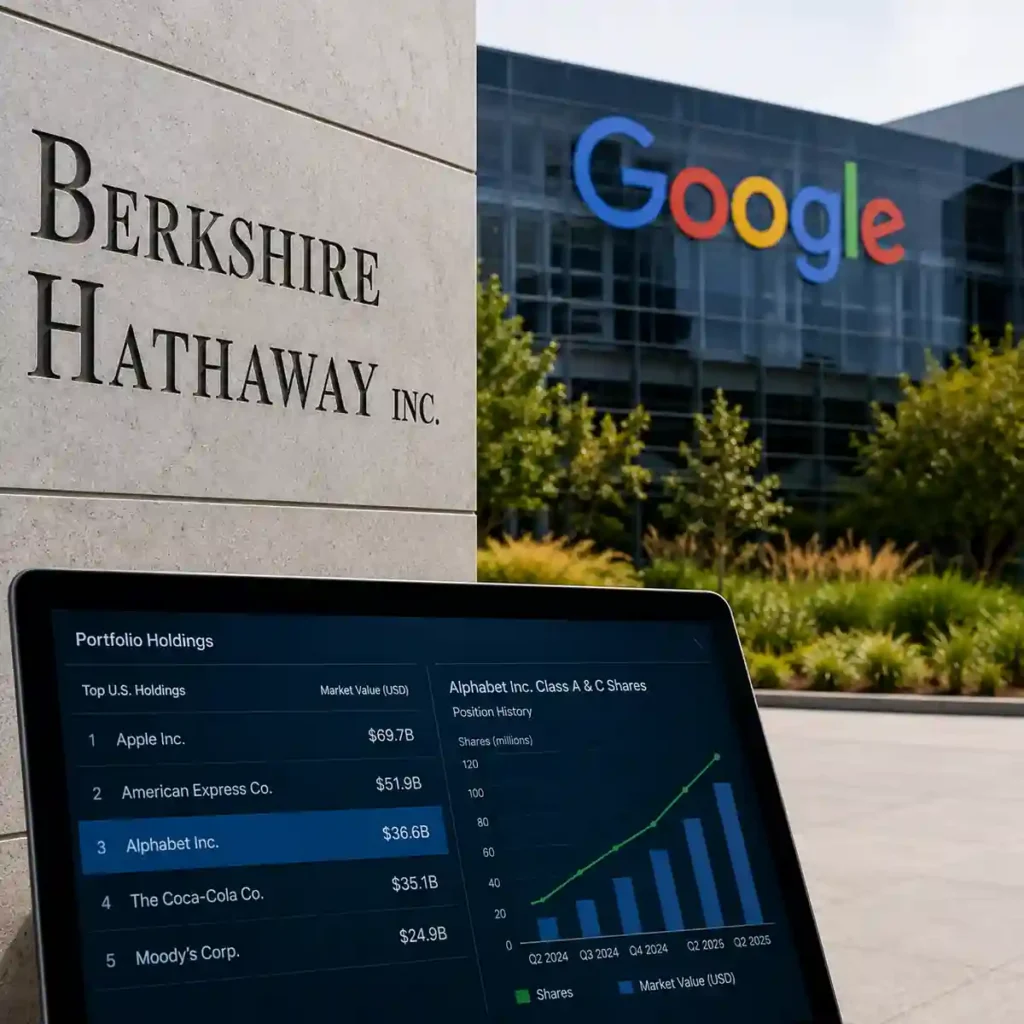

Berkshire Hathaway made one of its biggest portfolio moves of 2026 during the second quarter, adding roughly $17 billion to its Alphabet investment and turning Google’s parent into the third-largest holding in Berkshire’s U.S. equity portfolio.
Berkshire added about 48.1 million Alphabet shares during the three months ended June 30, taking its combined ownership of Class A and Class C shares to nearly 106 million. The position was worth about $36.6 billion based on the reported quarter-end figures.
The scale matters because Alphabet has quickly moved from a smaller Berkshire investment into a core holding, just as Google is spending heavily on artificial intelligence and computing infrastructure.
Berkshire’s Alphabet stake gets much bigger
A significant part of Berkshire’s Q2 increase came through a $10 billion private placement directly with Alphabet. The transaction covered both Class A and Class C shares.
Details of the investment were disclosed through Alphabet’s filing with the U.S. Securities and Exchange Commission. Berkshire also acquired additional shares beyond the private placement during the quarter.
By the end of June, Alphabet ranked above Coca-Cola, valued at roughly $35.1 billion in Berkshire’s portfolio. American Express remained larger at about $51.9 billion, while Apple was Berkshire’s biggest disclosed stock holding at approximately $69.7 billion.
That ranking is notable for a company historically associated with insurance, consumer goods, financial businesses, energy and industrial investments rather than technology. Apple changed that pattern, and Alphabet has now become another major technology position.
The investment comes during Alphabet’s AI expansion
The timing adds another layer to Berkshire’s decision. Alphabet has been investing heavily in data centers, computing capacity and other infrastructure needed to develop and operate AI products.
Google is integrating AI across Search and other services while expanding Gemini and Google Cloud. That creates potential growth opportunities, but the spending required is substantial.
Readers following the investment debate can find more context in this analysis of Alphabet stock and the growing debate over AI spending.
Berkshire’s purchase does not eliminate Alphabet’s risks. High infrastructure spending can pressure free cash flow and increase depreciation, while competition in AI and cloud computing remains intense. Google also continues to face regulatory scrutiny in major markets.
Delta, homebuilders and Macy’s also saw buying
Alphabet was by far the headline move, but Berkshire made several other notable purchases.
Its Delta Air Lines stake increased about 44% to 57.3 million shares, worth roughly $5.1 billion. The renewed airline exposure is particularly interesting because Berkshire sold its airline investments in 2020 when the pandemic devastated global travel.
Berkshire also added roughly $280 million to homebuilder Lennar and increased its Macy’s position by about 142%. The Macy’s percentage increase looks large, although the additional investment was only around $100 million, making it relatively small for Berkshire.
The activity shows why dollar values matter when reading institutional filings. A large percentage increase in a smaller holding can have far less significance than a modest percentage move in a multibillion-dollar position.
Comcast Settlement 2026: How Xfinity Customers Can File a Claim
Berkshire keeps cutting Bank of America
While Berkshire was putting fresh money into Alphabet and other companies, it continued reducing financial-sector exposure.
Its Bank of America position fell about 5.9% during Q2, representing a reduction of roughly $1.7 billion. Berkshire has now cut the position for eight consecutive quarters, leaving its overall stake around 53% smaller than before the sustained selling began.
The company also reduced its Capital One Financial position by approximately 58% and trimmed Ally Financial by about 7%.
The continued selling adds another chapter to Berkshire’s changing financial-sector exposure, following earlier investor attention around Bank of America and its place in Berkshire Hathaway’s portfolio.
Those moves suggest Berkshire was reallocating capital rather than simply becoming more bullish on stocks generally. New money was directed toward selected companies while older positions were reduced.
Berkshire still has $365.5 billion in cash
Perhaps the most striking part of the story is how much financial firepower remains. Berkshire held approximately $365.5 billion in cash and short-term investments as of June 30, about 8% lower than at the end of March.
That leaves the conglomerate capable of funding another major acquisition or stock purchase despite deploying billions into Alphabet, Delta and other investments.
For individual investors, Berkshire’s Alphabet purchase should not automatically be treated as a signal to buy GOOG or GOOGL. Berkshire has a long investment horizon, enormous liquidity and access to transactions that ordinary investors may not receive.
What the filing does establish is Alphabet’s dramatically greater importance inside Berkshire. With nearly 106 million shares and a position worth about $36.6 billion, Google’s parent has become one of the conglomerate’s defining public-market investments at a pivotal moment for the AI industry.

Make Swikblog your go-to source on Google for reliable updates, smart insights, and daily trends.