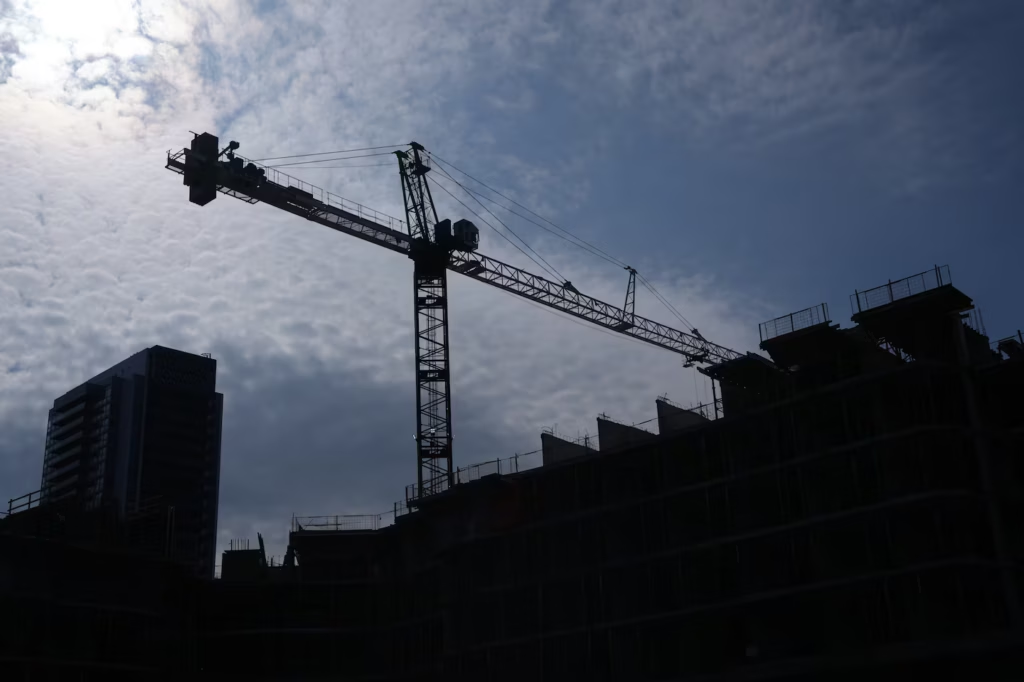

Canada’s condo market is entering a new phase where affordability concerns extend far beyond a property’s listing price. Buyers who once focused primarily on mortgage payments are increasingly scrutinizing monthly maintenance fees, reserve fund health and long-term ownership costs as condo sales remain sluggish in key urban markets.
The trend is particularly visible in the Greater Toronto Area, where the high-rise sector continues to lag despite government efforts to stimulate housing demand. New data from the Building Industry and Land Development Association (BILD) shows only 193 new condominium apartments were sold in May, compared with 830 low-rise homes. While overall new-home sales climbed to 1,023 units, the market remained 57% below the 10-year average, highlighting the challenges facing the condo sector.
The slowdown reflects more than market sentiment. It underscores a growing realization among buyers that the total cost of condo ownership can rise significantly over time, especially as maintenance fees increase and building repair costs mount.
Why Maintenance Fees Matter More Than Ever
Monthly maintenance fees have always been part of condo ownership, but they are playing a larger role in purchase decisions as household budgets remain stretched.
These fees typically cover building insurance, common-area maintenance, security services, cleaning, garbage removal, landscaping, elevator repairs and contributions to the reserve fund. Depending on the building, some utilities may also be included.
Industry professionals generally consider maintenance fees between 75 cents and 85 cents per square foot to be within a healthy range. For a 700-square-foot condo, that translates to approximately $525 to $595 per month.
Buildings with premium amenities such as swimming pools, fitness centres, concierge services and extensive recreational facilities often command higher fees because of the ongoing operational expenses associated with those features.
However, buyers should not automatically assume lower fees are better.
The Hidden Risk Behind Low Condo Fees
One of the most overlooked risks in the condo market is an underfunded reserve fund. While low maintenance fees may appear attractive, they can signal that a condo corporation is not collecting enough money to cover future repair obligations.
Experts frequently point to older buildings charging around 50 cents per square foot as potential warning signs, particularly if significant repairs are likely within the next decade.
When reserve funds fall short, condo boards may impose special assessments on owners. These one-time charges are used to fund major repairs such as roof replacements, window upgrades, parking garage restoration or mechanical system improvements.
Special assessments can reach thousands of dollars per unit and often affect marketability. Buyers may hesitate to purchase into a building facing large repair bills, putting pressure on resale values.
For this reason, reviewing a building’s status certificate and reserve fund study remains one of the most important steps before purchasing a condo.
Why Condo Demand Remains Weak
While ownership costs are attracting more attention, they are not the only challenge facing the sector.
The federal and Ontario governments introduced a temporary expansion of the HST rebate for new homes, allowing eligible buyers to receive rebates worth up to $130,000. The program helped improve activity in parts of the low-rise market, but the condo segment has yet to see a similar boost.
Industry officials say uncertainty surrounding implementation details and project eligibility may be causing some buyers to remain on the sidelines. High-rise developments also face construction timelines that may not align with rebate requirements.
Developers are responding cautiously. BILD noted that only one new condominium project launched in 2026, reflecting weak demand, elevated inventory levels and concerns about project viability.
The benchmark price for a new condo apartment in the GTA stood at $1,029,489 in May. Meanwhile, the benchmark price for single-family homes was $1,427,543, down 5.2% year-over-year.
That pricing dynamic highlights a growing challenge for condo developers. Construction costs and financing expenses limit their ability to reduce prices, even as buyers become more cautious.
Read More
What Buyers Should Focus On Before Purchasing
The current market environment rewards due diligence. Buyers evaluating a condo should look beyond the monthly fee and examine the building’s financial position, maintenance history, reserve fund balance and anticipated repair schedule.
Comparing total ownership costs is equally important. Mortgage payments, maintenance fees, insurance, property taxes and potential future fee increases all affect affordability.
The slowdown comes as housing affordability remains a major concern across Ontario, with recent data showing shifting buyer preferences and changing pricing trends in the Greater Toronto housing market.
For many households, condos will continue to represent the most realistic path to homeownership. But as maintenance fees rise and sales remain subdued, buyers are increasingly looking for value, financial stability and predictability before committing to a purchase.
Additional industry statistics and market updates are available through the Building Industry and Land Development Association (BILD).

Make Swikblog your go-to source on Google for reliable updates, smart insights, and daily trends.